
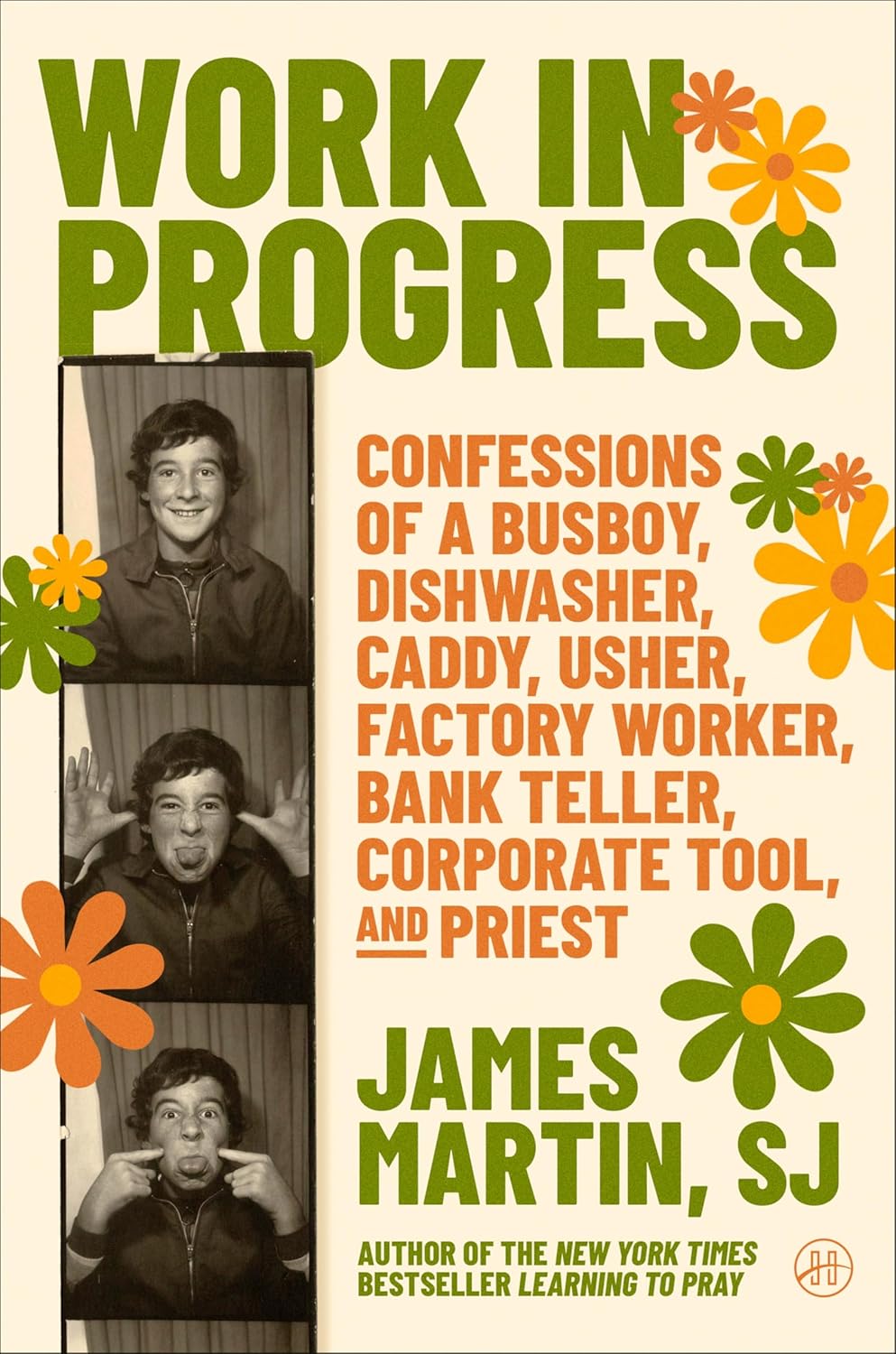
Work in Progress: Confessions of a busboy, dishwasher, caddy, usher, factory worker, bank teller, corporate tool, and priest – A Funny, Wise, and Inspiring Spiritual Memoir
Overview and Publication Details
“Work in Progress” is a humorous spiritual memoir by Rev. James Martin, SJ, a Jesuit priest, editor at large of America magazine, consultor to the Vatican’s Dicastery for Communication, and author of multiple New York Times bestsellers including The Jesuit Guide to (Almost) Everything and Jesus: A Pilgrimage. Published by HarperOne on February 3, 2026, the hardcover edition is approximately 368 pages, with audiobook (narrated versions available) and eBook formats. The book stands apart from Martin’s previous works, which often focus on prayer, scripture, or Jesuit spirituality; here, he adopts a lighter, more autobiographical tone to reflect on his pre-priesthood life.
Core Content and Structure
The memoir recounts Martin’s coming-of-age through a series of mismatched, untrained jobs spanning his boyhood, teenage years, and young adulthood in the 1960s, 1970s, and into the 1980s. He describes being thrust into roles with no prior experience: clearing tables and washing dishes in a restaurant kitchen, carrying golf bags on unfamiliar courses as a caddy, ushering at events, working assembly lines in a factory, handling cash as a bank teller, and enduring corporate office life as what he calls a “corporate tool.” These episodes culminate in his eventual vocation as a Jesuit priest.Each chapter centers on a specific job, filled with anecdotes of mishaps, awkward moments, and small triumphs. Martin portrays himself not as a hero but as a frequently hapless young person navigating unfamiliar environments, financial necessity, and the demands of work. Interspersed are personal photos from his youth, adding a nostalgic, visual layer to the stories. The narrative avoids heavy theological discourse, instead framing these experiences as formative for his later spiritual life.
Key Themes and Insights
The book emphasizes practical life lessons drawn from everyday labor: the importance of showing up on time, working diligently, treating others with kindness, apologizing when wrong, forgiving readily, asking questions when unsure, avoiding the misuse of power, noticing those in need, and listening attentively. Martin reflects on how these “ordinary” jobs shaped his character and prepared him for priesthood, illustrating Jesuit ideas of formation through real-world encounters. The tone is self-deprecating and warm, highlighting humor in failures while underscoring growth in humility, empathy, and resilience. It presents spirituality not through grand revelations but through the quiet wisdom gained in unglamorous settings.
Tone, Style, and Strengths
Martin’s writing is engaging, witty, and accessible, blending confession with gentle comedy. The memoir feels conversational, like sharing stories with a trusted friend, and its lighthearted approach makes it distinct from more introspective spiritual writings. Strengths include its relatability—many readers will recognize the universal struggles of early jobs—and its subtle integration of faith, showing how mundane work can reveal deeper truths about human dignity and kindness.
Overall Assessment
“Work in Progress” offers an endearing, insightful look at the winding path to vocation through the lens of everyday toil. It succeeds as both a funny coming-of-age tale and a quietly spiritual reflection, reminding readers that growth often emerges from discomfort and persistence. Ideal for fans of Martin’s earlier books seeking a more personal side, or anyone who appreciates memoirs that find meaning in ordinary life, the book delivers charm, wisdom, and gentle inspiration.