
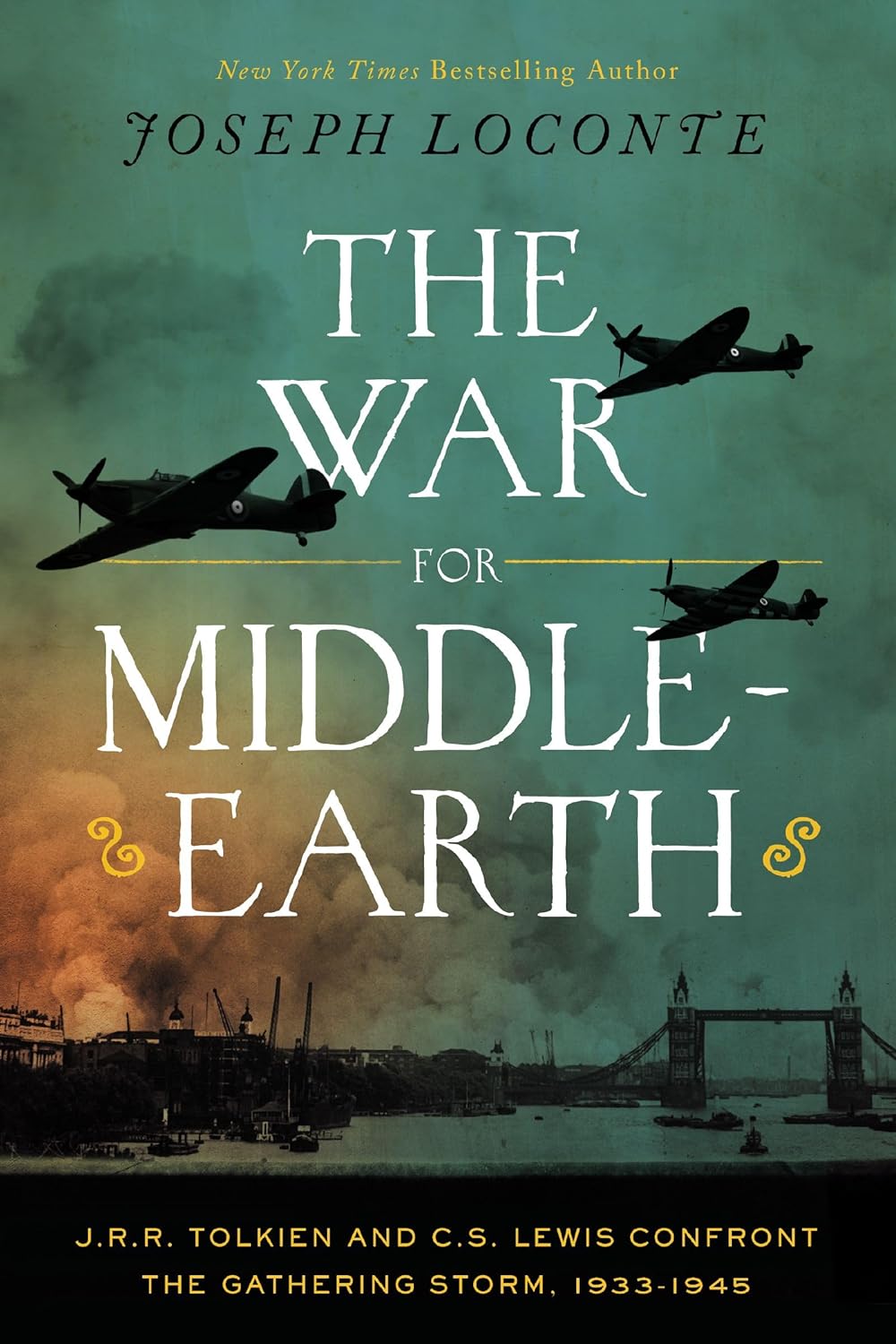
Book Review: The War for Middle-earth: J.R.R. Tolkien and C.S. Lewis Confront the Gathering Storm, 1933–1945 by Joseph Loconte
Introduction
Joseph Loconte, historian and author of the New York Times bestseller A Hobbit, a Wardrobe, and a Great War, returns with this compelling follow-up. Published in late 2025 (~288 pages, Thomas Nelson), The War for Middle-earth examines how the rise of fascism, the shadow of impending war, and the cataclysm of World War II shaped J.R.R. Tolkien and C.S. Lewis—both WWI veterans—and fueled their greatest works. Loconte argues their friendship, forged and deepened amid crisis, inspired a defiant vision of heroism, goodness, and faith in stories like The Hobbit, The Lord of the Rings, The Chronicles of Narnia, and Mere Christianity. In 2026, as global tensions echo the 1930s, this book offers fresh insight into how two Oxford dons used imagination as resistance against totalitarianism and despair.
Content and Structure
The narrative spans 1933 (Hitler’s rise) to 1945 (war’s end), blending biography, literary analysis, and historical context. Loconte draws on letters, Inklings meetings, broadcasts, and wartime experiences to show how external darkness influenced internal creativity.Key sections cover:
- The “gathering storm”: Tolkien and Lewis witness appeasement, rearmament debates, and moral decay in Europe. Both, scarred by WWI trenches, sense civilization’s fragility.
- Friendship’s crucible: Their bond—rooted in shared faith, myth, and scholarship—intensifies as they support each other through grief, air raids, and loss (e.g., Lewis’s brother Warnie, Tolkien’s family strains).
- Literary response: Tolkien refines Middle-earth amid blackouts and rationing; Lewis delivers BBC talks (later Mere Christianity) and begins Narnia. Loconte traces echoes—Sauron’s evil mirroring totalitarian regimes, Narnia’s redemption paralleling hope amid ruin.
- Broader efforts: The Inklings as a “beachhead of resistance,” Lewis’s apologetics countering nihilism, Tolkien’s myth-making reclaiming virtue.
The book interweaves personal stories (Tolkien’s domestic life, Lewis’s conversion influence) with larger events—Blitz, D-Day, Holocaust revelations—showing imagination as moral combat.
Key Themes and Takeaways
Central is the power of Christian imagination against dehumanization: Tolkien and Lewis reject despair, crafting tales of ordinary heroism, friendship, sacrifice, and eucatastrophe (joyful turn from doom). Themes include moral clarity in chaos, faith’s role in resisting evil, the redemptive value of myth, and literature’s capacity to restore wonder and virtue. Loconte portrays them as “indispensable men” for their era—using story and reason to defend human dignity when politics failed.
Strengths and Criticisms
Strengths: Loconte’s careful research and storytelling make history vivid and relevant. He avoids hagiography, acknowledging flaws while highlighting their courage. The link between war and works feels persuasive and illuminating for fans.Criticisms: Some may find the focus on Christian worldview narrow or interpretive (e.g., direct allegories debated by scholars). The emphasis on moral resistance can feel idealized amid complex wartime realities.
Conclusion
The War for Middle-earth is a thoughtful, inspiring bridge between history and legend—showing how Tolkien and Lewis confronted real darkness with enduring light. It’s essential for admirers of their works, students of 20th-century thought, or anyone pondering imagination’s role in turbulent times. Rated 4.5/5 for depth, warmth, and timeliness. Loconte proves their stories weren’t escapism—they were engagement, born in the furnace of war.