
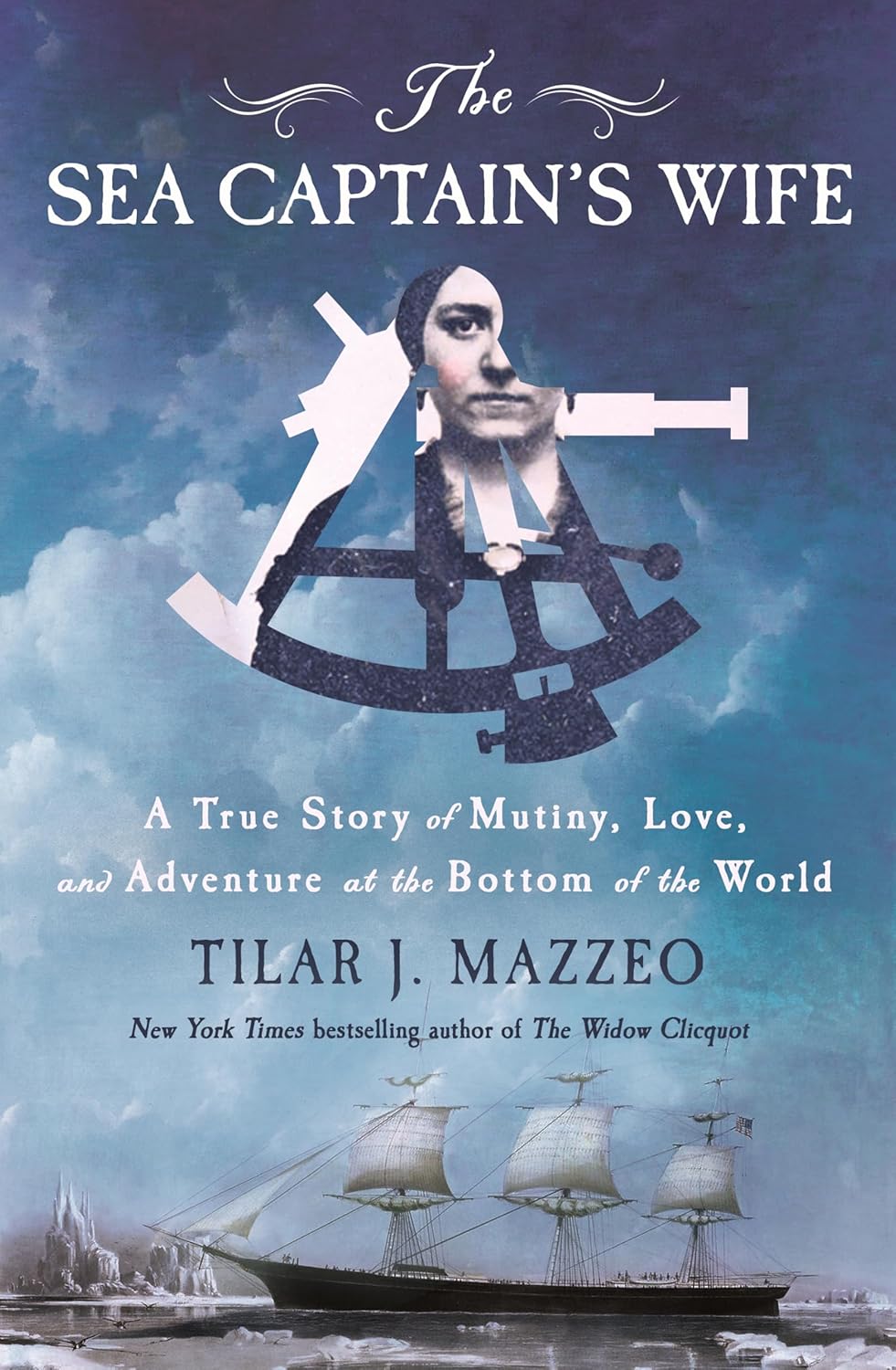
The Sea Captain’s Wife: A True Story of Mutiny, Love, and Adventure at the Bottom of the World
Overview and Publication Details
“The Sea Captain’s Wife” is a narrative nonfiction work by Tilar J. Mazzeo, a New York Times bestselling author known for biographies such as The Widow Clicquot. Published on December 9, 2025, by St. Martin’s Press, the hardcover edition spans approximately 288 pages, with eBook and audiobook formats available. The book recounts the remarkable true story of Mary Ann Patten, a 19-year-old woman who, in 1856, became the first female captain of a merchant clipper ship. Drawing on archival records, letters, newspaper accounts, and maritime logs, Mazzeo reconstructs Patten’s voyage amid the California Gold Rush era, highlighting themes of love, duty, courage, and gender barriers in 19th-century seafaring.
Core Content and Structure
The narrative opens with Mary Ann and her husband Joshua Patten, both from New England seafaring families, embarking on their second global clipper voyage in summer 1856 aboard the Neptune’s Car. Pregnant and newly married, Mary Ann joined Joshua as his companion—a common practice for captains’ wives, though strictly limited in role and movement. Disaster struck when Joshua fell gravely ill with tuberculosis, leaving the ship without effective command during the perilous passage around Cape Horn and through the Southern Ocean toward San Francisco.
Mary Ann assumed command, navigating the treacherous Drake Passage—known for its violent storms, icebergs, and unpredictable gales—while managing a mutinous crew, maintaining discipline, and caring for her dying husband. The book details her strategic decisions: quelling rebellion by rallying loyal sailors, using navigation charts (including those pioneered by Matthew Maury), and ensuring the ship’s cargo arrived intact. It also covers the voyage’s broader context: the high-stakes clipper ship races fueled by the Gold Rush, the tea trade, and the era’s rigid gender norms that confined women to domestic spheres even at sea.
The structure alternates between the high-seas drama and background on the Pattens’ lives, family histories, and the maritime world of the 1850s. Mazzeo builds tension toward the climax of the Southern Ocean crossing, then follows the aftermath, including Mary Ann’s brief celebrity upon arrival in San Francisco and the personal tragedies that followed.
Key Themes and Insights
Central to the story is Mary Ann’s embodiment of both wifely devotion and extraordinary leadership—praised in her time as a model of feminine virtue yet forced to defy conventions to save the ship. The book examines mutiny dynamics, the brutal realities of clipper voyages (frostbite, scurvy, relentless weather), and the limited rights of women, who received no pay for such efforts. Mazzeo contrasts public adulation with private hardship, including loss and illness, while illuminating how Patten’s feat challenged prevailing views on women’s capabilities.
Tone, Style, and Strengths
Mazzeo writes in a vivid, cinematic style that captures the thrill and terror of seafaring without romanticizing the dangers. The prose is accessible and engaging, blending meticulous research with dramatic pacing. Strengths include rich historical detail on clipper technology, navigation, and social context, alongside a compelling portrait of a young woman’s resilience. Reviews praise its thrilling narrative, archival depth, and balanced portrayal of heroism and hardship.
Overall Assessment
“The Sea Captain’s Wife” is a gripping, well-researched account that rescues Mary Ann Patten from historical obscurity, presenting her as a pioneer of female agency in a male-dominated world. It combines adventure, romance, and social history into an inspiring tale of determination against overwhelming odds. Highly recommended for readers of maritime history, women’s biographies, or true stories of survival and love in extreme conditions.