
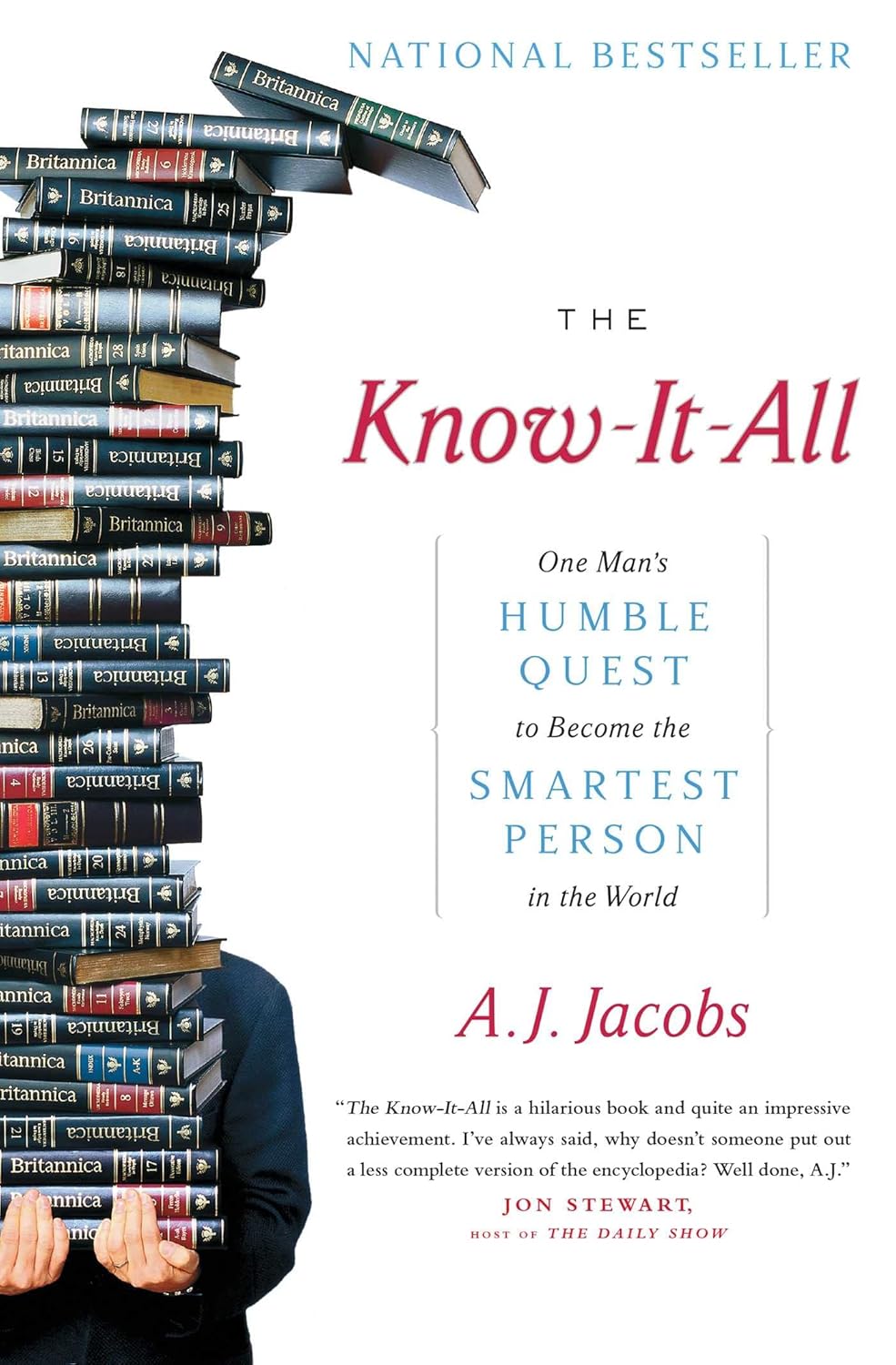
The Know-It-All: One Man’s Humble Quest to Become the Smartest Person in the World
Introduction
A.J. Jacobs, then an Esquire editor and NPR contributor, embarks on an audacious, self-imposed challenge in The Know-It-All (2004): read the entire 2002 Encyclopædia Britannica—all 32 volumes, 33,000 pages, 44 million words—from A to Z (or “a-ak” to “zywiec”). The goal? To fill gaps in his Ivy League education and become “the smartest person in the world.” At ~386–400 pages, this memoir blends quirky trivia, personal anecdotes, and humorous self-deprecation. Published amid the rise of stunt journalism and trivia culture, it remains a lighthearted classic. Jacobs’ witty, neurotic voice turns a potentially dry premise into an entertaining exploration of knowledge, intelligence, and human limits.
Content and Structure
The book is organized alphabetically by letter, mirroring the encyclopedia’s structure. Each chapter highlights entries that catch Jacobs’ eye—random facts, odd histories, bizarre people—while weaving in his life during the year-long project. He shares trivia like the origin of canned laughter, Nathaniel Hawthorne’s OCD tendencies, female Civil War spies, or the history of canned laughter.Parallel to the facts runs Jacobs’ personal narrative: his supportive yet skeptical wife Julie (who calls it a waste of time), his eccentric New York family (including a father who once tried—and quit—the same feat around “Borneo”), fertility struggles amid impending fatherhood, and job pressures. He tests his newfound “smarts” through real-world adventures: attempting to join Mensa, competing in crossword tournaments, failing hilariously on Who Wants to Be a Millionaire?, and attending high-IQ gatherings. The tone is confessional and comedic—Jacobs mocks his own neuroses, privilege, and obsession—while pondering deeper questions: Does hoarding facts equal wisdom? What makes someone truly intelligent?
Key Themes and Takeaways
The core theme contrasts rote knowledge with genuine understanding. Jacobs amasses trivia but realizes intelligence involves connections, wisdom, and humility—not just facts. He explores obsession’s toll (fatigue, social ridicule, family strain) and the joy of discovery. Family dynamics add heart: his father’s partial attempt and encouragement provide generational context. The book celebrates curiosity while gently satirizing the quest for intellectual superiority. Readers get bite-sized education—profound, funny, or absurd facts—alongside relatable reflections on growth, vulnerability, and the limits of book-smarts.
Strengths and Criticisms
Strengths: Jacobs’ humor shines—self-deprecating, clever, and laugh-out-loud funny in spots. The format keeps it engaging; trivia feels fresh and shareable. Personal stories ground the absurdity, making it more memoir than gimmick. Many praise its charm, inspiration for lifelong learning, and entertainment value over dry nonfiction.Criticisms: Some find it repetitive or padded with forced anecdotes (e.g., overworked fertility references). Jacobs’ privileged persona can grate—seen as smug, whiny, or entitled. Critics note the trivia-heavy approach yields superficial knowledge rather than depth, and personal tangents feel contrived. The humor occasionally falls flat or juvenile for some readers.
Conclusion
The Know-It-All is a delightful, quirky ride through one man’s absurd ambition, blending trivia buffet with heartfelt memoir. It doesn’t make Jacobs the smartest person alive, but it entertains while questioning what “smart” really means. Perfect for trivia lovers, humor fans, or anyone curious about big projects and small epiphanies. Rated 4.2/5—highly enjoyable, if not profound. A fun precursor to Jacobs’ later experiential books like The Year of Living Biblically.