
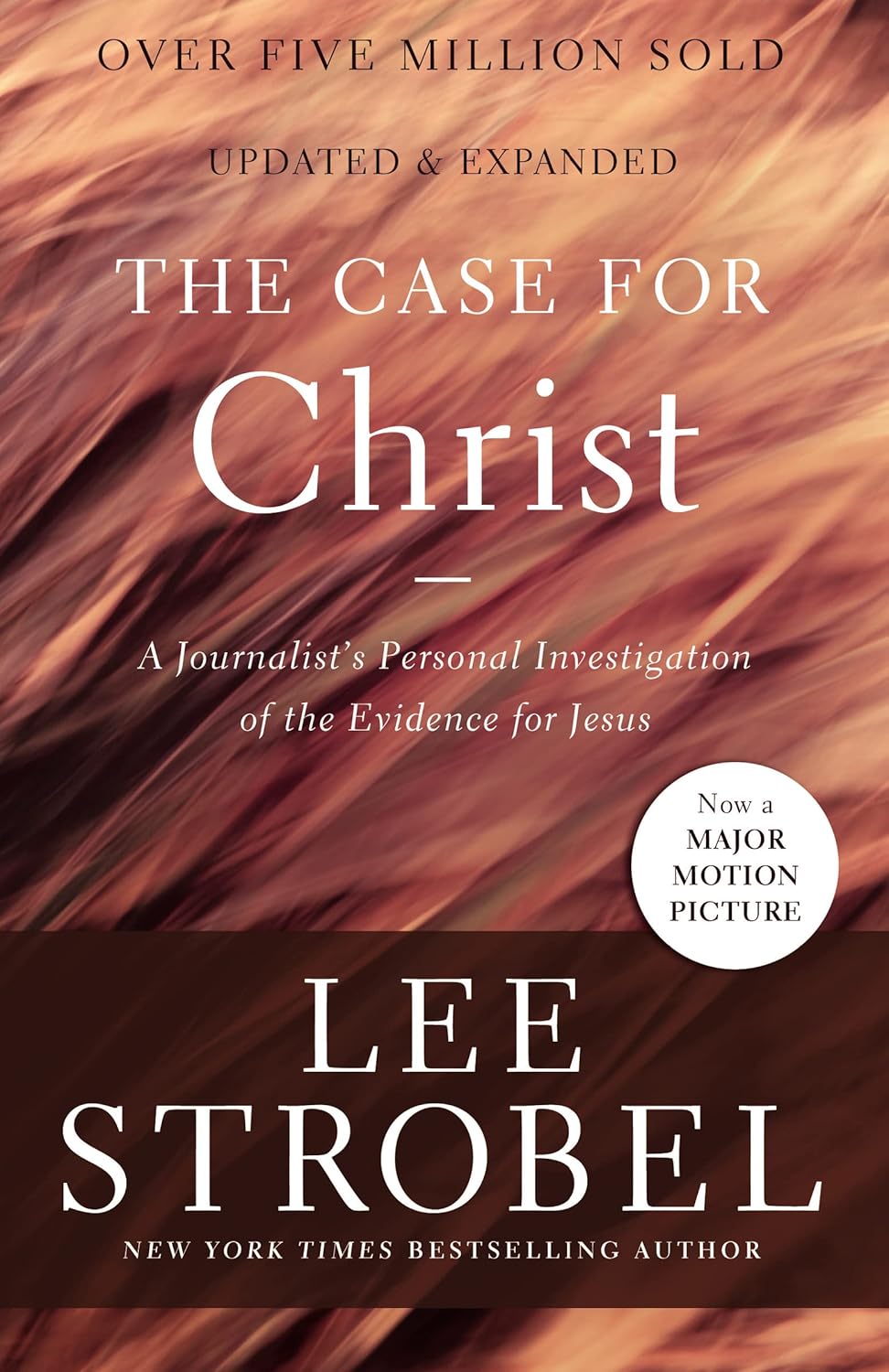
The Case for Christ: A Journalist’s Personal Investigation of the Evidence for Jesus (part of the Case for … series) by Lee Strobel is a popular apologetics book first published in 1998. It has sold millions of copies and remains one of the most widely read works making a case for the historical reliability of Christianity.
What the Book Is
Lee Strobel, a former atheist and award-winning legal editor for the Chicago Tribune, wrote the book after his wife became a Christian. Skeptical and worried about the impact on their marriage, Strobel decided to use his skills as an investigative journalist and lawyer to examine whether there was credible evidence for the claims of Christianity — especially that Jesus really existed, was the Son of God, and rose from the dead.
Instead of writing a traditional argument, Strobel structures the book as a series of interviews with leading scholars and experts in relevant fields (New Testament studies, history, archaeology, medicine, and psychology). He approaches each interview with tough, skeptical questions, much like a courtroom cross-examination.
Structure and Main Sections
The book is divided into three main parts:
- Examining the Record
Strobel investigates whether the Gospels (the biographies of Jesus in the New Testament) are reliable historical documents. He explores:- Whether they were written by eyewitnesses or based on eyewitness accounts.
- How well the New Testament manuscripts have been preserved and copied over time.
- Corroboration from non-Christian ancient sources.
- Archaeological evidence that supports places, people, and events mentioned in the Gospels.
- Analyzing Jesus
He examines who Jesus claimed to be and whether those claims hold up. Topics include:- Did Jesus really believe he was the Son of God and the Messiah?
- The psychological possibility of Jesus being a liar, lunatic, or Lord (the classic “trilemma”).
- Fulfillment of Old Testament prophecies.
- Researching the Resurrection
The final and most crucial section focuses on the central claim of Christianity — that Jesus rose from the dead. Strobel looks at:- Medical evidence regarding the crucifixion and whether Jesus could have survived it.
- The empty tomb and the reliability of the resurrection accounts.
- Alternative explanations (such as hallucinations, stolen body, or swoon theory) and why scholars find them insufficient.
Key Takeaways
Strobel concludes that the evidence points strongly toward the Gospels being reliable, Jesus claiming divinity, and the resurrection being the best explanation for the historical facts. He presents the case that believing in Jesus requires less of a “leap of faith” than rejecting the evidence.
The book is accessible and reads like a detective story, with short chapters and clear explanations.
Tone & Style
The tone is journalistic — straightforward, inquisitive, and evidence-based. Strobel writes in a conversational style that makes complex topics (textual criticism, ancient history, archaeology) easy for general readers to follow. He includes his own personal journey from skepticism to faith, which adds an emotional layer.
Who Should Read It
- People exploring Christianity or questioning their faith
- Christians looking for a clear, reasoned defense of core beliefs
- Readers who enjoy evidence-based apologetics or investigative-style nonfiction
- Skeptics or atheists open to examining the historical case for Jesus
Note: The book is written from a Christian perspective and presents arguments supporting traditional Christian beliefs. Some critics argue that Strobel mainly interviews scholars who already agree with his conclusions, so readers interested in counterarguments may want to read skeptical responses as well.
In short, The Case for Christ is Lee Strobel’s personal investigation into whether Jesus of Nazareth was who the New Testament claims he was. Through interviews with experts, he builds a case for the reliability of the Gospels, the claims of Jesus, and the reality of the resurrection. It is a popular, easy-to-read introduction to Christian apologetics that has helped many people think more deeply about the historical foundations of their faith.