
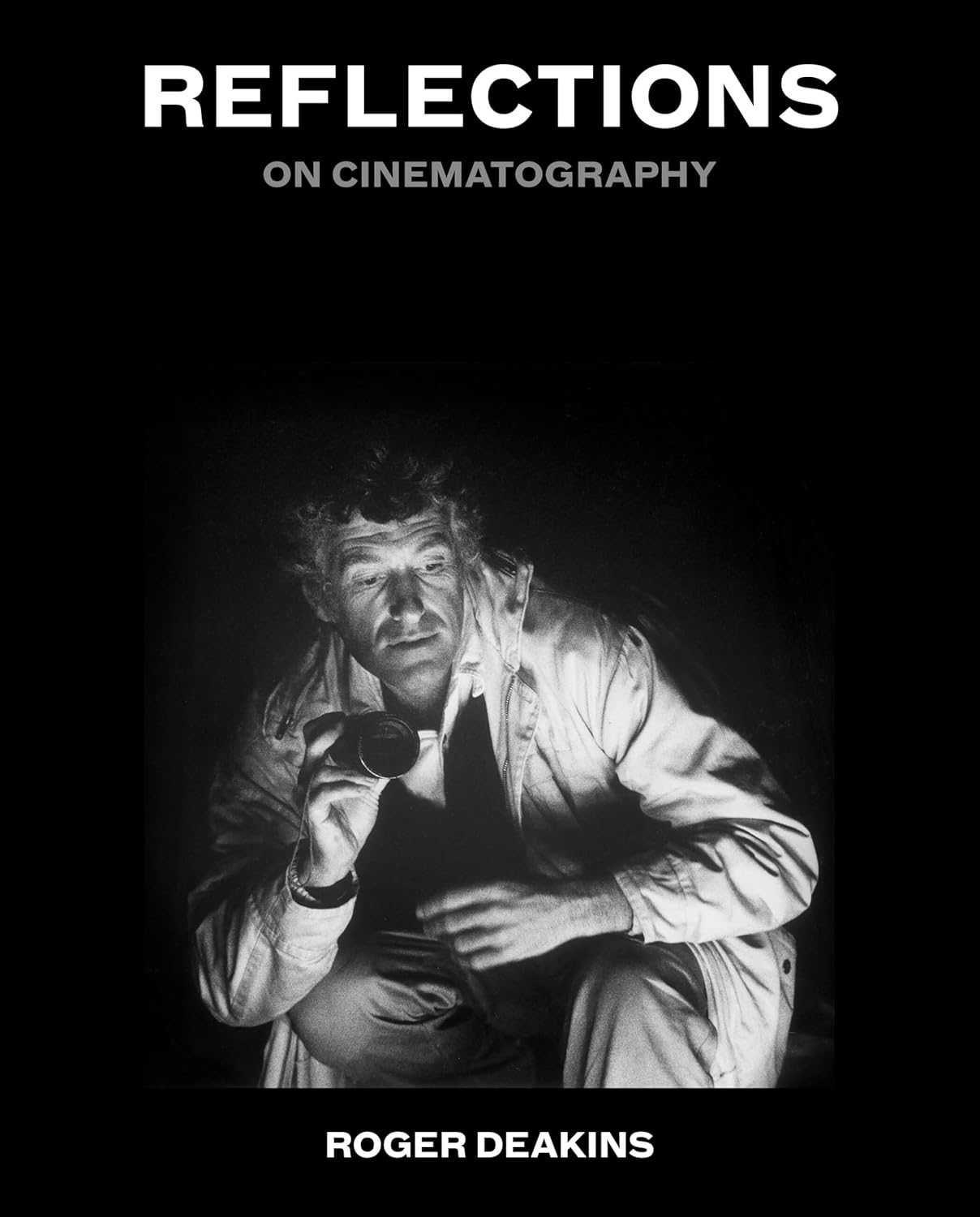
Reflections: On Cinematography stands as a landmark publication in the literature of film craft. Authored by Sir Roger Deakins—widely regarded as one of the greatest cinematographers in the history of cinema—this work is a singular visual memoir that intertwines personal narrative, technical insight, and an extraordinary collection of images. With sixteen Academy Award nominations and two wins (for Blade Runner 2049 and 1917), along with five BAFTA victories, Deakins has shaped the visual language of modern filmmaking through collaborations with directors such as the Coen Brothers, Sam Mendes, Denis Villeneuve, and others. This book extends his longstanding educational efforts—seen in his Team Deakins podcast and website—into a comprehensive, reflective volume that documents both his improbable journey and the artistry behind his most iconic images.
Content and Structure
The book traces Deakins’s career chronologically, beginning with his early life in Torquay, England, and his initial forays into documentary filmmaking in Africa and beyond during the late 1970s. It progresses through his transition to narrative features, including early British works and pivotal American projects such as The Shawshank Redemption, Fargo, No Country for Old Men, Skyfall, Blade Runner 2049, and 1917. Deakins reflects candidly on each project: the creative decisions, collaborative dynamics, technical challenges, and personal growth that defined them.A hallmark of the volume is its integration of never-before-seen materials: storyboards, lighting diagrams, exposure notes, camera plans, and sketches. These elements reveal the meticulous process behind celebrated sequences—the golden-hour one-shot illusion of 1917, the neon-drenched dystopia of Blade Runner 2049, the dust-choked tension in No Country for Old Men, or the dreamlike framing in The Big Lebowski. Deakins discusses lighting setups (including practical constraints like weather and equipment limitations), camera movement, framing choices, and the evolution of technology across five decades. The prose is lyrical yet precise, blending humility, humor, and irony with detailed “shop talk” that illuminates the science and intuition of cinematography.
Visual and Production Quality
The book is lavishly illustrated with color photographs, behind-the-scenes images, and technical illustrations that serve both instructional and aesthetic purposes. Printed on high-quality stock, the visuals are sharp and evocative, demonstrating Deakins’s mastery of light, color, and composition. The design balances generous image spreads with readable text, making it suitable as both a scholarly reference and a coffee-table volume for cinephiles.
Significance and Broader Message
Beyond technical instruction, Reflections offers a meditation on collaboration, resilience, and the transformative power of visual storytelling. Deakins emphasizes the cinematographer’s role as interpreter—translating script and director’s vision into tangible emotion—while acknowledging the “complete madness” of the industry and the rapid changes in filmmaking processes. For aspiring cinematographers, it functions as an informal master class; for general readers, it provides inspiration drawn from a life dedicated to seeing the world anew through the lens.The memoir quietly conveys profound lessons: true artistry emerges from constraints as much as freedom, collaboration demands trust, and beauty often arises from simplicity and observation.
Final Assessment
Reflections: On Cinematography is an essential, masterful work—beautifully produced, intellectually rich, and deeply personal. It is indispensable for students of film, working professionals, and dedicated enthusiasts alike. Priced in the $40–50 range for the hardcover (with signed editions available through select retailers such as the American Society of Cinematographers), it represents exceptional value given its depth, production quality, and rarity of insight from a living legend.Highly recommended as both a historical document and a source of enduring creative inspiration.