
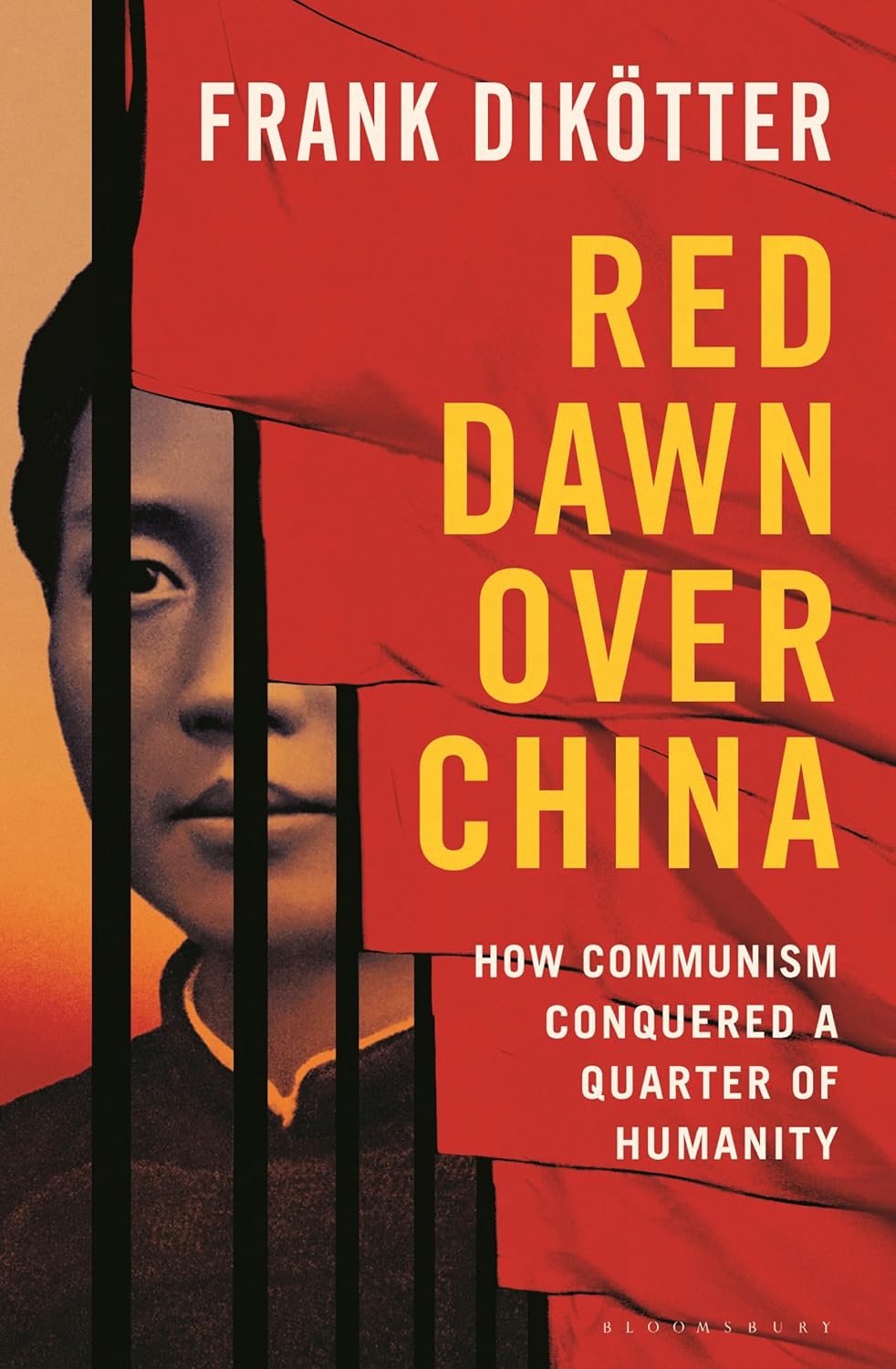
Red Dawn Over China: How Communism Conquered a Quarter of Humanity by Frank Dikötter is a sweeping, unflinching narrative history. Published in early 2026 by Bloomsbury, the book traces the rise, triumph, and consolidation of Chinese communism from the 1910s to the late 1970s. Dikötter argues that the Chinese Communist Party’s victory was neither inevitable nor the product of popular will alone; it resulted from a lethal combination of ideology, ruthless organization, foreign opportunity, civil-war chaos, and massive violence.
Plot Overview
The story opens in the late 1910s with the May Fourth Movement and the founding of the Chinese Communist Party (CCP) in 1921. Early communists—Chen Duxiu, Li Dazhao, Mao Zedong—were small groups of intellectuals inspired by the Bolshevik Revolution. They had almost no popular base. Dikötter shows how the CCP survived its first decade through Comintern funding, urban uprisings that failed disastrously (Shanghai 1927, Canton 1927), and brutal purges of its own ranks.
The Long March (1934–1935) is treated not as heroic legend but as a desperate retreat after repeated military disasters. Only a few thousand of the original 86,000 survived. Mao emerged dominant not because of genius strategy but through intrigue, betrayal, and elimination of rivals (Zhang Guotao, the returned-student faction).
The book’s core covers the decisive 1945–1949 civil-war period. Dikötter emphasizes:
- The CCP’s land-reform terror campaigns that won peasant support through fear and redistribution of property
- Nationalist (KMT) corruption, inflation, and military collapse
- Soviet logistical aid after 1945 (Manchurian weapons, training)
- Mao’s deliberate strategy of prolonging the war to exhaust Chiang Kai-shek while building a disciplined, fanatical army
By October 1949 the People’s Republic was proclaimed. The final third examines how the regime consolidated power:
- The 1950–1953 Korean War (used to justify internal repression)
- The 1950–1952 suppression of counter-revolutionaries (hundreds of thousands executed)
- The 1957 Anti-Rightist Campaign (550,000 intellectuals labeled, sent to labor camps)
- The Great Leap Forward famine (1958–1962), which Dikötter estimates killed 45 million people
- The Cultural Revolution (1966–1976), portrayed as Mao’s attempt to reassert personal control through mass violence and chaos
The narrative ends in the late 1970s with Deng Xiaoping’s rise, the arrest of the Gang of Four, and the beginning of reform—while stressing that the Leninist party-state structure remained intact.
Character Dynamics and Development
Mao Zedong dominates the book. Dikötter presents him as a calculating, paranoid figure who prioritized power over people. He was willing to sacrifice millions to maintain control and pursue utopian visions. Other key figures include:
- Zhou Enlai (loyal executor, master of survival)
- Liu Shaoqi (pragmatist purged in the Cultural Revolution)
- Lin Biao (military architect turned rival)
- Chiang Kai-shek (portrayed as authoritarian but outmaneuvered by corruption and poor strategy)
The Chinese peasantry and urban intellectuals appear as both victims and, at times, participants in violence. Dikötter shows how terror atomized society, turning neighbor against neighbor.
Key Themes
- Communism in China was built on violence from the beginning—land reform, purges, famine, and mass campaigns were not aberrations but essential tools.
- The CCP’s success owed more to KMT failures, Japanese invasion, and Soviet support than to widespread ideological appeal.
- Mao’s rule was personalist and totalitarian; the party existed to serve him, not the other way around.
- The legacy of these decades—party monopoly, surveillance state, historical amnesia—still shapes China today.
Style and Reception
Dikötter writes in clear, forceful prose. He draws on newly available provincial archives, diaries, and internal documents. The book is heavily footnoted but reads like a fast-moving story. Critics praise its rigor and moral clarity; some argue it underplays popular support for aspects of the revolution or the role of nationalism.
In short, this is a stark, powerful account. It explains how a fringe movement conquered the world’s most populous nation through ideology, terror, and strategic ruthlessness. It is essential reading for anyone seeking to understand modern China’s origins—and why the Communist Party still rules with an iron grip.