
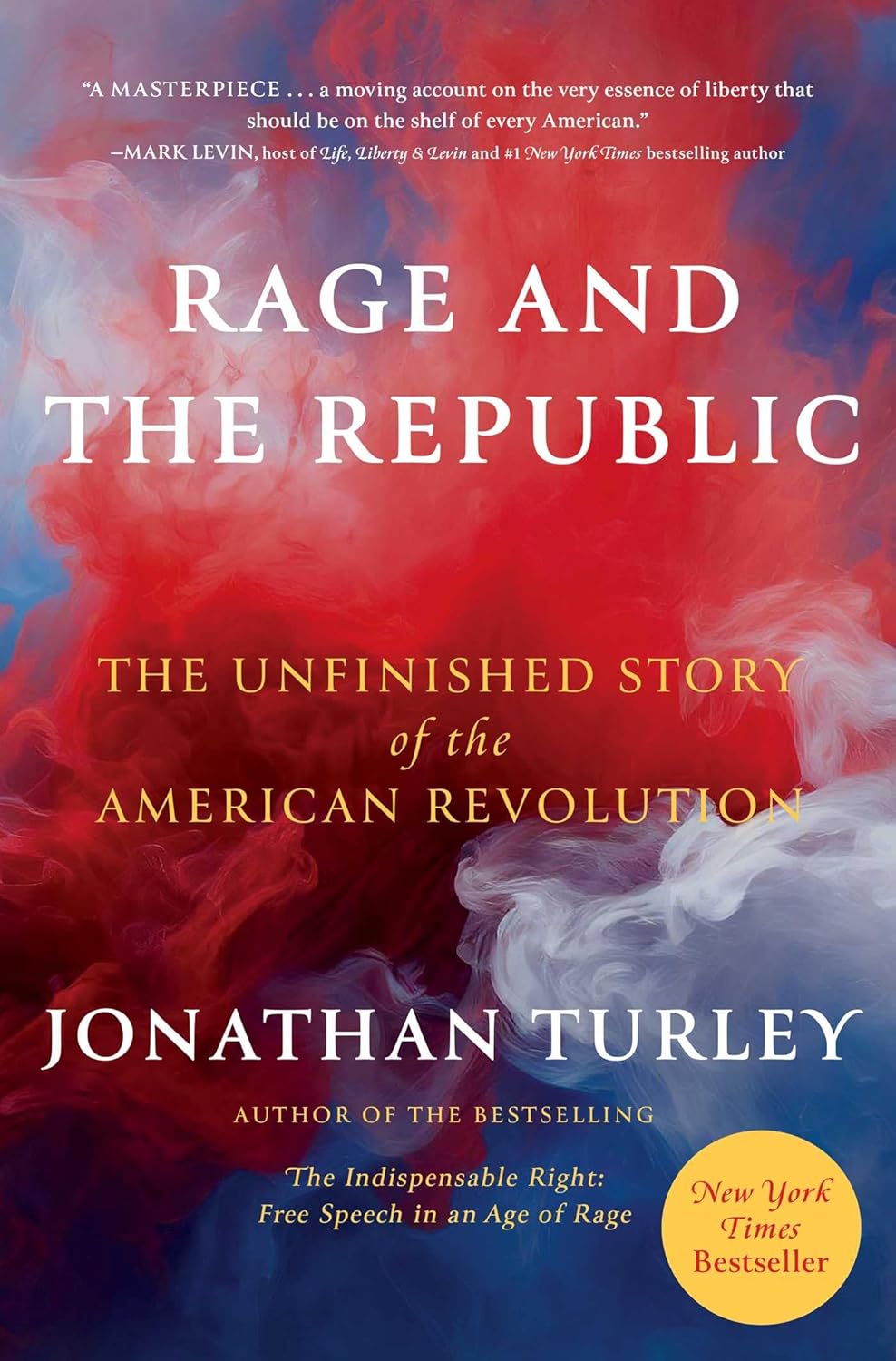
Rage and the Republic: The Unfinished Story of the American Revolution by Joseph J. Ellis is a concise yet powerful reinterpretation of the American founding era. Published in early 2026 by Alfred A. Knopf, the book argues that the Revolution was never truly “finished”—its central promises of liberty and equality remain contested, incomplete, and at times betrayed. Ellis, a Pulitzer Prize–winning historian (Founding Brothers, American Sphinx), uses rage—both revolutionary and reactionary—as the emotional thread that runs through the entire period.
Plot Overview
The narrative is not a chronological retelling of battles and treaties. Instead, Ellis organizes the book around five interlocking themes that reveal the Revolution’s unfinished nature:
- The Rage of ’76
The book opens with the explosive anger that fueled independence: colonists’ fury at Parliament’s taxation without representation, the Boston Massacre, and the Intolerable Acts. Ellis shows how this rage was not just anti-British but deeply ideological—ordinary people began to imagine themselves as citizens rather than subjects. - The Rage Within
The Revolution unleashed internal conflicts the founders never fully resolved. Ellis examines slavery (the “original sin” baked into the Constitution), women’s exclusion from political rights, and the violent displacement of Native nations. He highlights figures like Abigail Adams (“Remember the ladies”), Phillis Wheatley, and the enslaved petitioners who demanded freedom—and how their calls were largely ignored. - The Rage of Reaction
After independence, conservative backlash emerged. Shay’s Rebellion (1786–1787) terrified elites and helped produce the Constitution. The Federalist Papers were partly a defensive response to democratic excess. Ellis argues the Constitution was a brilliant compromise that restrained popular rage while preserving slavery and elite power. - The Rage of the 1790s
The first party system (Federalists vs. Democratic-Republicans) was born in bitterness. Jefferson and Hamilton’s rivalry, the Alien and Sedition Acts, Fries’s Rebellion, and the election of 1800 are portrayed as near-misses for civil conflict. The peaceful transfer of power in 1801 is celebrated as a rare achievement. - The Unfinished Republic
The final chapters bring the story to the present. Ellis connects the founding era’s unresolved tensions—race, inequality, the tension between liberty and order—to modern debates over voting rights, gun culture, economic disparity, and polarization. He ends with cautious hope: the American Revolution gave the world the idea that ordinary people could govern themselves, and that idea still has revolutionary power if Americans choose to reclaim it.
Character Dynamics and Development
Ellis focuses on the founders as flawed, passionate human beings:
- George Washington — the indispensable man who stepped down from power twice, yet owned enslaved people until his death.
- Thomas Jefferson — brilliant theorist of liberty who never freed most of his slaves.
- John Adams — prickly, principled, fearful of mob rule.
- Alexander Hamilton — ambitious visionary who distrusted pure democracy.
- James Madison — architect of the Constitution who later became a fierce partisan.
The book also elevates lesser-known voices: enslaved petitioners in Massachusetts, women who petitioned for divorce rights, Native leaders who negotiated in vain, and ordinary farmers and artisans whose rage drove events.
Key Themes
Rage as creative and destructive force — It sparked independence but also justified slavery, Indian removal, and suppression of dissent.
- The Revolution as paradox — It proclaimed universal rights while denying them to most people.
- The Constitution as compromise, not perfection — It enabled both progress and profound injustice.
- The ongoing nature of the American experiment — Every generation must decide whether to expand or restrict freedom.
The tone is reflective, candid, and urgent. Ellis writes with the clarity and moral seriousness that made him one of America’s most trusted historians. He avoids partisan finger-pointing while refusing to romanticize the past.
In short, this is a compact, deeply felt book. It reminds readers that the American Revolution was not a single event that ended in 1783 or 1787—it is an unfinished story of rage, hope, betrayal, and possibility. Perfect for anyone seeking a thoughtful, non-polemical look at the founding era and why its contradictions still shape American life today.