
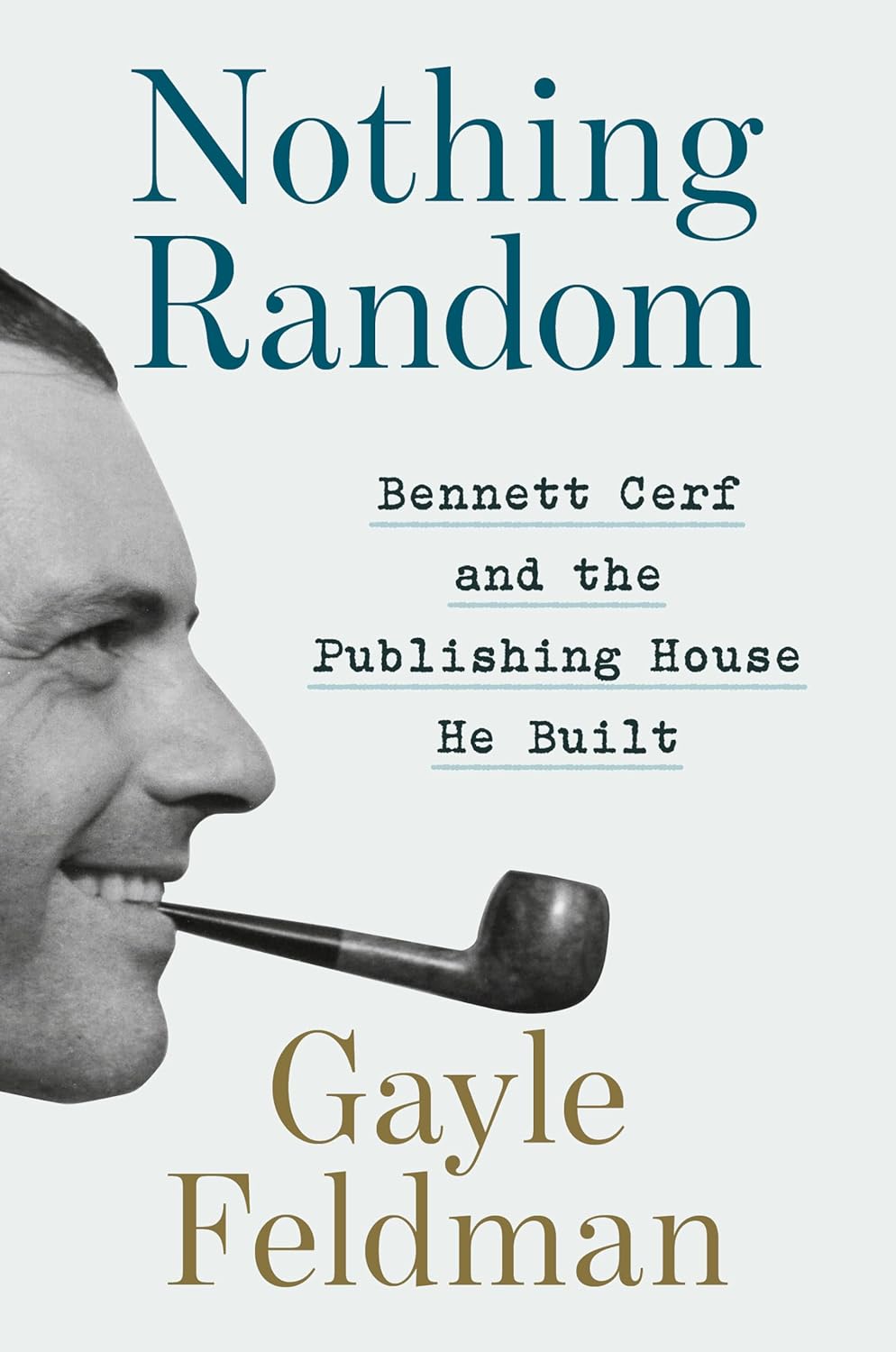
Nothing Random: Bennett Cerf and the Publishing House He Built
Overview and Publication Details
“Nothing Random: Bennett Cerf and the Publishing House He Built” is a comprehensive biography published on January 13, 2026, by Random House. Authored by Gayle Feldman, a longtime publishing industry journalist and contributor to Publishers Weekly, the hardcover edition spans approximately 1,072 pages, reflecting its depth and scope. The book draws on extensive research, including interviews with over 200 individuals, archival materials, private letters previously unavailable to scholars, and other primary sources. It serves as both a life story of Bennett Cerf—co-founder of Random House—and a detailed history of the transformation of American book publishing in the 20th century.
Core Content and Structure
The biography traces Cerf’s life from his early ambition in the 1920s to become a major publisher through his rise to prominence and eventual celebrity status. Born in 1898, Cerf, along with his lifelong business partner Donald Klopfer, acquired the Modern Library in 1925 and transformed it into a respected imprint of affordable, high-quality classics. In 1927, they founded Random House, initially as a vehicle to publish James Joyce’s “Ulysses” after Cerf successfully challenged U.S. obscenity laws in a landmark 1933 court case that expanded literary freedom.
The narrative covers Random House’s evolution into one of America’s leading publishers, signing major authors such as Eugene O’Neill, Gertrude Stein, William Faulkner, Ayn Rand, Truman Capote, and others. It examines key editorial decisions, business strategies, and cultural shifts, including the integration of Jewish entrepreneurs (like the Knopfs and Simon & Schuster) who reshaped the industry. Cerf’s personal life—his charm, wit, playboy reputation, and television fame as a panelist on “What’s My Line?”—is interwoven with professional milestones, portraying him as a paradoxical figure: driven yet affable, visionary yet pragmatic.
Feldman structures the book chronologically while delving into thematic elements: the fight against censorship, the role of publicity and celebrity in publishing, the impact of World War II and postwar prosperity, corporate mergers, and the transition from independent houses to larger conglomerates. The title “Nothing Random” reflects Cerf’s deliberate, calculated approach to building an enduring institution.
Key Themes and Insights
The work highlights Cerf’s front-row seat to mid-20th-century American literary and cultural history, from the Jazz Age to the television era. It explores how publishing transitioned from a gentlemanly trade to a modern business, the influence of censorship battles on free expression, and the personal dynamics within Random House. Feldman addresses Cerf’s contradictions—his public persona versus private complexities—and the broader ecosystem of authors, editors, and competitors that defined the era.
Tone, Style, and Strengths
Feldman employs a cinematic, engaging style that balances meticulous research with vivid storytelling, making the lengthy text accessible and compelling. The biography avoids hagiography, offering a nuanced portrait that acknowledges Cerf’s flaws alongside his achievements. Early reviews describe it as engrossing, intimate, and well-crafted, praising its depth of detail and ability to illuminate both an individual life and an industry in flux. Its length allows for thorough exploration of events and relationships.
Overall Assessment
“Nothing Random” stands as a definitive, richly documented biography of Bennett Cerf and a significant contribution to publishing history. It captures the energy and innovation that built Random House while providing insight into how one man’s vision helped shape modern American literature. Essential for readers interested in 20th-century publishing, literary biography, or the intersection of culture and commerce, the book offers a thorough, authoritative account of a pivotal figure and the house he created.