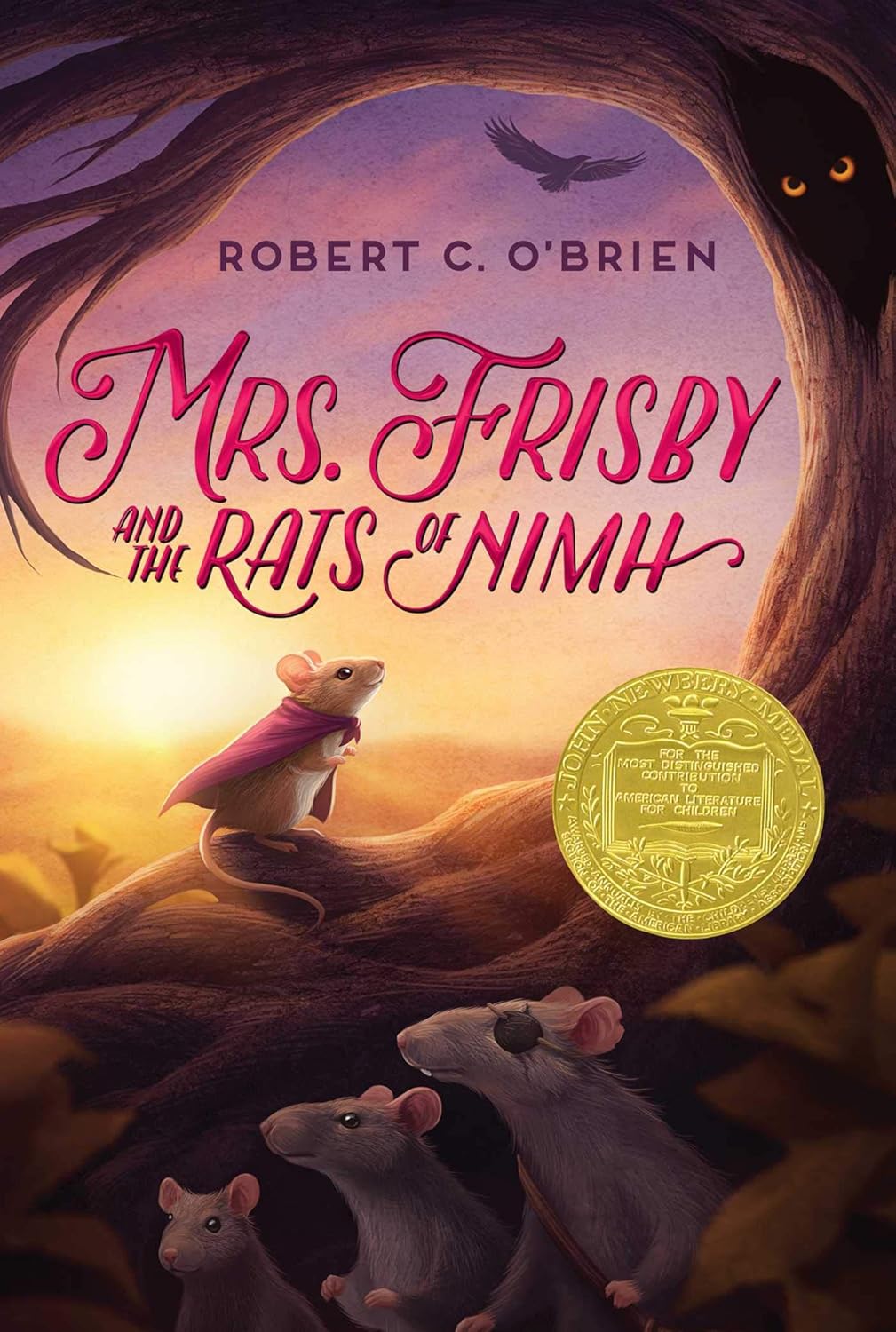
Mrs. Frisby and the Rats of NIMH by Robert C. O’Brien is a beloved children’s science-fiction/fantasy novel first published in 1971. It won the Newbery Medal in 1972 and remains a classic for its intelligent storytelling, strong female protagonist, themes of courage, community, and the ethical consequences of scientific experimentation.
Plot Summary (Spoiler-Light)
Mrs. Frisby is a widowed field mouse with four young children living in a cinder block on a farmer’s field. Her youngest son, Timothy, is gravely ill with pneumonia, and the family must move their home before the farmer plows the field in spring—yet Timothy is too sick to be moved.
Desperate for help, Mrs. Frisby seeks out a mysterious group of highly intelligent rats living under the rosebush on the farm. These rats are no ordinary rodents: they can read, write, use tools, and have built an elaborate underground society. They owe Mrs. Frisby’s late husband a great debt, and they agree to help her—if she will undertake a dangerous task for them.
The rats’ story is extraordinary. They are escapees from the National Institute of Mental Health (NIMH), where they were part of secret experiments that dramatically increased their intelligence and lifespans—but also gave them longer lives they were not prepared to live. Now they face a moral dilemma: continue living in hiding with stolen human technology, or risk everything to become truly independent and self-sufficient.
Mrs. Frisby must decide how much she is willing to risk for her family, while the rats grapple with whether knowledge and progress are worth the cost of losing their wild nature.
Key Characters
- Mrs. Frisby — Brave, resourceful widow and mother. Not a warrior, but determined and clever.
- Nicodemus — Wise, thoughtful leader of the rats; the moral and philosophical heart of the story.
- Timothy — Mrs. Frisby’s sick son; his illness drives the urgency of the plot.
- Jeremy — A friendly crow who becomes an unlikely ally.
- The Dragon — The farmer’s cat (terrifying from the mice’s perspective).
- Jenner — A dissenting rat who represents a darker path.
Major Themes
- Courage in ordinary beings (small size does not mean small heart)
- The ethics of scientific experimentation on animals
- The tension between technology/progress and natural living
- Community, sacrifice, and helping others even when it’s risky
- What it means to be truly “civilized” or free
Tone & Style
The tone is serious and thoughtful for a children’s book, with real stakes (illness, danger, moral dilemmas) but no graphic violence. The prose is clear, elegant, and emotionally honest. It feels like a fable with depth—accessible to young readers yet layered enough for adults to appreciate the philosophical questions.
Legacy & Adaptations
- Won the Newbery Medal (1972) and the Lewis Carroll Shelf Award
- Adapted into the animated film The Secret of NIMH (1982, Don Bluth), which is darker and more fantastical than the book
- Inspired the sequel Rats of NIMH series by Jane Leslie Conly (O’Brien’s daughter)
- Often taught in schools for its themes of science, ethics, and empathy
In short, Mrs. Frisby and the Rats of NIMH is a timeless story of a mother’s bravery, a community’s struggle for independence, and the cost of intelligence without wisdom. It is both a thrilling adventure and a quiet meditation on what it means to be human (or rat, or mouse). Highly recommended for ages 8–12 (and adults who enjoy thoughtful animal fantasy). A true classic that still feels fresh and relevant today.