
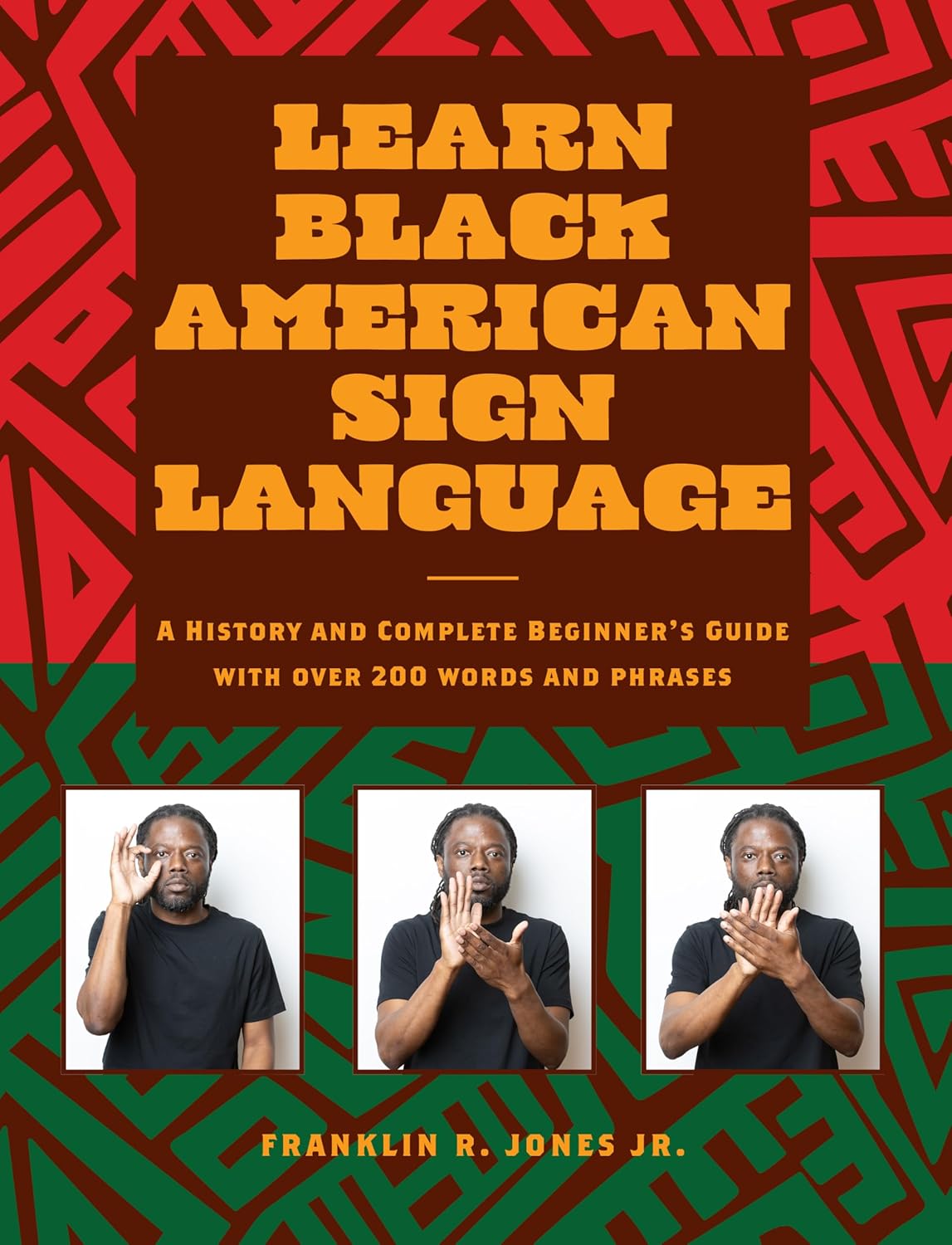
Learn Black American Sign Language: A History and Complete Beginner’s Guide with Over 200 Words and Phrases by Franklin R. Jones Jr. and Dr. Carolyn McCaskill is a clear, welcoming introduction to Black American Sign Language (Black ASL or BASL). Published in early 2026 by Wellfleet Press (part of the Quarto Group), this hardcover book (around 192 pages) combines history, cultural context, and practical learning. It celebrates BASL as a distinct variety of American Sign Language shaped by Black Deaf experiences.
History and Background
Black ASL developed mainly because of segregation in the U.S. For much of the 20th century, many Southern and some Northern states had separate schools for Black Deaf children. These schools often used different teaching methods, smaller class sizes, and more visual/gestural styles compared to white Deaf schools. Black Deaf students created their own signing patterns influenced by:
- African American cultural expressions
- Regional dialects from spoken Black English
- Emphasis on larger, more expressive movements
- Unique signs for everyday items or concepts tied to Black community life
After desegregation in the 1960s–1970s, Black ASL remained strong in Black Deaf families, churches, social events, and communities. It shows solidarity, identity, and pride. The book explains this history without jargon. It draws from research like the Black ASL Project (led by scholars including McCaskill) and the film Signing Black in America.
What the Book Covers
The guide is beginner-friendly. It starts with basics:
- What Black ASL is and why it matters
- How it differs from standard ASL (e.g., two-handed signs where standard ASL uses one, bigger facial expressions, different vocabulary for some words)
- Cultural notes on Black Deaf community values
The core section teaches over 200 words and phrases. Signs are grouped by theme:
- Greetings and introductions
- Family and people
- Numbers and time
- Food and daily life
- Emotions and descriptions
- Common phrases and slang unique to or preferred in Black ASL
Each sign includes:
- Step-by-step instructions (handshape, movement, location, palm orientation)
- Photos or clear illustrations
- Notes on regional differences (BASL varies by area, just like spoken dialects)
- Tips on non-manual signals (facial expressions, head tilts, body posture) that add meaning and flavor
The book stresses respect: BASL is a living dialect, not “broken” ASL. It encourages learners to connect with Black Deaf signers when possible.
Who Should Read It
This is perfect for:
- Beginners wanting to learn signing with cultural awareness
- Deaf educators, interpreters, or allies
- People interested in Black Deaf history and language justice
It is not a full ASL course. It focuses on BASL features and vocabulary while building basic skills. Pair it with video resources (many Black ASL signers share on YouTube) for movement practice.
In short, this is a warm, informative read. It honors Black ASL as a rich, proud part of Deaf culture. It teaches signs while sharing the story of how segregation shaped a unique way of signing. Great for anyone who wants to learn respectfully and understand the deeper roots of language in the Black Deaf community.