
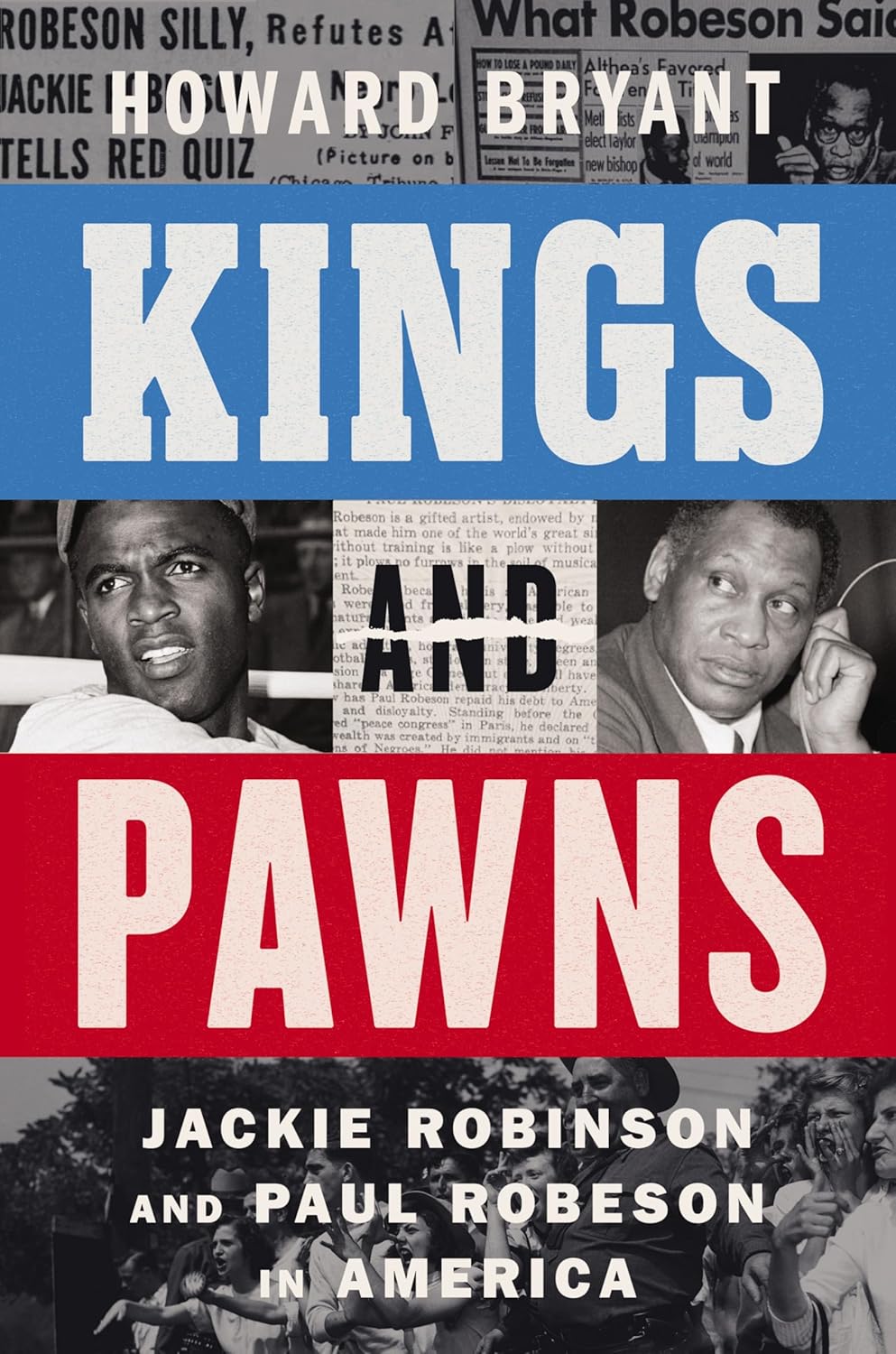
Kings and Pawns: Jackie Robinson and Paul Robeson in America by Jeff Young is a powerful dual biography that examines the lives and legacies of two towering Black American icons—Jackie Robinson and Paul Robeson—during the pivotal mid-20th century struggle for civil rights and equality. Published in early 2026 by St. Martin’s Press, the book explores how both men became symbols of Black excellence and resistance, yet followed sharply divergent paths that revealed the high personal costs of challenging American racism.
Plot Overview
The narrative is structured around parallel lives that occasionally intersected in public view and private tension. Jackie Robinson, born 1919, broke Major League Baseball’s color barrier in 1947 with the Brooklyn Dodgers. He endured vicious racism on and off the field—spikes aimed at his legs, death threats, segregated hotels—yet adhered to a strategy of dignified restraint urged by Dodgers executive Branch Rickey. Robinson’s success made him a national hero and a living proof that integration could work.
Paul Robeson, born 1898, was already a global superstar by the 1930s: All-American football player at Rutgers, Columbia Law graduate, world-renowned singer and actor (“Ol’ Man River,” Othello on Broadway and in London), and outspoken advocate for Black rights, labor unions, and anti-colonialism. Robeson traveled the world, performed for Spanish Civil War fighters, spoke against fascism, and openly criticized American racism and imperialism. His refusal to remain silent—especially during the Cold War—led to blacklisting, passport revocation, FBI surveillance, and a ruined career.
Young shows how both men were celebrated and punished for their talent and courage. Robinson became the acceptable face of Black advancement: patriotic, moderate, willing to endure abuse quietly. Robeson became the unacceptable radical: internationalist, socialist-leaning, unwilling to compromise. Their paths crossed most dramatically in the late 1940s when Robinson testified before the House Un-American Activities Committee (HUAC) in 1949, publicly distancing himself from Robeson’s politics and urging Black Americans to reject communism. Robeson saw the testimony as betrayal; many in the Black community felt Robinson had been used to undermine a fellow fighter.
The book traces the long aftermath: Robinson’s gradual shift toward more outspoken civil-rights activism in the 1950s and 1960s (supporting MLK, criticizing slow progress), and Robeson’s isolation, health decline, and eventual rehabilitation in the 1970s as a cultural hero. Both died in the early 1970s—Robinson in 1972, Robeson in 1976—leaving legacies that still spark debate: integration versus radical change, patriotism versus international solidarity, personal sacrifice versus collective justice.
Character Dynamics and Development
Robinson emerges as disciplined, proud, and conflicted. He endured humiliation for the greater good but grew increasingly frustrated with the limits of token integration. Robeson appears as uncompromising, charismatic, and tragically isolated. His refusal to bend cost him everything—career, friendships, health—yet he never recanted his beliefs.
Their relationship is the emotional core: two men who shared the dream of Black freedom but disagreed fiercely on strategy. Robinson chose the path of working within the system; Robeson sought to dismantle it. Young portrays neither as villain or saint—both were shaped by racism, both paid heavy prices, both advanced the cause in different ways.
Key Events and Themes
Major moments include:
- Robinson’s 1947 debut and the 1949 HUAC testimony.
- Robeson’s 1949 Peekskill riots (violent attacks on his concert) and passport denial.
- The Cold War blacklisting that silenced Robeson while elevating Robinson as a symbol.
- The civil-rights movement of the 1960s, where Robinson became more vocal and Robeson was largely forgotten in the U.S.
Central themes:
- The price of visibility for Black Americans in white-dominated spaces.
- The tension between reform and revolution in the fight for justice.
- How Cold War politics forced Black leaders to choose sides, often at great personal cost.
- The unfinished nature of the civil-rights struggle—integration won battles, but systemic racism endured.
The tone is measured, empathetic, and unflinching. Young draws on letters, interviews, FBI files, and contemporary accounts to give both men full humanity. He avoids hagiography and lets the reader grapple with their choices.
In short, this is a moving, necessary read. It places two giants side by side—Jackie Robinson, the quiet trailblazer who endured racism to prove equality possible, and Paul Robeson, the fearless radical who demanded it outright. Their stories reveal the complexity of the Black freedom struggle and remind us that progress has always required both restraint and rage. Perfect for anyone interested in civil rights, sports history, Cold War America, or the moral choices faced by those who challenge injustice.