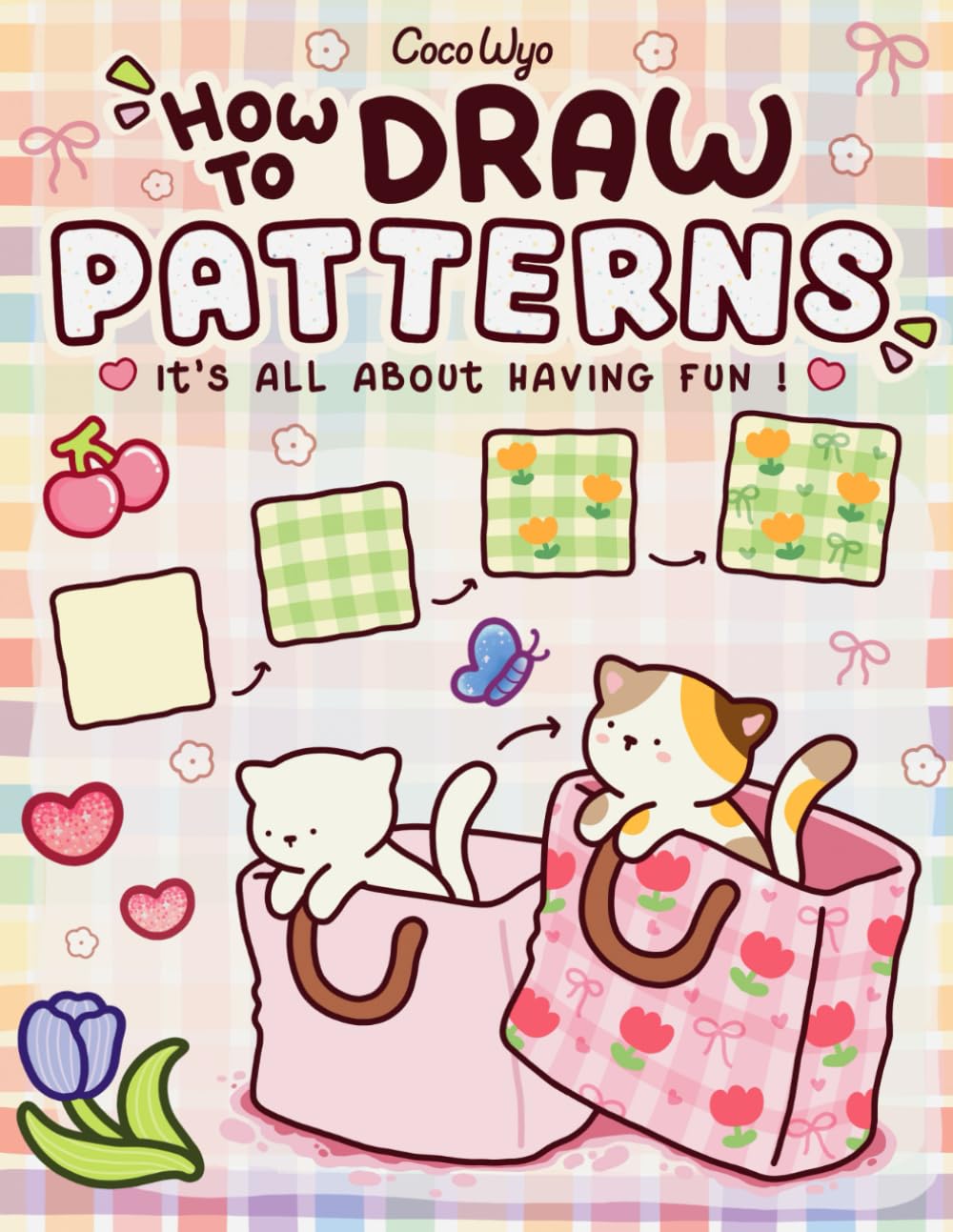
How to Draw Patterns: Easy and Fun Step-by-Step Guide for Unique Creations
- Paper (any kind—sketchbook, printer paper, or even napkins)
- Fine-tip pens, markers, or pencils (black for bold lines; colors for fun)
- Optional: Ruler for straight lines, compass or circle templates, eraser
- Lightly draw a grid of squares or rectangles (e.g., 4×4 or 5×5 blocks). Use a ruler for neatness or freehand for organic feel.
- Or divide your page into sections with wavy lines, circles, or random shapes.
Why? The grid gives boundaries so your pattern stays balanced and repeating.
- Dots / circles
- Lines (straight, wavy, zigzag)
- Triangles / squares
- Half-circles / petals
- Leaves / raindrops
Tip: Keep the first element small and simple—you’ll build complexity by repeating and varying it.
- Change size (big + small)
- Rotate or flip
- Add details (dots inside circles, lines crossing)
- Alternate direction or color
- Draw scattered circles of different sizes across the page (overlap is okay!).
- Add smaller circles or dots inside larger ones.
- Connect some with tiny lines or add highlights (small white dots if using marker).
- Fill negative space with tiny bubbles or stars.
Result: Playful, bubbly texture—great for backgrounds.Pattern 2: Raindrops / Petals (Organic & Flowy)
- Draw a row of teardrop shapes (curved line down, pointed end).
- Repeat rows, alternating direction (point up, then down).
- Add a small circle or dot at the rounded end of each drop.
- Vary thickness and spacing for rhythm.
Result: Calm, nature-inspired flow—try in blues for water effects.Pattern 3: Zigzag / Chevron Lines (Geometric & Bold)
- Draw parallel zigzag lines across the page.
- Fill between lines with stripes, dots, or small triangles.
- Mirror or invert every other row for contrast.
Result: Modern, energetic—perfect for borders.Pattern 4: Dot-to-Dot Flowers / Mandala Style
- Draw a central dot or small circle.
- Surround it with larger circles or petals (repeat 6–8 times).
- Add layers: dots around petals, lines radiating out.
- Repeat the whole motif in a grid.
Result: Zentangle-like meditative design.Pattern 5: Wave / Scallop (Fun & Wavy)
- Draw a wavy line across the page.
- Add another wave parallel below it.
- Fill with scallops (half-circles along the waves).
- Add stripes, dots, or tiny fish inside for whimsy.
Result: Ocean or abstract texture—very satisfying to fill.
- Mix mediums: Use colored pens, watercolors, or markers for shading.
- Add texture: Cross-hatching, stippling (dots), or hatching lines.
- Play with scale: One big motif repeated vs. tiny dense fills.
- Theme it: Nature (leaves, stars), food (cherries, ice cream cones), abstract (swirls, geometric).
- Go freeform: No grid—just start in the center and grow outward.
Step 5: Finishing Touches & Tips for Fun
- Outline in black pen for pop.
- Color in sections or leave line art.
- Scan and tile digitally if you want seamless repeats (apps like Procreate or free tools work great).
- Practice daily for 10–15 minutes—patterns are perfect for stress relief and building confidence.
The best part? There’s no “wrong” pattern. Mistakes become new elements! Experiment, have fun, and soon you’ll create your own signature style.What kind of pattern would you like to try first—geometric, nature-inspired, or totally abstract? Or want more details on one of these?