
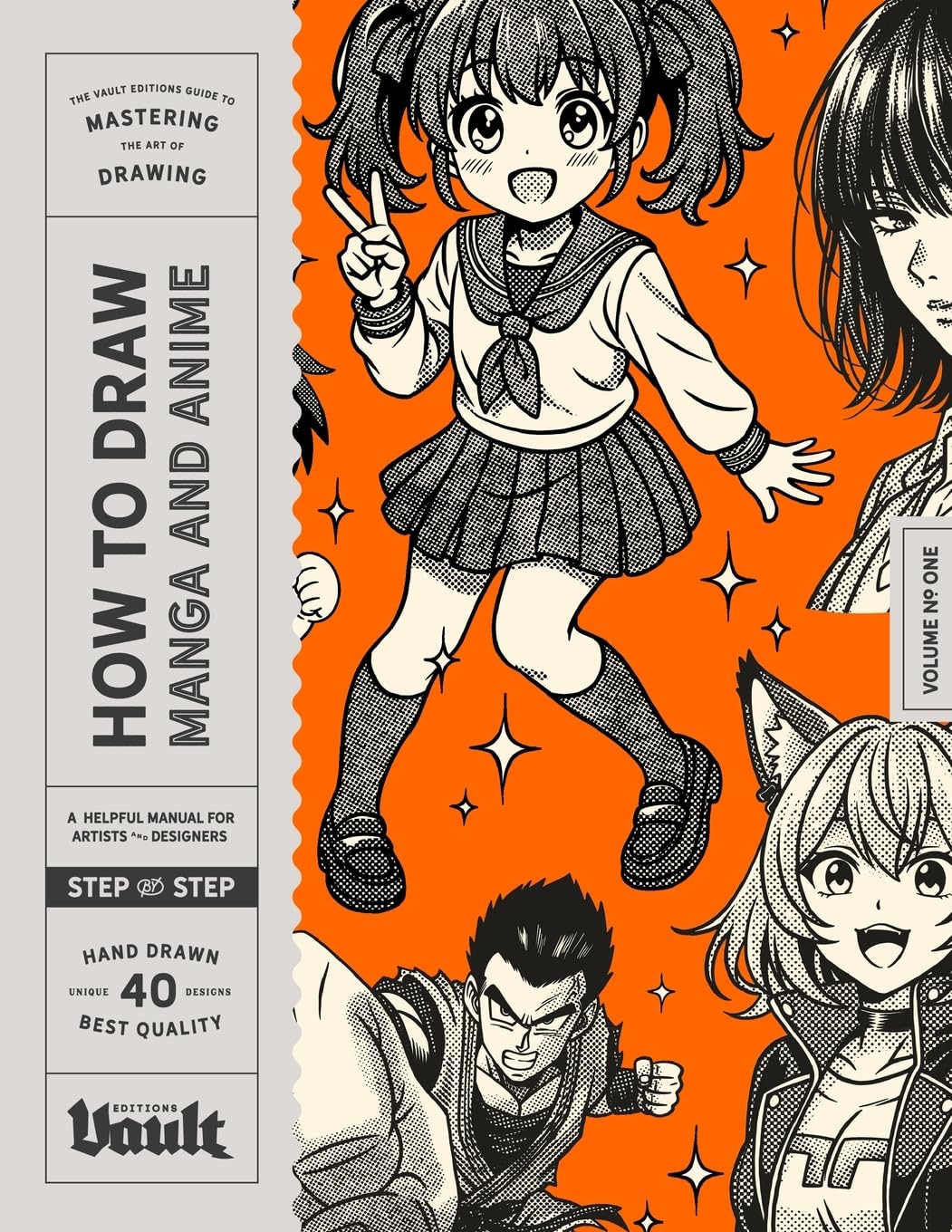
How to Draw Manga and Anime for Beginners: Step-by-Step Lessons for Drawing Faces, Figures, Poses and Anime Characters
Published by Vault Editions Ltd. on November 21, 2025, How to Draw Manga and Anime for Beginners by Kale James is a practical, beginner-focused paperback (approximately 150–160 pages, standard 8.5 × 11-inch format) that delivers exactly what its title promises: a structured, step-by-step system for learning authentic manga and anime drawing fundamentals. Aimed at aspiring artists with little to no prior experience, the book builds skills progressively, starting from basic proportions and moving toward expressive characters, dynamic poses, and full anime-style illustrations.
James, an illustrator with a background in educational art resources (known for similar Vault Editions titles on figure drawing and anatomy), organizes the content into clear, logical sections that form a complete foundational course. Early chapters cover essential building blocks: head construction using simplified guidelines (the classic “egg” or “circle + cross” method adapted for anime’s large eyes and small chins), facial features (expressive eyes, stylized noses/mouths, hairstyles with flow and volume), and basic proportions for chibi, teen, and adult body types. The book emphasizes manga/anime-specific stylization — exaggerated expressions, sparkling highlights in eyes, speed lines for emotion — while grounding everything in observable anatomy to avoid flat or disproportionate results.
Subsequent sections advance to full figures: breaking down torsos, limbs, hands, and feet with simplified construction lines; understanding foreshortening and perspective for natural-looking poses; and exploring dynamic action stances (fighting poses, jumps, dramatic leans) common in shonen and action genres. Later lessons introduce clothing folds, fabric textures (school uniforms, fantasy armor, casual streetwear), and character design basics — creating original OCs by mixing features, expressions, and outfits. Each topic includes multiple step-by-step demonstrations: starting with light construction lines, adding details layer by layer, and finishing with clean inking or shading suggestions (hatching, screentones, cel-style highlights).
The teaching style is encouraging and straightforward — no overwhelming theory, just clear instructions, numbered steps, and side-by-side before/after visuals. James includes common beginner pitfalls (e.g., “don’t make eyes too symmetrical” or “avoid stiff poses by adding contrapposto”) with quick fixes. While the book leans toward traditional pencil/ink techniques, it nods to digital tools (Procreate, Clip Studio Paint) with tips on layers and brushes. No color section is included — the focus stays on line art and monochrome fundamentals, making it ideal as a pre-coloring primer.
Production quality suits the beginner audience: matte cover with vibrant sample artwork, thick white paper that handles pencil and fineliners well, and a lay-flat binding for easy reference while drawing. At a typical price of $15–20, it offers excellent value, especially compared to pricier imports or licensed “How to Draw Manga” series that can feel dated or overly complex.
Compared to classics like Christopher Hart’s Manga Mania (more stylized but less anatomical) or Christopher Hart’s Master Guide to Drawing Anime (more template-based), James’s book stands out for its balanced, systematic approach — blending stylized anime flair with enough real anatomy to build sustainable skills. It avoids overwhelming with too many character archetypes or advanced effects, keeping the pace achievable for self-learners.
Early reader feedback (from Amazon and art communities) praises its clarity and motivation: many note quick progress in drawing recognizable anime faces and poses after just a few weeks. Minor critiques include a lack of full-color examples (though line art focus keeps it accessible) and a somewhat generic selection of character types (mostly teen protagonists, few diverse body types or older characters).
In summary, How to Draw Manga and Anime for Beginners is a solid, no-nonsense starter guide that turns “I want to draw like my favorite anime” into achievable daily practice. Perfect for teens discovering manga, adults returning to drawing, or anyone eager to create their own characters with confidence. Grab a sketchbook, follow the steps, and watch your anime dreams take shape — one expressive eye and dynamic pose at a time. Highly recommended for newbies ready to level up.