How to Draw Anything in 3D: Learn to Draw Fun Things in Three Dimensions with Step-by-Step Lessons and Guides
Overview and Publication Details
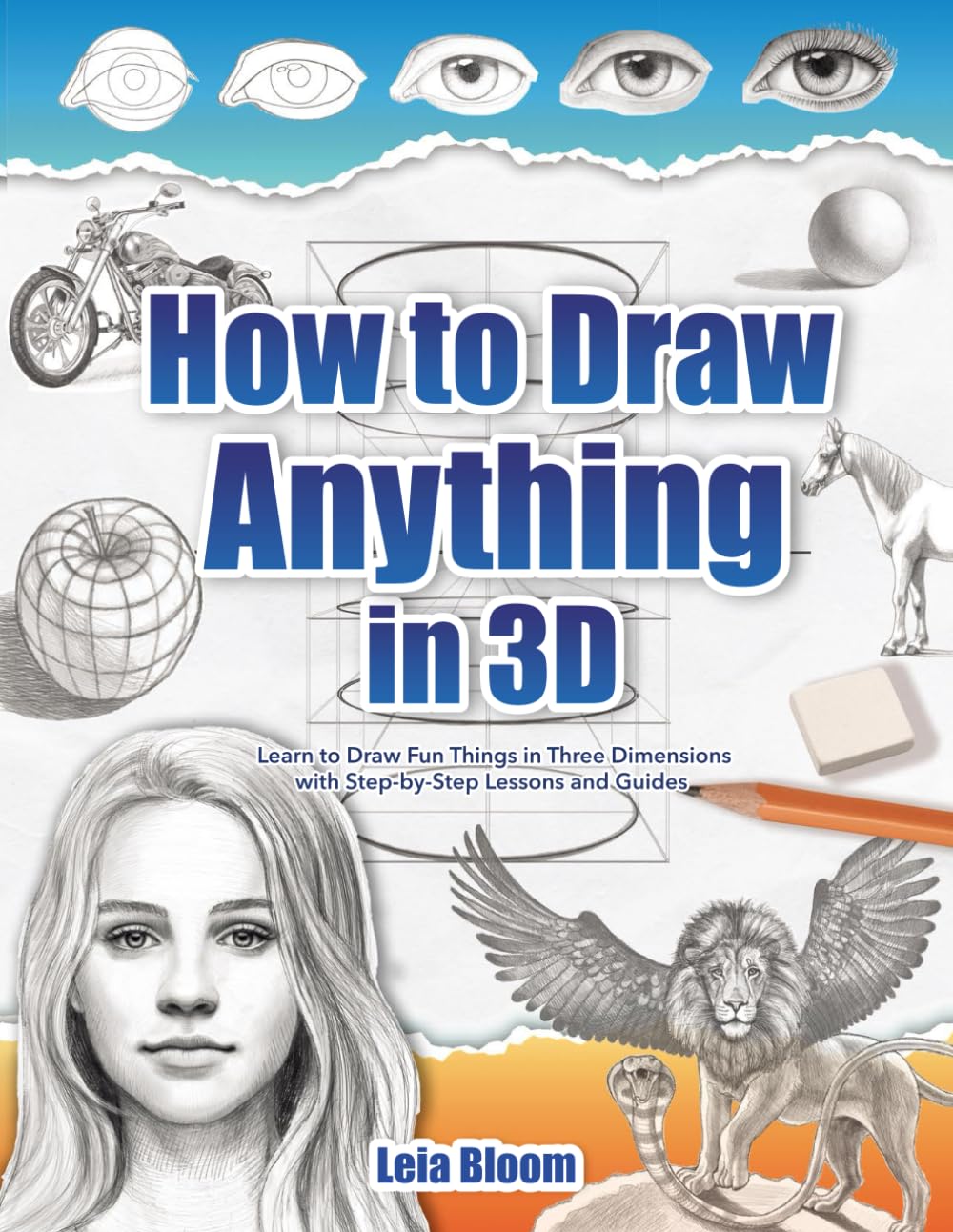
“How to Draw Anything in 3D: Learn to Draw Fun Things in Three Dimensions with Step-by-Step Lessons and Guides” is a practical drawing instruction book authored by Leia Bloom and published on November 3, 2023, by Let’s Draw Press (an independent imprint often associated with Acorn Publishing LLC). The paperback edition is approximately 107 pages, with dimensions of 8.5 x 0.25 x 11 inches, making it a compact, workbook-style format suitable for desk use. It is widely available through major retailers such as Amazon, Walmart, and AbeBooks, and has achieved notable popularity, appearing on bestseller lists in the drawing and art instruction category as recently as late 2024. The book targets beginners and intermediate artists interested in creating optical illusions and realistic three-dimensional effects on flat paper using pencil techniques.
Core Content and StructureThe book introduces the fundamentals of 3D drawing—also known as anamorphic or trompe-l’œil illusion art—where simple lines and shading create the appearance of depth, volume, and objects popping off the page. It begins with essential techniques for building depth and realism, including perspective basics, shading gradients, light source placement, shadow casting, and highlighting to simulate illumination.
The core of the book consists of step-by-step lessons and projects that guide readers through drawing a wide variety of subjects. These include:
- Everyday objects and nature elements such as flowers, fruits, and animals.
- Architectural features like buildings and cityscapes.
- Portraits and human figures with realistic volume.
- Fantastical and imaginative creations, including mythical creatures and whimsical scenes.
Each project features clear, sequential instructions: starting with basic outlines or guidelines, progressing through adding details, applying shading for form, and refining edges for a polished 3D effect. The emphasis is on pencil work, with tips on tool selection (e.g., varying hardness of leads for different tones), blending techniques, and common pitfalls like inconsistent lighting.
The format includes ample blank space or practice areas on many pages, encouraging readers to draw directly in the book alongside examples. This hands-on approach makes it function partly as a guided sketchbook.
Key Techniques and Insights
Bloom focuses on accessible methods that do not require advanced art skills or special equipment. Key concepts covered include mastering chiaroscuro (strong contrasts between light and dark), understanding how light interacts with curved and angular surfaces, and using foreshortening to enhance the illusion of protrusion. The book stresses experimentation and confidence-building, presenting 3D drawing as an achievable skill rather than an innate talent. It aims to help readers “awaken their inner artist” by providing tools to translate imagination into convincing three-dimensional visuals.
Tone, Style, and Strengths
The tone is encouraging, straightforward, and motivational, with clear language that avoids overwhelming technical jargon. Instructions are concise yet detailed enough for self-paced learning. Strengths include the diversity of fun, engaging subjects that keep practice enjoyable, and the practical, beginner-friendly progression that builds skills incrementally. Many users appreciate the book’s ability to produce impressive results quickly, fostering a sense of accomplishment.Some feedback notes that while the step-by-step guides are helpful, the examples can be small or limited in some sections, and advanced artists might find the content more introductory. Overall, it receives strong ratings (around 4.6 out of 5 on major platforms) for its accessibility and creative inspiration.
Overall Assessment
“How to Draw Anything in 3D” serves as an excellent entry point into illusion-based drawing, offering a satisfying mix of instruction, projects, and creative freedom. It excels at demystifying the process of making flat drawings appear three-dimensional, making it ideal for hobbyists, students, or anyone wanting to explore optical art without complex tools. The book’s hands-on format and variety of themes make it both educational and entertaining, providing lasting value as a reference and practice companion.