
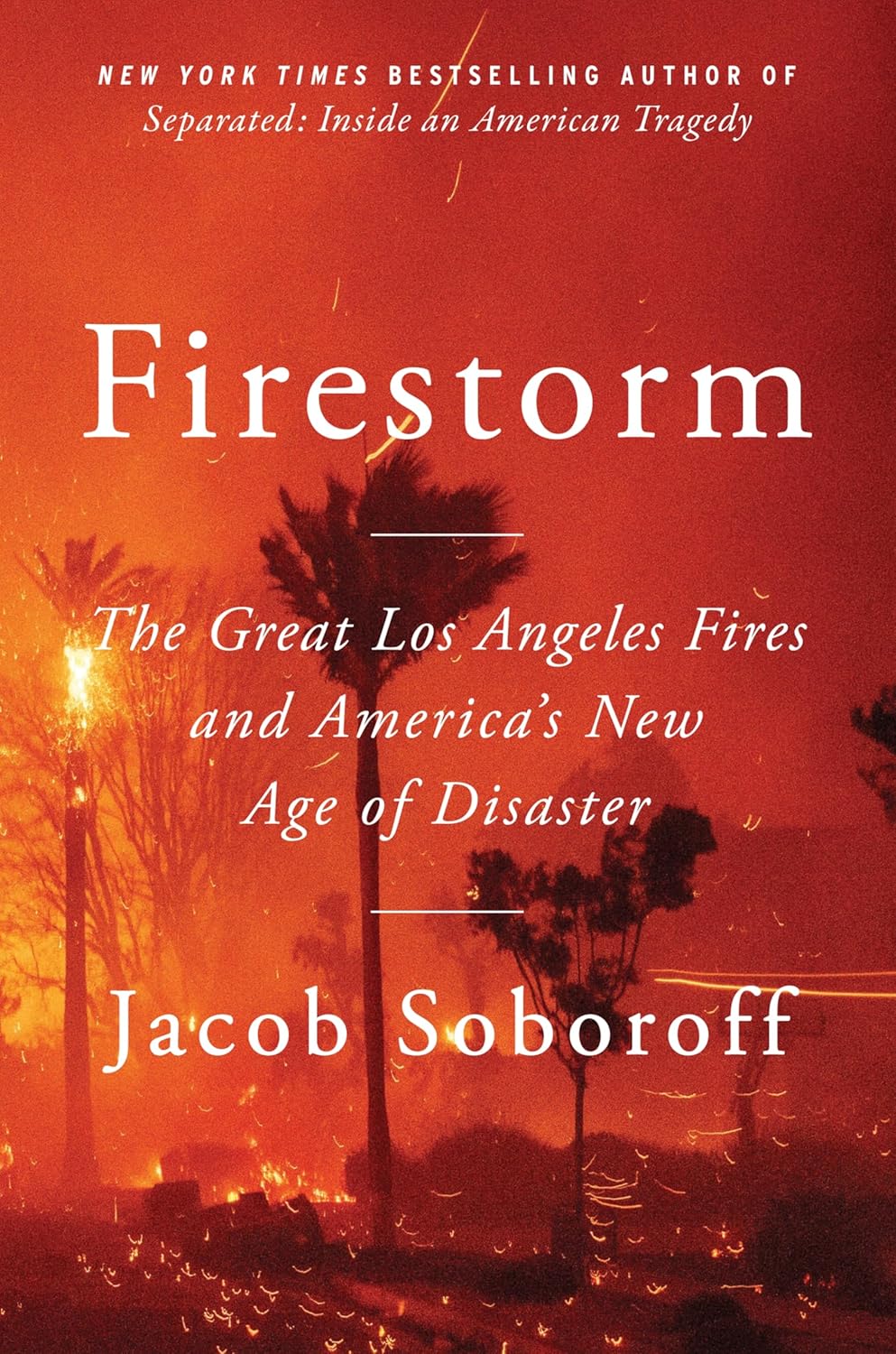
Book Review: Firestorm: The Great Los Angeles Fires and America’s New Age of Disaster by Jacob Soboroff
Introduction
Jacob Soboroff, MSNBC/MS NOW senior correspondent and author of the New York Times bestseller Separated, delivers a visceral, firsthand account in Firestorm (2026). At ~272 pages (Mariner Books/HarperCollins), the book chronicles the devastating January 2025 Los Angeles wildfires—primarily the Palisades Fire and Eaton Fire—that became America’s costliest wildfire event, destroying thousands of structures, claiming lives, and scorching tens of thousands of acres. Soboroff, a Pacific Palisades native who covered the blaze live as it engulfed his childhood home and landmarks, blends memoir, on-the-ground reporting, and urgent analysis. Praised as a “gripping, unshakeable firsthand account” (San Francisco Chronicle) and reading “like a sci-fi thriller” (Los Angeles Times), it’s a love letter to L.A., a warning about climate-fueled disasters, and a call for reckoning in what Soboroff calls America’s “new age of disaster.” Released just a year after the fires, it feels immediate and prophetic.
Content and Structure
The narrative unfolds in real time, drawing from Soboroff’s reporter’s notebook during nearly two weeks of relentless coverage. It begins on January 7, 2025, with a frantic text from his brother: a massive plume rising behind their family home in the Palisades. Soboroff rushes to report live, witnessing childhood memories “carbonize”—his birthplace hit hard, favorite spots incinerated, even his old preschool in flames.The book interweaves:
- Minute-by-minute scenes: Evacuations, firefighters battling infernos, residents fleeing the Eaton Fire in Altadena.
- Voices from the ground: Displaced families, first responders risking lives, meteorologists explaining tinderbox conditions, politicians (including Gov. Gavin Newsom’s desperate calls amid signal loss), and experts on climate, infrastructure, and misinformation.
- Personal stakes: Soboroff’s family group chats, emotional processing, and reflections on covering trauma at home after years abroad (border crises, Ukraine, Haiti).
Later sections zoom out: interviews with scientists, emergency officials, and academics reveal systemic failures—deteriorating infrastructure, urban-wildland sprawl, climate change, and real-time disinformation (e.g., amplified on social media). Soboroff frames the fires as a “harbinger”—the “fire of the future”—not isolated but a preview of cascading disasters.
Key Themes and Takeaways
Core is the collision of personal loss and planetary crisis: fire as a “time machine” showing past erasure and a dystopian future for Soboroff’s children. Themes include grief over a beloved city reduced to ash, the human cost of inaction (infrastructure neglect, climate denial), misinformation’s role in chaos, and resilience amid horror. Soboroff critiques how politics and denial exacerbated suffering while highlighting heroics—firefighters, community aid—and the need for reckoning to avert worse. It’s not just about L.A.; it’s a national mirror on vulnerability in an era of intensifying extremes.
Strengths and Criticisms
Strengths: Soboroff’s insider-outsider perspective (local yet national reporter) adds emotional depth and credibility. The pacing is relentless, voices vivid, and analysis balanced—personal without self-indulgence. Early reviews laud its cathartic power for survivors and urgency for broader audiences.Criticisms: Some note an awkward blend of memoir and reporting; the emotional intensity can overshadow deeper systemic dives. It prioritizes immediacy over exhaustive policy solutions.
Conclusion
Firestorm is essential reading—a heartbreaking, eye-opening dispatch from the front lines of climate reality. Soboroff transforms personal devastation into a broader warning: without change, more (and worse) is coming. Rated 4.6/5 for its raw power, timeliness, and humanity. Ideal for those grappling with disaster’s toll, climate futures, or L.A.’s soul. In a warming world, this isn’t history—it’s prelude.