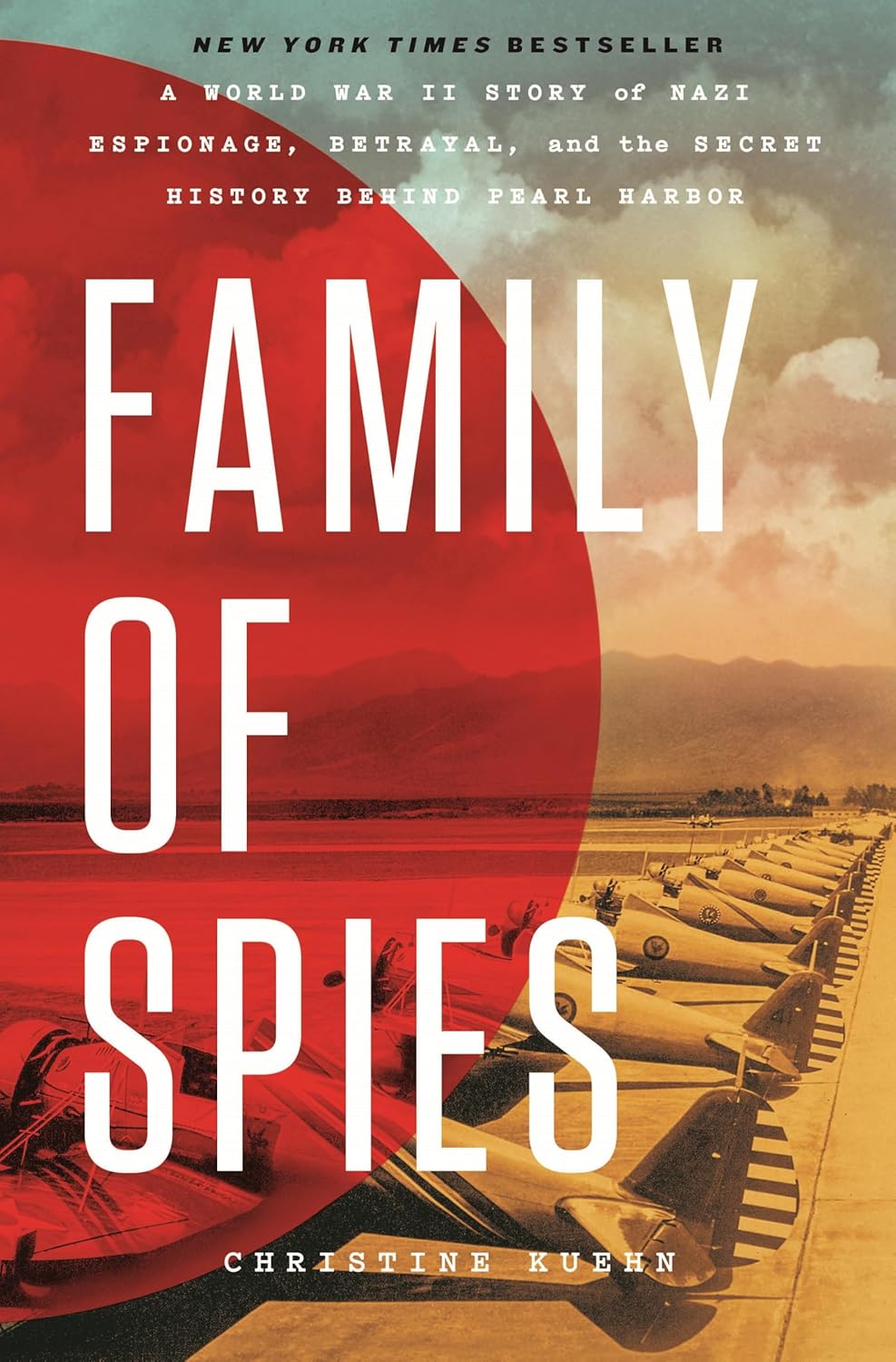
Family of Spies: A World War II Story of Nazi Espionage, Betrayal, and the Secret History Behind Pearl Harbor
Overview and Publication Details
“Family of Spies,” published by Celadon Books on November 25, 2025, is a non-fiction work blending memoir, family history, and investigative journalism. The author, Christine Kuehn, a journalist, recounts her decades-long discovery of a hidden family secret: her German grandparents and aunt were involved in Nazi-linked espionage that supported Japanese intelligence efforts leading to the attack on Pearl Harbor. The book, approximately 272 pages, alternates between Kuehn’s personal quest for truth—sparked by a 1994 letter from a historian—and the historical events of the 1930s and 1940s. It draws on family documents, FBI files, interviews, and archival research to reconstruct this previously untold story.
Core Narrative and StructureThe book opens with Kuehn receiving an unexpected inquiry that forces her to confront her father, Eberhard Kuehn, about rumors of Nazi ties. Eberhard, who had concealed the truth for decades, gradually reveals fragments of the family’s past. The narrative shifts between two timelines: the author’s modern investigation and the historical account of the Kuehn family in Nazi Germany and Hawaii.
In the 1930s, Otto Kuehn, the author’s grandfather, and his wife Ruth (half-Jewish) become entangled with high-ranking Nazis, including Joseph Goebbels, through their daughter’s brief connection. Rather than persecution, the family is relocated to Hawaii in 1935 under orders to spy on the U.S. Pacific Fleet at Pearl Harbor. Posing as a businessman running a steel company, Otto establishes a residence overlooking the naval base, hosting parties for American officers to gather intelligence on ship movements, defenses, and troop numbers. Ruth and their daughter actively participate, passing information to Japanese contacts while shielding young Eberhard from the operation.
The espionage culminates in the events surrounding December 7, 1941. Otto is arrested shortly after the attack, tried as the only person convicted in connection with planning it, sentenced to death (later commuted), and eventually deported. The rest of the family faces internment and deportation, while Eberhard, then a young adult, chooses to remain in the U.S. and suppress his heritage.
Key Historical and Personal Insights
Kuehn examines the mechanics of amateur espionage: Otto’s lavish but suspicious lifestyle, frequent visits to the Japanese consulate, and the FBI’s surveillance through informants and wiretaps. The book explores debates over the intelligence’s actual impact on the attack, while detailing the family’s internal dynamics, including secrecy, denial, and the psychological toll on Eberhard.The author’s journey adds emotional depth—she grapples with shock, grief, and ethical questions about legacy and forgiveness. Interwoven are broader contexts: Nazi propaganda’s reach, the vulnerability of Pearl Harbor defenses, and the human cost of wartime secrets.
Tone, Style, and Strengths
Written in clear, engaging prose, the book maintains a fast-paced, propulsive rhythm despite its dual timelines. Kuehn balances meticulous research with personal vulnerability, avoiding sensationalism while acknowledging the story’s gravity. It offers fresh details on a well-known historical event without claiming to rewrite its causes entirely, focusing instead on this family’s niche but shocking role.Critics praise its absorbing quality, thorough documentation, and emotional resonance, describing it as a compelling mix of true-crime intrigue and family memoir.
Overall Assessment
“Family of Spies” provides a gripping, intimate perspective on espionage, betrayal, and the long shadows of World War II. It illuminates overlooked aspects of Pearl Harbor’s prelude while exploring how hidden histories shape identity across generations. The work stands as a valuable addition to WWII literature, particularly for readers interested in intelligence operations, family secrets, and the personal ramifications of global conflict.