
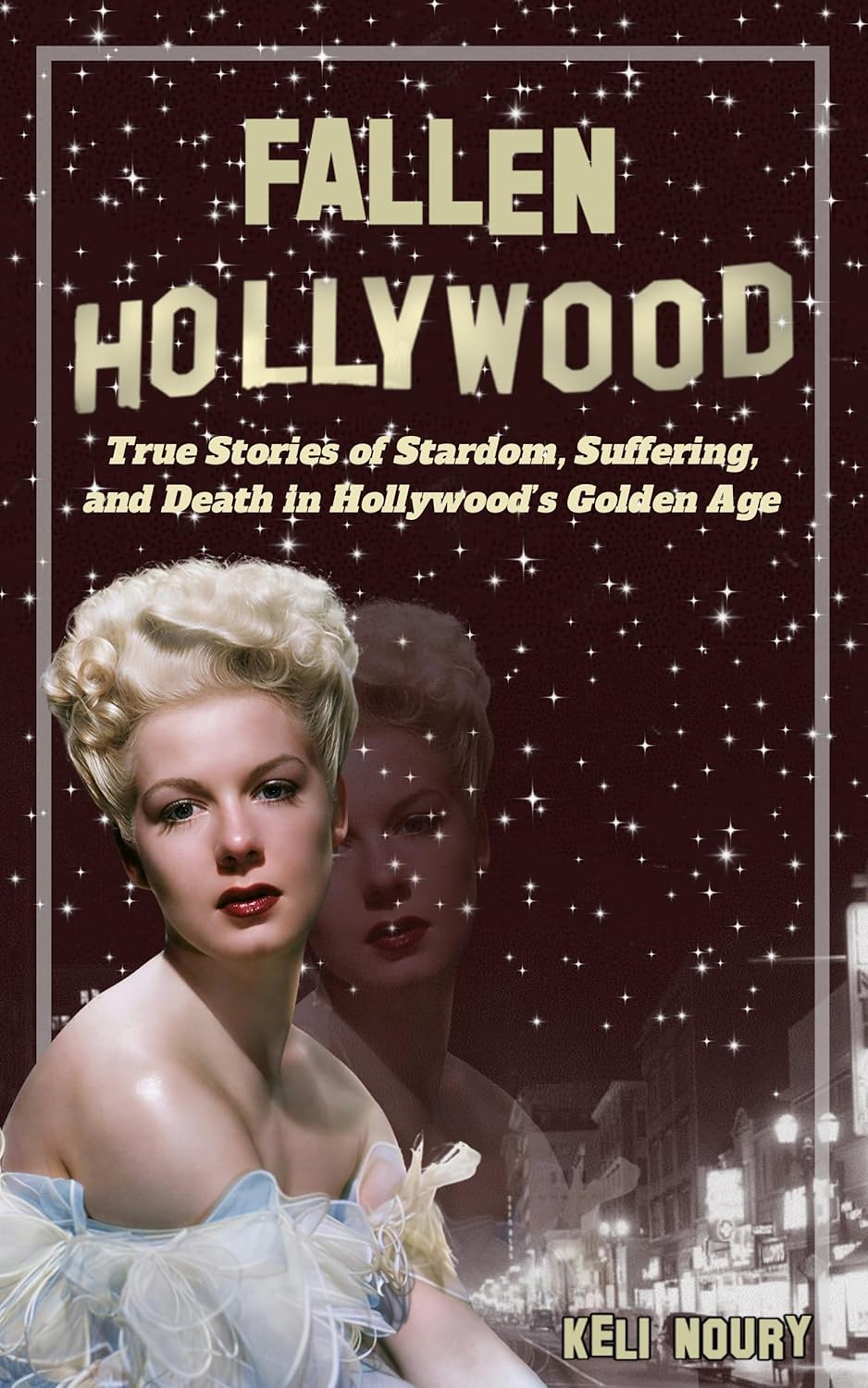
Book Review: Fallen Hollywood: True Stories of Stardom, Suffering, and Death in Hollywood’s Golden Age by Keli Noury
Introduction
Keli Noury’s Fallen Hollywood (2025), part of the 18-book “Dark Side of Hollywood” Kindle series, peels back the glittering facade of Tinseltown’s Golden Age (roughly 1920s–1950s) to expose the human cost of fame. At around 200–250 pages (typical for the series’ e-book format), it’s a compilation of biographical sketches focusing on stars whose lives ended in tragedy, abuse, addiction, or scandal. Noury, an author specializing in Hollywood’s underbelly, delivers a sobering counter-narrative to the era’s mythologized glamour. Released late 2025, it taps into renewed interest in Old Hollywood’s shadows—amplified by modern reckonings with abuse, mental health, and industry exploitation. The book is raw and unflinching, emphasizing that stardom often exacted devastating prices: emotional scars, silenced voices, and premature deaths.
Content and Structure
The book profiles a selection of iconic figures whose public personas masked profound suffering. Rather than a single narrative, it’s a series of interconnected true stories, each highlighting abuse, addiction, hidden identities, family trauma, or untimely ends.Key profiles include:
- Joan Crawford: The ruthless parenting that left her adopted children (notably Christina) with lifelong emotional wounds, as detailed in Mommie Dearest-inspired accounts.
- Margaux Hemingway: The model’s tragic spiral into depression, substance abuse, and suicide, echoing her grandfather Ernest’s fate.
- Rock Hudson: His courageous (yet private) battle with AIDS in the 1980s, the secrecy forced by 1950s–60s Hollywood homophobia, and the industry’s role in concealing his illness.
- Other figures touch on child-star exploitation (e.g., Judy Garland’s studio-forced addictions and breakdowns), controversial legacies (Kirk Douglas, Errol Flynn, Bing Crosby), and broader patterns of vice, scandal, and silenced suffering.
Noury draws from historical records, biographies, interviews, and public accounts to illustrate how the studio system—controlling images, suppressing scandals, and demanding perfection—contributed to downfall. The tone is matter-of-fact and somber, avoiding sensationalism while underscoring silence, denial, and the “happy ending” myth’s cruelty.
Key Themes and Takeaways
Central is the dark bargain of fame: glamour built on exploitation, hidden pain, and disposability. Themes include child-star trauma, LGBTQ+ secrecy in a repressive era, parental abuse enabled by celebrity power, addiction as industry coping mechanism, and retroactive moral judgment. Noury shows how the Golden Age’s shine often masked systemic failures—studio control, gender dynamics, and cultural taboos—that left stars isolated and broken. The book serves as a cautionary tale: stardom rarely delivers lasting fulfillment; for many, it accelerated suffering and death.
Strengths and Criticisms
Strengths: Concise, accessible profiles make it easy to read in bursts. Noury compiles lesser-discussed angles with empathy, humanizing icons often reduced to scandal. It fits the series’ focus on unflinching truth, appealing to true-crime and Hollywood-history fans.Criticisms: As part of a prolific Kindle series, some entries feel formulaic or reliant on well-trodden sources (e.g., Mommie Dearest, public AIDS narratives). Depth varies—more vignette than deep biography—and the relentless tragedy can feel overwhelming without much redemption or analysis.
Conclusion
Fallen Hollywood is a stark reminder that behind every silver-screen legend lies a human story of pain. Noury doesn’t glorify suffering but exposes it, challenging romanticized views of the Golden Age. Ideal for readers interested in Hollywood’s shadows, celebrity biographies, or cultural critiques of fame. Rated 4.1/5 for its raw honesty and accessibility. In an era revisiting industry accountability, this book adds to the conversation: stardom’s cost was often paid in silence, scars, and shortened lives.