
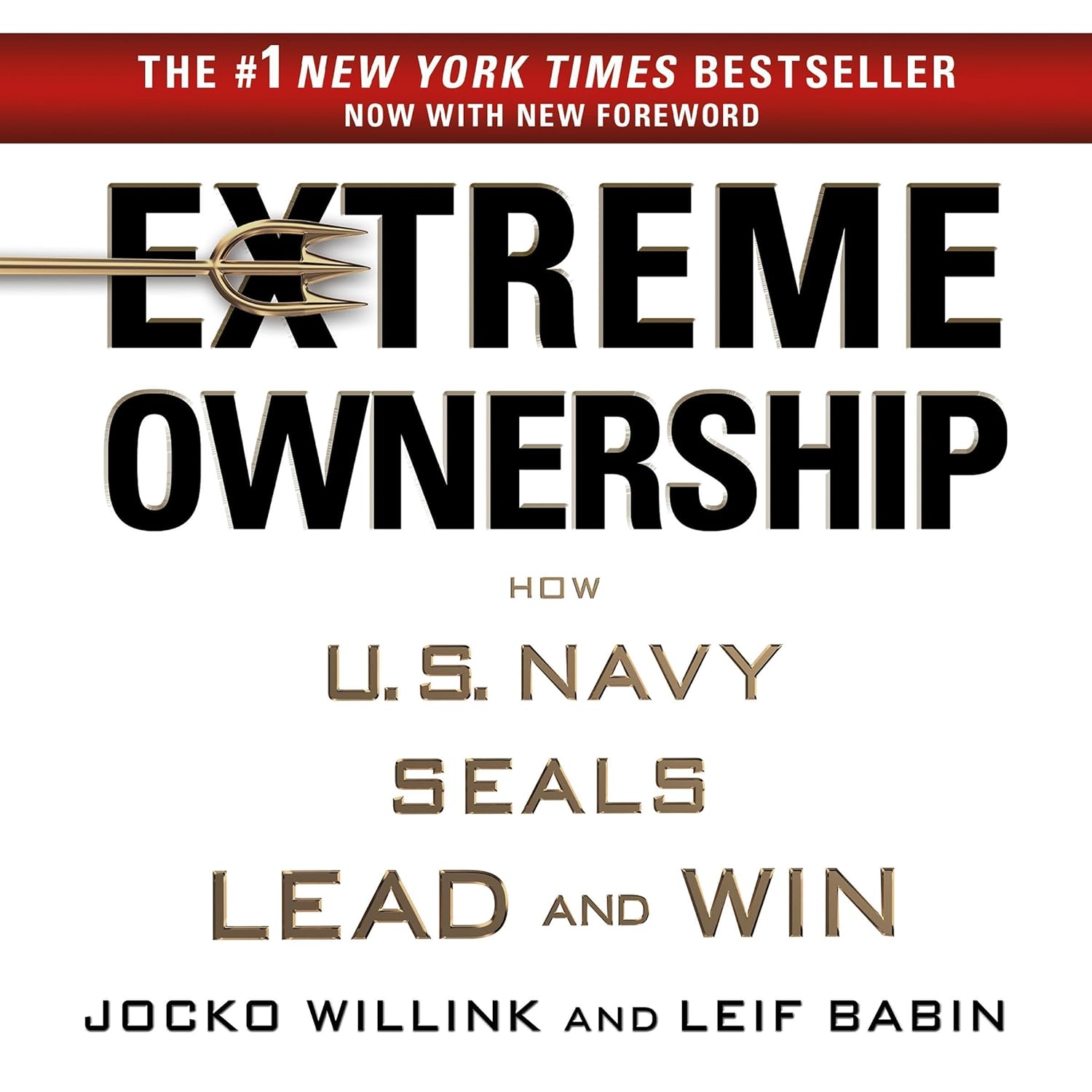
Extreme Ownership: How U.S. Navy SEALs Lead and Win
Introduction
Extreme Ownership (2015) is a leadership manifesto born from the crucible of combat in Iraq’s Battle of Ramadi. Co-authored by former Navy SEAL officers Jocko Willink (task unit commander) and Leif Babin (platoon leader), the book distills hard-won lessons from high-stakes SEAL operations into universal principles for leading teams to victory—in war, business, or life. At ~320 pages, it’s part gripping war memoir, part practical guide. The core idea: true leaders take extreme ownership—total responsibility for everything in their world, no excuses, no blame-shifting. In 2026, with remote teams, volatile markets, and constant pressure, its no-nonsense approach remains a bestseller and go-to for executives, entrepreneurs, and anyone seeking accountability-driven success.
Content and Structure
The book divides into three parts: Winning the War Within (individual mindset), Laws of Combat (team execution), and Sustaining Victory (long-term application). Each of the 12 chapters follows a consistent format:
- A combat story from Ramadi—intense, detailed accounts of SEAL missions amid chaos, IEDs, sniper fire, and urban warfare.
- The leadership principle derived from that experience.
- A real-world business application, drawn from the authors’ post-SEAL consulting firm, Echelon Front, where they helped Fortune 500 companies, startups, and teams turn around failures.
Key chapters cover principles like:
- Extreme Ownership — Leaders own every success and failure; no bad teams, only bad leaders.
- No Bad Teams, Only Bad Leaders — Performance reflects leadership quality.
- Believe — Leaders must understand and sell the “why” of the mission.
- Cover and Move — Teams support each other like SEALs in combat.
- Simple — Plans must be clear and executable.
- Prioritize and Execute — Focus on the highest-priority task amid chaos.
- Decentralized Command — Empower juniors to lead within intent.
- Discipline Equals Freedom — Structured habits create options.
The narrative alternates between Willink and Babin, adding authenticity. Combat tales are vivid and raw—losses, close calls, tactical decisions—while business examples show the principles applied to sales slumps, project failures, and corporate silos.
Key Themes and Takeaways
The book hammers radical accountability: blame no one else, fix what you can control, lead from the front. Ego kills teams; humility builds them. Leadership isn’t rank—it’s mindset and action. Other themes include clear communication, ego-checking, prioritizing under pressure, and leading up/down the chain. The SEAL ethos—teamwork over individualism, discipline as liberation—translates seamlessly to civilian challenges. Readers leave with tools: checklists, mental models, and a refusal to accept mediocrity.
Strengths and Criticisms
Strengths: The dual storytelling (combat + business) makes abstract ideas concrete and memorable. Principles are actionable, battle-tested, and free of fluff. Many credit it for career pivots, team turnarounds, and personal growth. The intensity inspires without sugarcoating.Criticisms: Some find it repetitive (each chapter mirrors the structure) or overly militaristic—aggressive tone may not suit every culture. It emphasizes individual responsibility so heavily that systemic issues (e.g., toxic workplaces) get less attention. Not a light read; the combat violence can be graphic.
Conclusion
Extreme Ownership delivers a blueprint for winning through relentless accountability and disciplined execution. It’s not motivational fluff—it’s a demanding call to own your world. Ideal for leaders facing high stakes, whether in boardrooms or battlefields. Rated 4.7/5 for impact and practicality. If you’re tired of excuses (yours or others’), this book will challenge and equip you. Pair it with the authors’ podcast or follow-ups like The Dichotomy of Leadership for balance. In a world quick to point fingers, extreme ownership remains revolutionary.