
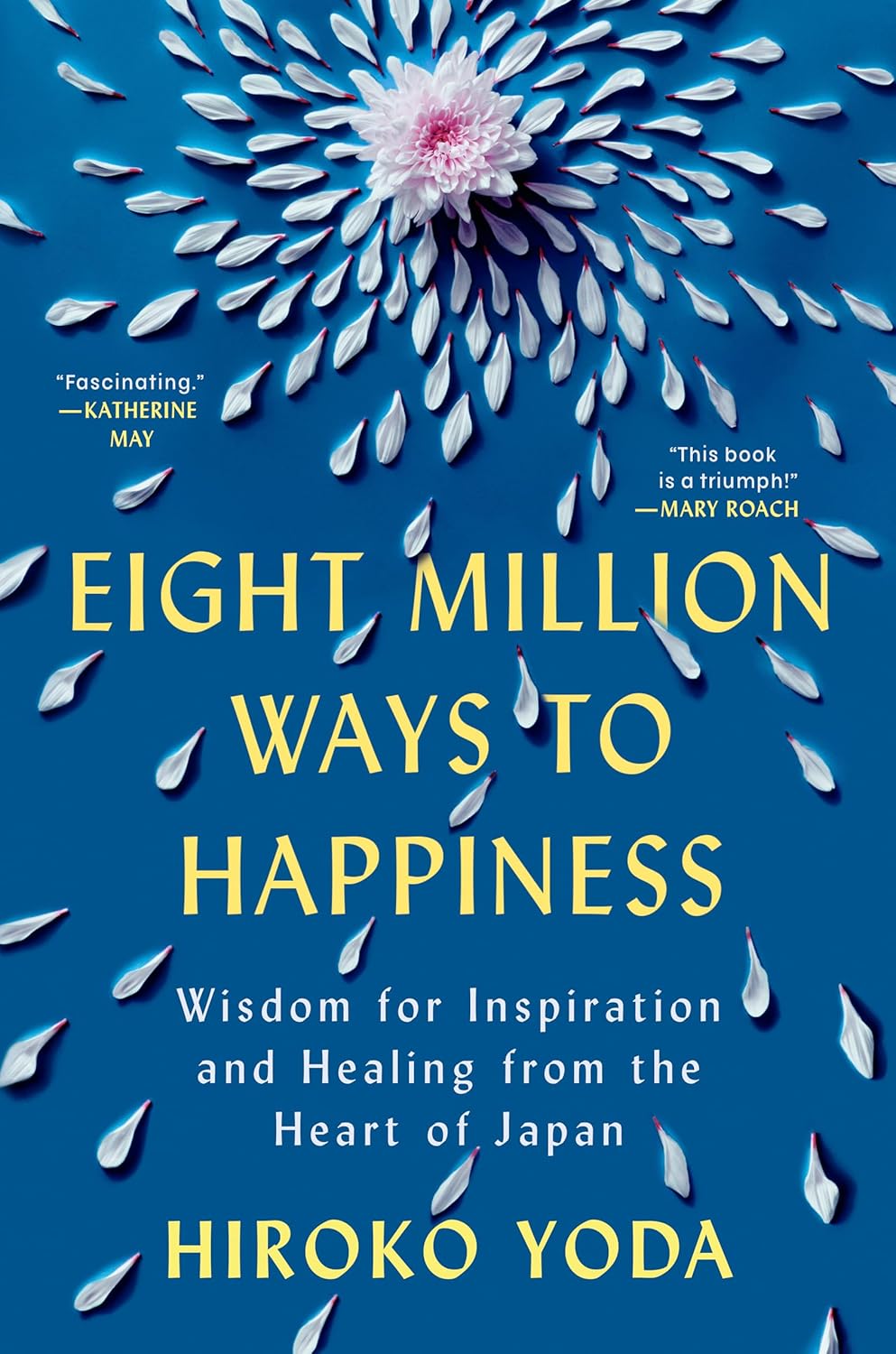
Eight Million Ways to Happiness: Wisdom for Inspiration and Healing from the Heart of Japan
Overview and Publication Details
“Eight Million Ways to Happiness: Wisdom for Inspiration and Healing from the Heart of Japan” is a non-fiction work by Hiroko Yoda, a certified Shinto cultural historian, former Tokyo editor for CNN Go, and field producer for National Geographic TV. Published on December 30, 2025, by Tiny Reparations Books (an imprint of Penguin Random House), the hardcover edition spans approximately 368 pages, with audiobook and eBook formats also available. The title draws from the Japanese concept of “yaoyorozu no kami” (eight million gods), reflecting Shinto’s belief in countless spirits inhabiting the natural world. The book combines memoir, cultural exploration, and practical guidance to offer a path toward joyful, balanced living rooted in Japan’s spiritual traditions.
Core Content and Structure
The narrative centers on Yoda’s personal decade-long journey through Japan’s spiritual landscape, prompted by profound grief following the loss of her mother and later her father. This odyssey becomes a framework for examining how ancient practices—primarily Shinto, but also elements of Buddhism, folk traditions, and nature reverence—provide tools for reconnection, healing, and finding happiness amid modern turbulence.The book weaves personal storytelling with cultural reporting. Yoda travels across Japan, participating in rituals such as shrine dances, seasonal festivals, purification ceremonies, and interactions with sacred sites, forests, and everyday natural elements. She explores concepts like kami (spirits or deities present in all things), harmony with nature, impermanence, gratitude, and the flexible, non-dogmatic approach to spirituality characteristic of Japanese traditions.Key sections address:
- Reconnecting with the natural world to counter disconnection and burnout.
- Rituals and mindfulness practices that foster presence, emotional release, and alignment of mind and heart.
- Lessons from Shinto’s emphasis on purity, renewal, and coexistence with the environment.
- Practical applications for contemporary life, such as slowing down, tuning into seasonal rhythms, and cultivating inner peace without rigid doctrine.
Yoda contrasts Japan’s syncretic, adaptive spirituality with more prescriptive Western approaches, highlighting its accessibility and relevance for anyone seeking inspiration and emotional healing.
Key Insights and Themes
The work emphasizes Japan’s unique view of spirituality as interwoven with daily life and nature rather than confined to institutions. Central ideas include embracing impermanence (mono no aware), finding divinity in the ordinary, and using ritual to process grief and stress. Yoda presents these not as exotic curiosities but as universal tools for resilience and joy. The book avoids overly academic tone, instead offering reflective, experiential insights supported by her lived encounters and historical context.
Tone, Style, and Strengths
Written in an intimate, reflective voice, the text blends vulnerability—sharing the author’s grief—with warmth and optimism. It is praised for its authenticity, depth of cultural insight, and relevance beyond Japan, appealing to readers interested in mindfulness, nature-based healing, or spiritual exploration without dogma. Early reception highlights its moving quality as a “pilgrimage” through traditions, with endorsements noting its timeliness for those navigating modern challenges.
Overall Assessment
“Eight Million Ways to Happiness” stands as a thoughtful, heartfelt guide that bridges personal healing with cultural wisdom. It offers readers a gentle yet profound invitation to rediscover joy through connection to nature, ritual, and spiritual flexibility. Ideal for those drawn to Japanese philosophy, grief recovery, or alternative paths to well-being, the book provides both inspiration and practical perspectives in an accessible, engaging format.