
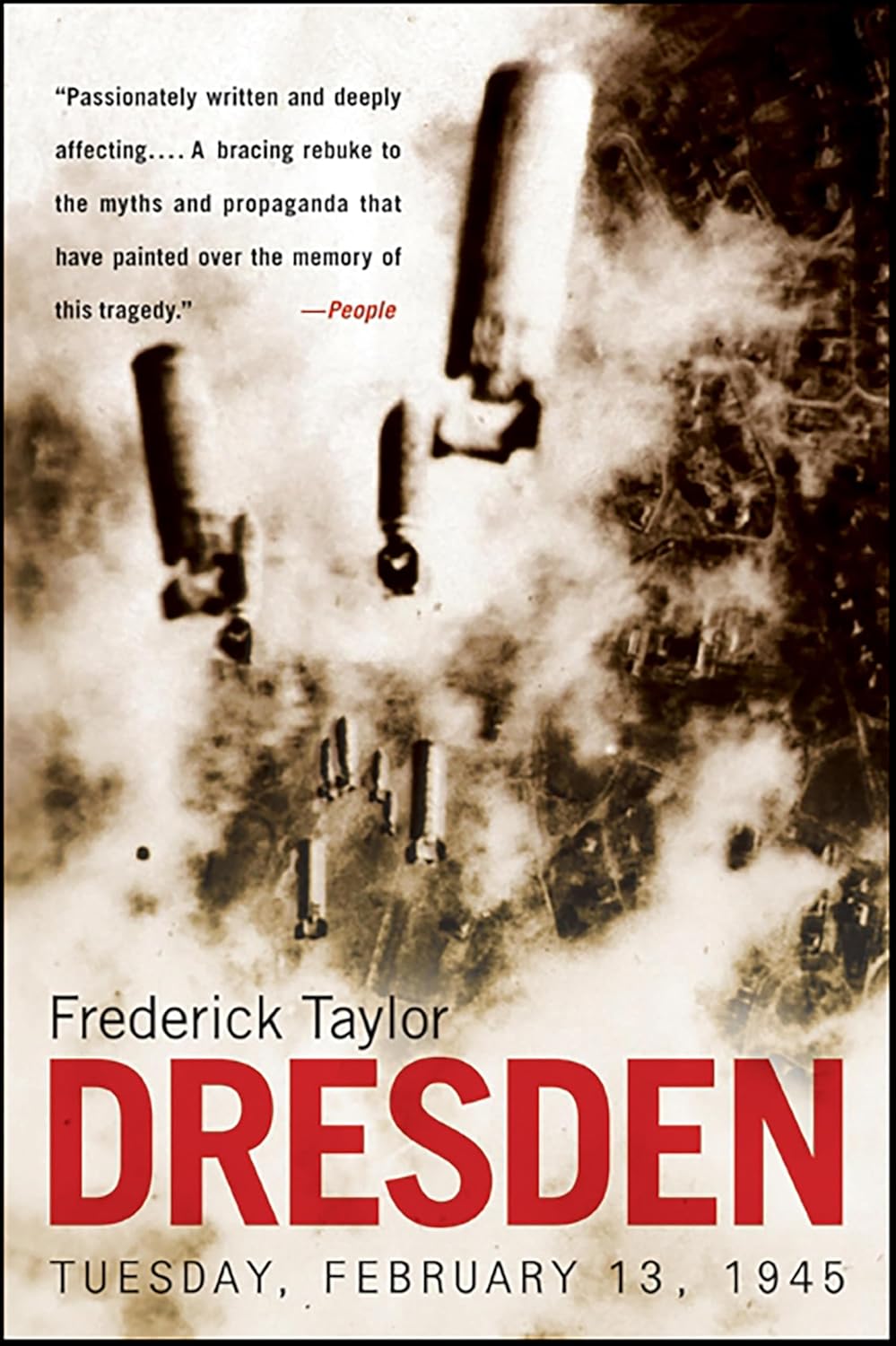
Dresden: Tuesday, February 13, 1945 by Frederick Taylor is a meticulously researched and highly readable historical account of one of the most controversial events of World War II: the Allied bombing of Dresden. First published in 2004 (with various editions since), it remains one of the most balanced and detailed examinations of the raid that turned the beautiful Saxon city into a firestorm.
What the Book Covers
On the evening of Tuesday, February 13, 1945—just weeks before the end of the war in Europe—Dresden’s air-raid sirens sounded as they had many times before. This time, however, the attack was devastating. Over two main waves (British RAF followed by American USAAF), more than 4,500 tons of high-explosive and incendiary bombs were dropped on the largely unprotected city. The result was a massive firestorm that killed an estimated 25,000 people and destroyed much of the historic center.Taylor’s book does far more than describe the bombing itself. It provides rich context:
- The history and cultural significance of Dresden before the war (often called “Florence on the Elbe”).
- The strategic situation in February 1945: the Soviet advance from the east, the chaos of millions of refugees, and the remaining German war industries in and around the city.
- The decision-making process on the Allied side — why Dresden was chosen, the role of RAF Bomber Command under Arthur Harris, and the involvement of the Americans.
- The mechanics of the raid: how the bombers navigated, marked targets, and created the firestorm.
- The human experience on the ground: vivid accounts from survivors, firefighters, and even some of the airmen who flew the missions.
- The immediate aftermath and the long controversy that followed (including Nazi propaganda, postwar debates about war crimes, and inflated death toll claims).
Taylor draws on newly accessible archives after the fall of East Germany, interviews with survivors and aircrew, and a wide range of German, British, and American sources to present a nuanced picture.
Key Strengths
- Balanced perspective — Taylor neither defends nor condemns the bombing in simplistic terms. He explains the military context while acknowledging the horror and the moral questions it raises.
- Human focus — The book brings the suffering of ordinary civilians and the experiences of the bomber crews to life without sensationalism.
- Debunking myths — It addresses exaggerated claims (such as wildly inflated death tolls or stories of deliberate strafing of civilians) while still confronting the undeniable tragedy.
- Clear, engaging writing — Despite its scholarly depth, the book reads like a compelling narrative history.
Tone
The tone is sober, respectful, and analytical. Taylor is appalled by the scale of destruction and loss of life, yet he places the event firmly in the broader context of total war. He avoids easy moral judgments, instead encouraging readers to wrestle with the difficult realities of wartime decision-making.
Who Should Read It
- Anyone interested in World War II, aerial bombing campaigns, or the ethical dilemmas of modern warfare.
- Readers who want a detailed yet accessible account of the Dresden raid without extreme bias.
- Those fascinated by how history is remembered and debated (the bombing remains controversial to this day).
In short, Dresden: Tuesday, February 13, 1945 is the definitive modern account of the bombing that destroyed one of Europe’s most beautiful cities in the final months of the war. Frederick Taylor combines thorough research, vivid storytelling, and thoughtful analysis to examine both the military operation and its devastating human cost.
It is a sobering, important book that helps readers understand one of the most haunting episodes of the Second World War. Highly recommended for history enthusiasts who appreciate nuance and depth.