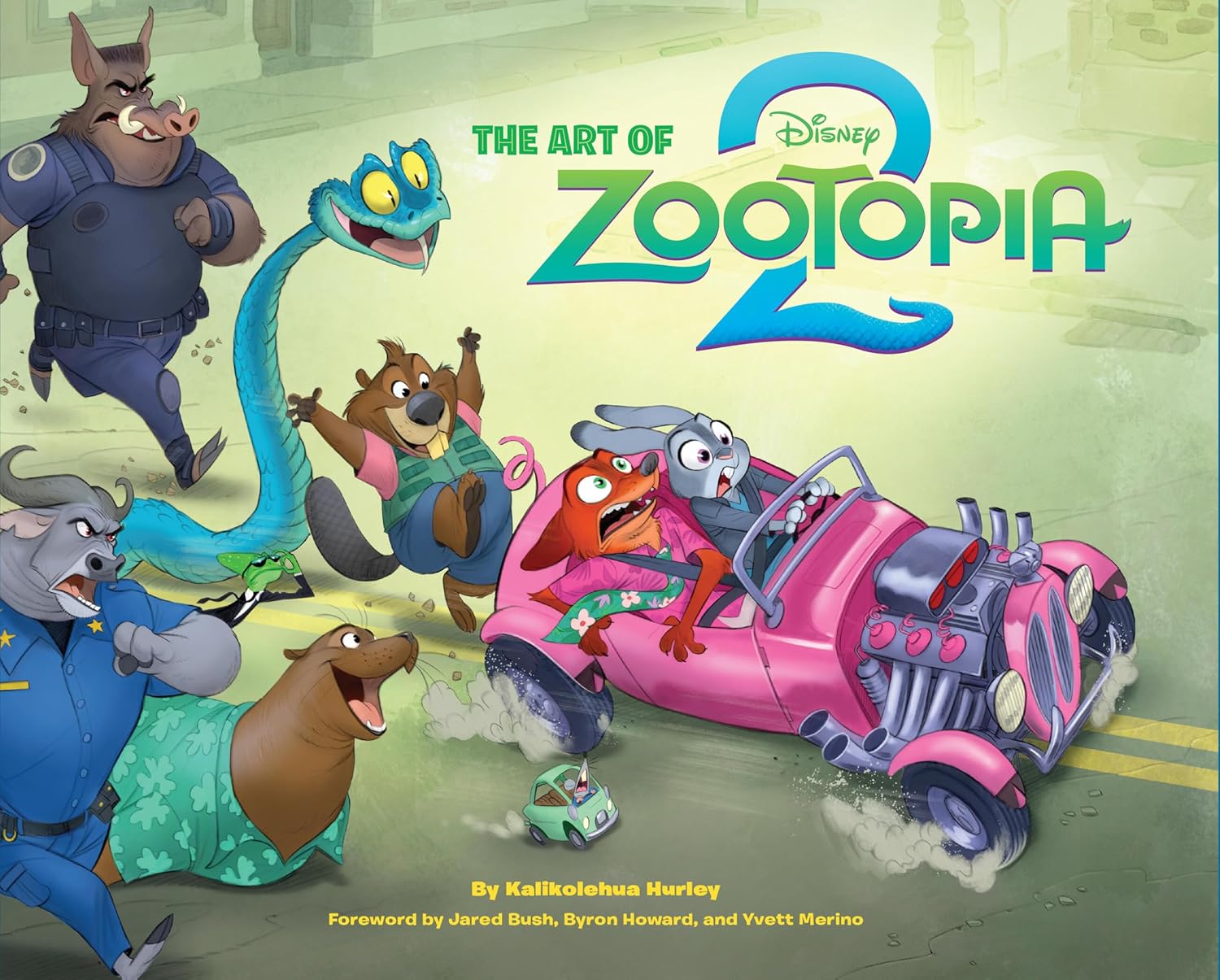
Disney The Art of Zootopia 2
Published by Chronicle Books in November 2025, Disney The Art of Zootopia 2 (written by Kalikolehua Hurley) continues the respected tradition of Disney’s “Art of” series. This hardcover volume offers an intimate, behind-the-scenes exploration of the creative process behind Walt Disney Animation Studios’ Zootopia 2 — one of the studio’s most anticipated sequels in recent years. Spanning approximately 172–178 pages, the book presents a carefully curated collection of visual development materials accompanied by thoughtful commentary from key members of the filmmaking team.
The book opens with a foreword contributed by directors Jared Bush and Byron Howard, together with producer Yvett Merino. Their introduction sets an appreciative tone, reflecting on the challenges and joys of returning to the richly built world of Zootopia nearly a decade after the original film’s success. What follows is a well-structured journey through the production pipeline, generally organized by major categories: character design, environmental world-building, story development, and keyframe sequences.
One of the strongest aspects of the volume is the sheer quality and variety of the artwork. Readers are treated to early concept sketches, refined character turnarounds, expressive model sheets, atmospheric colorscripts, detailed location paintings, and numerous storyboards. Particularly impressive are the evolutions shown in secondary and background characters — new inhabitants of the expanding Zootopia universe whose designs reflect careful consideration of anatomy, fur patterns, costume logic, and personality expression. Several abandoned directions and early iterations are included, offering valuable insight into how the final designs were reached through iteration.
The environmental art stands out as especially lavish. The book devotes generous space to new districts, markets, architecture, and natural extensions of the original city’s districts. Double-page spreads of the Marsh Market, subterranean reptile zones, updated downtown areas, and other expanded locales allow readers to appreciate the extraordinary level of detail that animators and background artists poured into even the smallest corners of the frame. These paintings frequently combine strong graphic design with believable ecological and cultural logic — a hallmark of the Zootopia franchise.
Compared with the art book for the first Zootopia film, this sequel volume places noticeably greater emphasis on storyboards. Entire sequences appear in storyboard form, which some readers may find rewarding while others might have preferred additional concept paintings or sculpts instead. This choice likely reflects the fact that the world-building foundation was already established in the original movie; as a result, Zootopia 2 focuses more on evolving character relationships, new plot threads, and comedic set-pieces rather than reinventing the entire setting from scratch. The inclusion of Easter eggs, rejected gags, and subtle nods to the first film adds welcome layers for returning fans.
Textual content is concise yet informative. Short passages from directors, art directors (including Meg Park), editors, and other department heads explain design decisions, thematic intentions, and technical solutions without overwhelming the visuals. The writing remains accessible — never overly technical — making the book suitable for casual viewers, younger readers interested in animation, and serious students of the craft alike.
Production values are consistent with other recent entries in the series: crisp printing, excellent color fidelity, a sturdy binding, and an attractive dust jacket. At a list price generally lower than many comparable large-format art books, it represents good value for the amount and quality of content provided.
In summary, Disney The Art of Zootopia 2 is a handsome, thoughtfully assembled companion piece that deepens appreciation for the film’s visual achievements. While it may not contain quite the same volume of radical early departures as the first book (due to the established universe), it excels in showcasing refined craftsmanship, imaginative expansion of an already beloved world, and the collaborative spirit behind a major animated feature. It is highly recommended for fans of the franchise, animation enthusiasts, and anyone who values seeing how extraordinary animated worlds are patiently constructed one brushstroke and sketch at a time.