
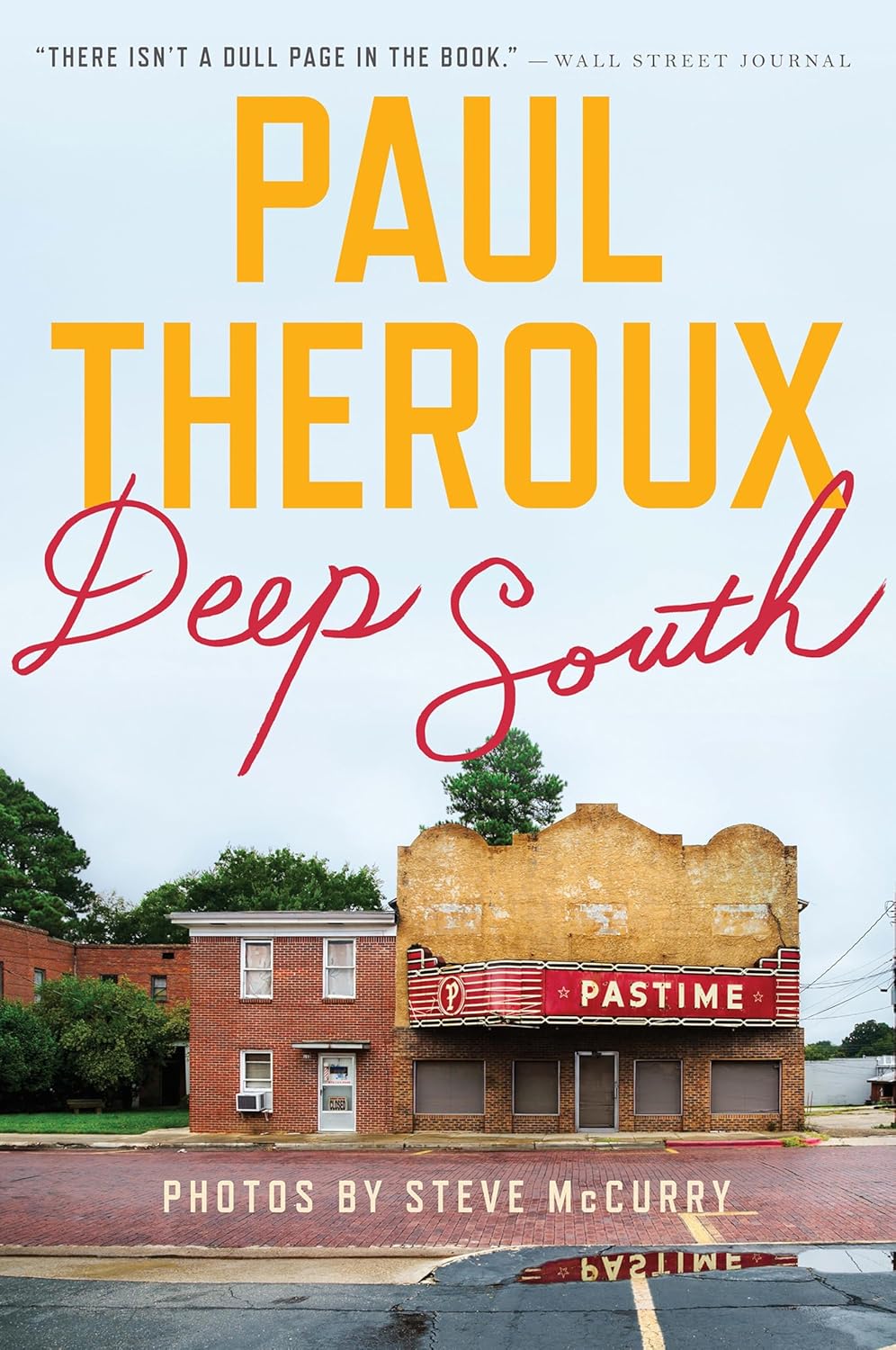
Deep South: Four Seasons on Back Roads
Introduction
Paul Theroux, renowned for his sharp-eyed travelogues across Africa, Asia, and beyond, turns inward in Deep South (2015) to explore an unfamiliar territory: his own country. At age 74, the veteran writer embarks on multiple road trips through the rural American South—primarily Mississippi, Alabama, Arkansas, Louisiana, Georgia, and South Carolina—over the course of a year. Eschewing tourist hotspots and interstates, he sticks to back roads, small towns, and overlooked communities. The result is a vivid, often sobering portrait of a region marked by persistent poverty, racial tensions, gun culture, resilience, and surprising warmth. Unlike Theroux’s foreign adventures, this is domestic discovery, and the book feels both intimate and urgent. It’s travel writing as social reportage, blending observation, conversation, and historical reflection.
Content and Structure
The book is organized around four seasonal journeys, each revealing how weather, economy, and mood shift across the year. Theroux drives alone in his car, stopping at diners, churches, gun shows, pawn shops, farms, and decaying main streets. He talks to everyone: Black farmers, white factory workers, churchgoers, gun enthusiasts, civil rights veterans, meth users, and small-business owners. No grand itinerary exists; he follows whim and impulse, letting encounters dictate the path.
Spring brings renewal but also floods and economic hardship. Summer exposes sweltering isolation and gun culture at fairs and shows. Fall highlights harvest struggles and lingering Civil War echoes. Winter reveals stark poverty—shuttered towns, abandoned homes, and people living hand-to-mouth. Theroux weaves in history: slavery’s legacy, Emmett Till’s murder, church burnings, Reconstruction’s failures, and modern inequality. He draws parallels to developing-world conditions he knows from Africa, noting red-dirt roads, subsistence living, and overlooked populations that feel like a “third world” within America. The narrative mixes dialogue-heavy scenes with meditative passages on landscape, food (fried catfish, barbecue), language, and the South’s paradoxical pride amid decline.
Key Themes and Observations
Theroux confronts uncomfortable truths without preachiness. Poverty is pervasive—trailer parks, food deserts, opioid scars—but so is hospitality; strangers invite him to meals or church. Racism lingers in casual remarks and segregated realities, yet he finds interracial friendships and shared struggles. Gun ownership is normalized and defended fiercely, often tied to self-reliance. He critiques absentee politicians and corporate exploitation while admiring local ingenuity and faith communities.The South emerges as a “dream with distortions”—beautiful yet broken, generous yet guarded. Theroux avoids stereotypes, letting people speak for themselves. His outsider-insider perspective (a New Englander with global experience) adds distance: he sees what natives might overlook, comparing Southern decline to post-colonial Africa.
Strengths and Criticisms
The book’s greatest strength is its humanity—vivid characters and unfiltered voices make it immersive and moving. Theroux’s prose is economical yet evocative, capturing the texture of places and conversations. At ~440 pages, it feels thorough without dragging.Some criticize it as overly bleak or outsider judgment, focusing too much on negatives (poverty, racism) while underplaying progress or urban South. Female voices are fewer, and the lone-traveler format limits depth in some areas. Still, the honesty—admitting surprise, discomfort, and occasional warmth—lends authenticity.
Conclusion
Deep South is essential reading for understanding modern America beyond headlines. It challenges assumptions, reveals hidden layers, and humanizes a region often reduced to caricature. Theroux doesn’t solve problems—he illuminates them through people and places. In an era of division, this book reminds us how travel (even domestic) fosters empathy. Highly recommended for fans of travel writing, social observation, or anyone curious about the real American South.