
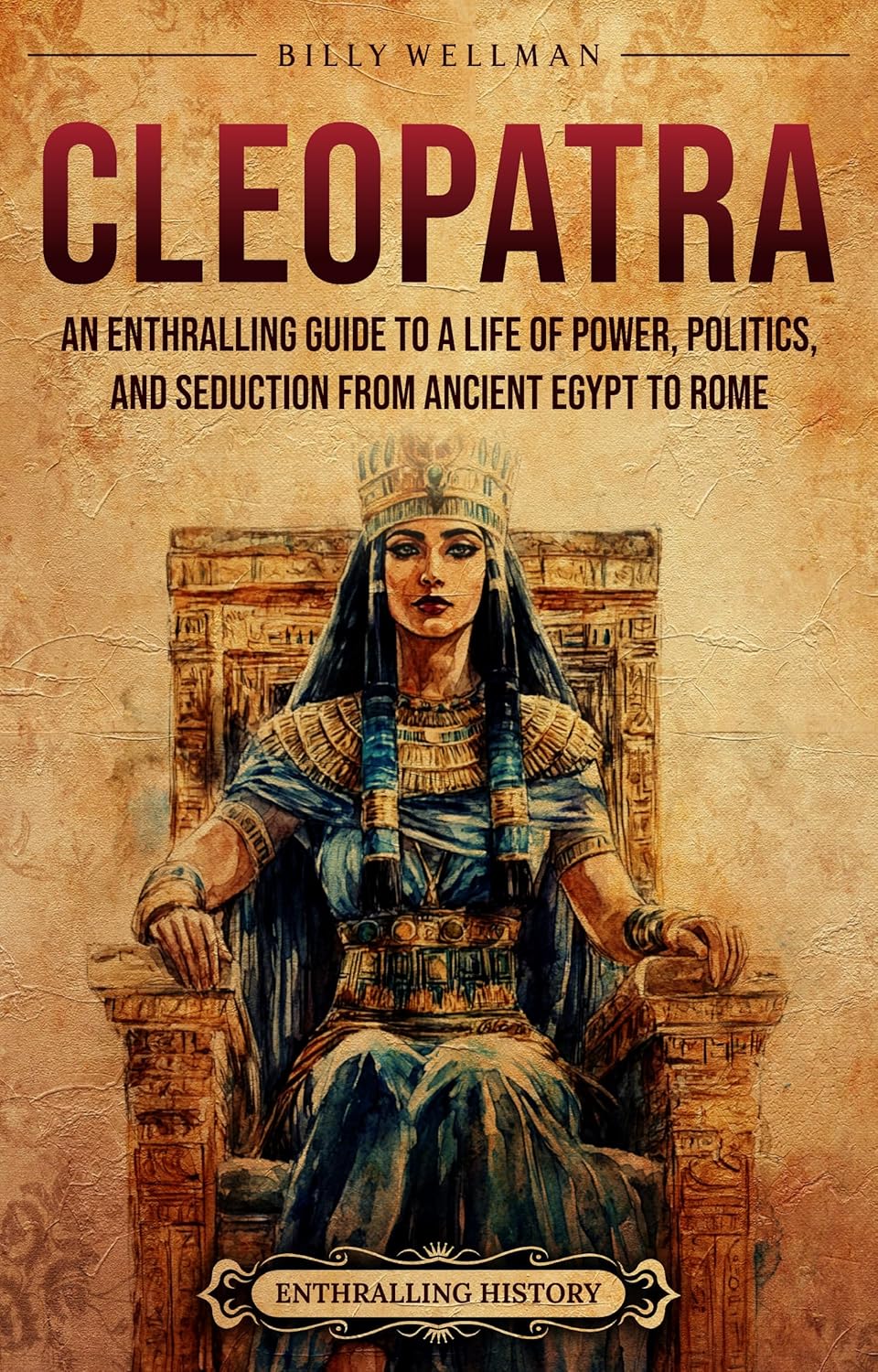
Cleopatra: An Enthralling Guide to a Life of Power, Politics, and Seduction from Ancient Egypt to Rome (Egyptian Mythology and History)
Overview and Publication Details
“Cleopatra: An Enthralling Guide to a Life of Power, Politics, and Seduction from Ancient Egypt to Rome” is a concise non-fiction biography published on January 5, 2026, by Billy Wellman as part of the “Egyptian Mythology and History” series. The paperback edition runs approximately 104 pages, with eBook and audiobook versions (narrated by Virtual Voice, lasting about 3 hours and 5 minutes) also available through independent publishing channels. The book aims to present a straightforward, myth-busting portrait of Cleopatra VII Philopator, the last active ruler of the Ptolemaic Kingdom of Egypt, emphasizing her intelligence, strategic acumen, and political maneuvering over romanticized or vilified narratives.
Core Content and Structure
The book focuses on Cleopatra’s life from her ascent to power amid familial intrigue to her alliances with Rome’s most powerful men and her ultimate downfall. It begins with her background as a member of the Macedonian-Greek Ptolemaic dynasty, highlighting the complex court politics, sibling rivalries, and civil wars that shaped her early reign. Key sections cover:
- Her strategic consolidation of power in Egypt, including the expulsion and later reconciliation with her brother Ptolemy XIII.
- Her pivotal relationship with Julius Caesar, portrayed as a calculated political partnership that secured her throne and produced a son, Caesarion.
- Her alliance with Mark Antony, framed as both romantic and pragmatic, aimed at preserving Egyptian independence against Octavian’s rising influence.
- The broader geopolitical context of the late Roman Republic, including the power struggles following Caesar’s assassination and the formation of the Second Triumvirate.
Wellman addresses common misconceptions, such as the overemphasis on seduction as her primary tool. Instead, the narrative underscores her multilingual abilities (she reportedly spoke nine languages, including Egyptian), diplomatic skill, economic reforms, and efforts to present herself as a living incarnation of Isis to legitimize her rule among her subjects.
The text draws on ancient sources like Plutarch, Cassius Dio, and Suetonius, while acknowledging their Roman biases that often painted Cleopatra as manipulative or decadent. The author seeks to rehabilitate her image as a capable leader who navigated immense pressures to protect her kingdom.
Key Themes and Insights
Central themes include female leadership in a patriarchal world, the clash between Hellenistic Egypt and Republican Rome, and the role of propaganda in shaping historical memory. The book explores how Cleopatra used alliances, image-building, and military support to delay Egypt’s annexation, while also examining the personal and political costs—family betrayals, the loss of independence, and her dramatic suicide in 30 BCE following defeat at Actium.The writing style is accessible and direct, avoiding dense academic jargon to deliver a clear chronological account with occasional interpretive commentary on her decisions and legacy.
Tone, Style, and Strengths
The tone is engaging and corrective, aiming to “cut through the noise” of legend and Roman smear campaigns to reveal a “sharp thinker” and “bold leader.” Its brevity makes it suitable as an introductory or supplementary read rather than an exhaustive scholarly work. Strengths lie in its focus on political strategy and power dynamics over sensational romance, offering a balanced view that respects Cleopatra’s agency.
Overall AssessmentThis guide provides a compact, readable introduction to Cleopatra’s life, effectively challenging stereotypical portrayals while grounding the story in historical context. It suits readers seeking a quick yet insightful overview of one of antiquity’s most fascinating figures, particularly those interested in ancient politics, gender in leadership, or the transition from Ptolemaic Egypt to Roman province. While not groundbreaking in new research, it serves as a clear, myth-dispelling entry point into her complex legacy.