
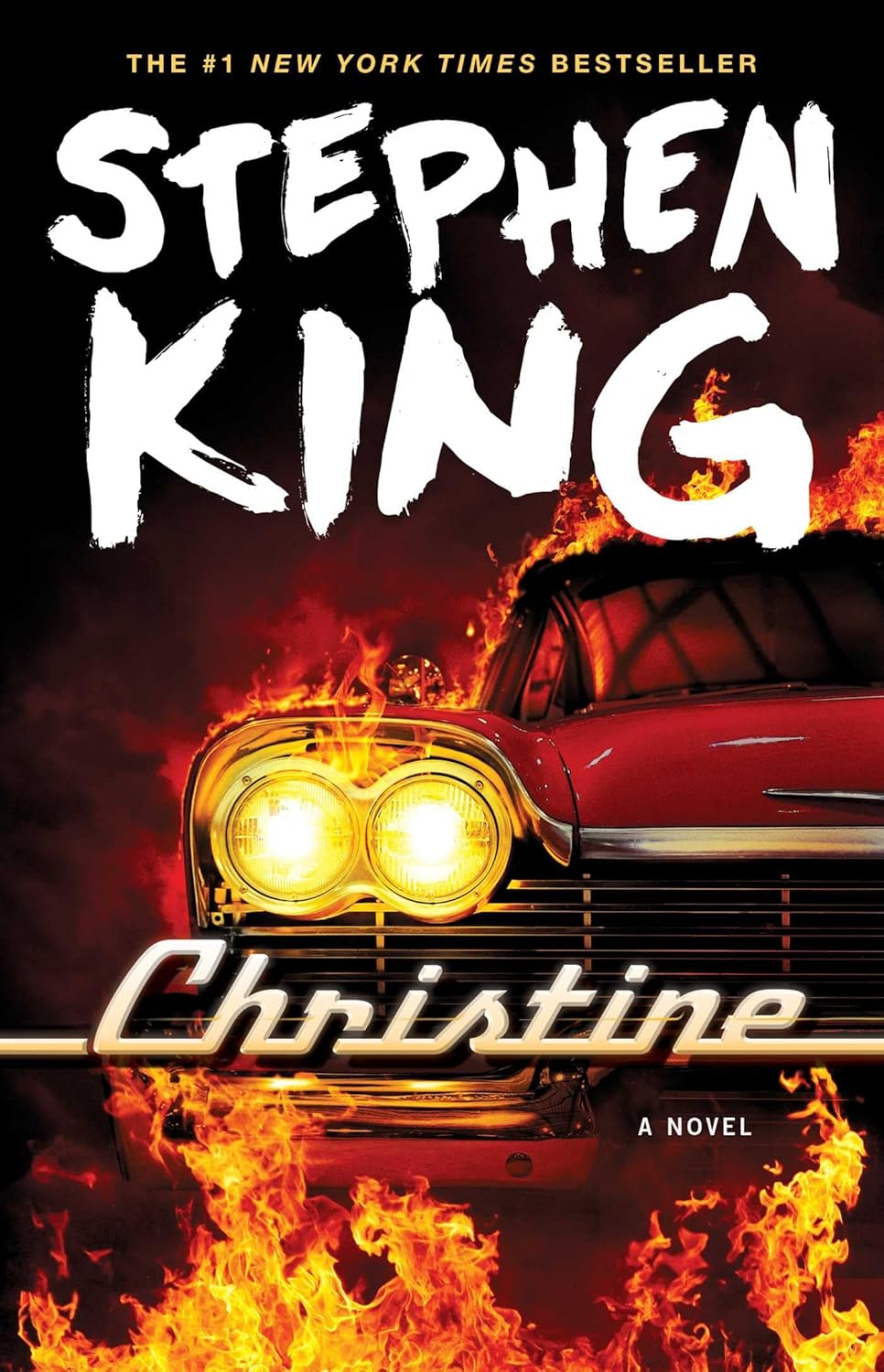
Christine by Stephen King is a chilling, character-driven horror novel first published in 1983. It remains one of King’s most iconic works, blending coming-of-age drama, obsessive love, supernatural possession, and classic 1950s car culture into a slow-burn nightmare about a boy, a girl, and a very jealous automobile.
Plot Overview
The story is narrated mostly by Dennis Guilder, a high-school senior in 1978 Libertyville, Pennsylvania. Dennis watches his best friend, Arnie Cunningham—a shy, awkward, perpetually bullied teenager—undergo a dramatic transformation after he buys a beat-up 1958 Plymouth Fury in terrible condition from an old man named Roland LeBay.
The car is named Christine. From the moment Arnie sees her, he is obsessed. He talks to her, spends every spare moment restoring her, and begins to change: he stands up to bullies, gets a girlfriend (the beautiful and kind Leigh Cabot), gains confidence, and starts dressing and acting like a 1950s greaser. At first Dennis is happy for his friend. Then he realizes something is deeply wrong.
Christine is not just a car. She is alive, malevolent, and violently possessive of Arnie. When anyone threatens Arnie or damages the car—even slightly—Christine exacts horrific revenge. She repairs herself overnight, grows stronger, and begins to act independently. She stalks and terrorizes anyone who crosses Arnie. She kills. She burns. She will not let Arnie go.
As Arnie sinks deeper into his obsession, he becomes paranoid, aggressive, and unrecognizable. Leigh tries to warn Dennis. Dennis tries to save his friend. The final act becomes a desperate battle between a boy and the car that owns him. Christine is indestructible, relentless, and willing to kill everyone Arnie loves to keep him.
The climax is brutal and heartbreaking. The ending is both satisfying and haunting.
Character Dynamics and Development
- Arnie Cunningham — starts as a classic King underdog: smart, kind, but socially invisible. His transformation is tragic. The car gives him power but strips away his humanity. He becomes cruel, jealous, and dangerously dependent.
- Dennis Guilder — the reliable narrator, loyal friend, and moral center. He watches Arnie’s fall with growing horror. His love for his friend drives him to confront Christine.
- Leigh Cabot — brave, perceptive, and terrified. She sees the truth early but struggles to make Arnie believe her.
- Christine — the true villain. She is jealous, possessive, and alive in a way no machine should be. She represents toxic obsession, the danger of loving something (or someone) too much.
The relationships are intense and believable. Friendship, first love, and teenage insecurity collide with supernatural evil.
Key Events and Themes
The book moves through three acts:
- Arnie buys Christine and begins restoration. Early signs of strangeness appear.
- Christine kills. Arnie changes. Dennis and Leigh try to intervene.
- The final confrontation: a high-stakes showdown between human will and supernatural fury.
Major themes include:
- Obsessive love as a destructive force
- The danger of losing yourself to something external
- Coming of age and the loss of innocence
- The seductive power of power (Christine makes Arnie strong, but at terrible cost)
- Friendship as redemption
The tone is nostalgic for 1950s rock ‘n’ roll and car culture, but deeply unsettling. King’s prose is vivid, funny in places, and terrifying when it needs to be. The car’s personality comes through in small, creepy details—headlights that glow like eyes, the radio playing 1950s songs at impossible times.
In short, this is a classic King read. A shy boy buys a junked car that changes his life. The car gives him confidence, a girlfriend, and revenge. It also takes everything. Friendship and love fight a jealous, murderous machine. The ending is brutal, emotional, and unforgettable. Perfect for fans of supernatural horror, coming-of-age stories, and anything that makes you afraid of your own car.