
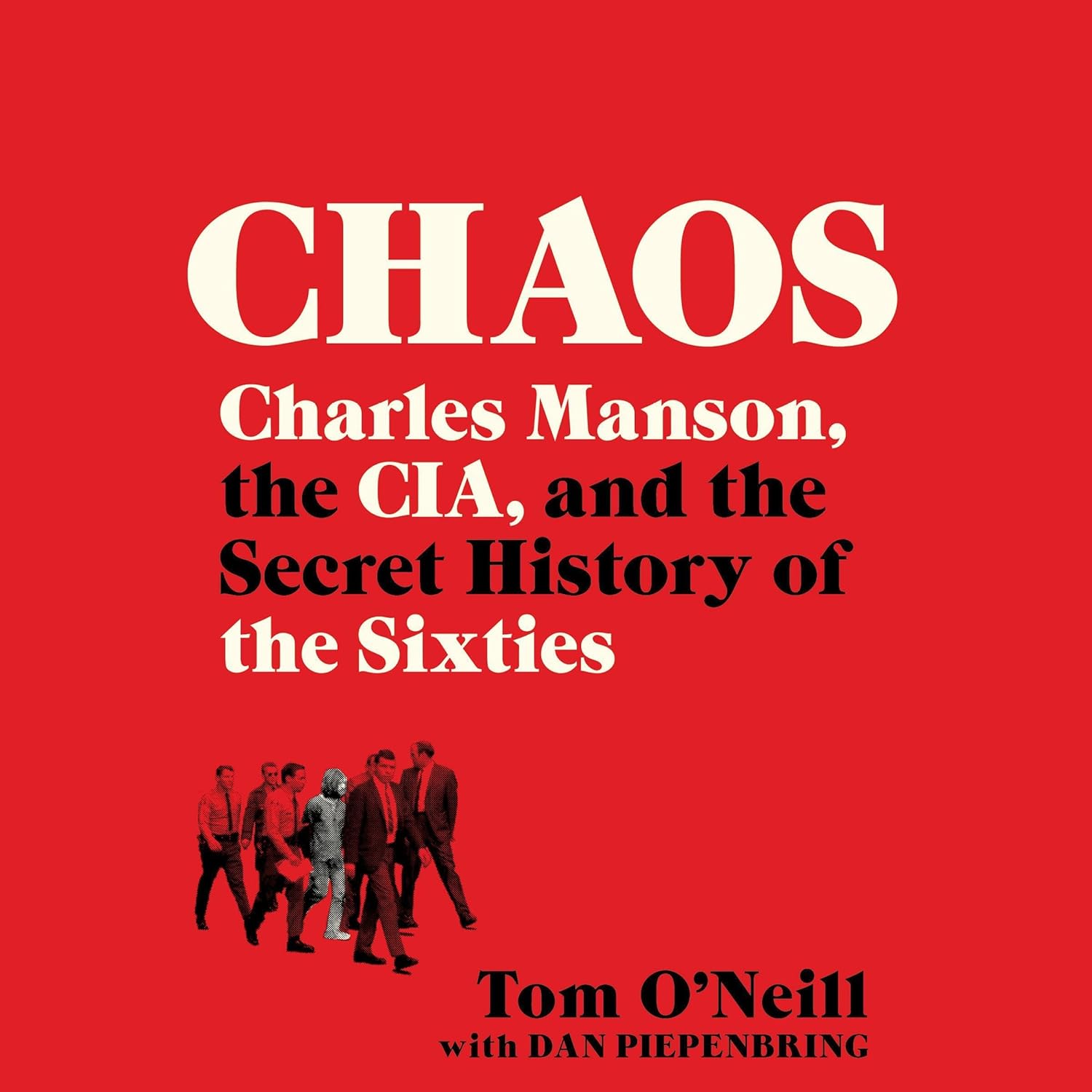
Chaos: Charles Manson, the CIA, and the Secret History of the Sixties by Tom O’Neill (with Dan Piepenbring) is a gripping, exhaustively researched investigative work that challenges the official narrative of the 1969 Manson Family murders. Published in 2019, the book became a bestseller and one of the most discussed true-crime titles of the decade for its provocative claims, extensive interviews, and refusal to accept the standard story.
Overview
O’Neill began researching the Manson case in 1999 for a magazine article timed to the 30th anniversary of the Tate-LaBianca killings. What started as a short assignment turned into a 20-year obsession. The book is structured as both a narrative investigation and a memoir of O’Neill’s own journey—his growing doubts, dead ends, threats, and eventual discoveries.Key sections include:
- The official story (as presented by prosecutor Vincent Bugliosi in Helter Skelter): Manson ordered the murders to incite a race war (“Helter Skelter”) based on twisted Beatles lyrics and apocalyptic visions.
- O’Neill’s re-examination of evidence, timelines, witness statements, and forensic details that never quite add up.
- Deep dives into the people and institutions surrounding the case: the LAPD, the Los Angeles County DA’s office, Hollywood figures, drug dealers, and intelligence agencies.
Core Claims & RevelationsO’Neill does not claim Manson was innocent or that the CIA directly ordered the murders. Instead, he argues the full story was deliberately suppressed or ignored.
Major findings and theories include:
- Manson’s pre-murder intelligence connections
Manson was a frequent visitor to the Haight-Ashbury Free Medical Clinic in 1967–1968, where he interacted with Dr. Louis “Jolly” West—a CIA-funded psychiatrist who ran MKUltra subprojects involving LSD, hypnosis, and mind control. West had a secret office in the clinic. O’Neill presents evidence that Manson may have been exposed to experimental psychological techniques during his frequent prison terms and parole periods. - The role of the CIA and MKUltra
The book connects West and other MKUltra-linked figures to the counterculture scene in San Francisco and Los Angeles. O’Neill suggests Manson’s ability to manipulate followers (through drugs, sex, and psychological control) bears eerie similarities to techniques studied in MKUltra. - Unexplained links to law enforcement
Several key witnesses and potential suspects had ties to law enforcement or intelligence. For example, the Tate house was previously rented by music producer Terry Melcher (who had rejected Manson’s music ambitions), but also linked to people in the CIA orbit. O’Neill uncovers inconsistencies in police reports, missing evidence, and possible cover-ups. - Drug-world connections
The murders occurred amid a volatile Hollywood drug scene. Sharon Tate’s house was a known party spot. Some victims had ties to dealers and users. O’Neill explores whether the killings were drug-related retaliation rather than purely ideological. - Bugliosi’s narrative
O’Neill is highly critical of Vincent Bugliosi (the lead prosecutor whose book Helter Skelter shaped public understanding). He accuses Bugliosi of shaping the case to fit a simple, dramatic story—ignoring contradictory evidence and protecting powerful figures.
Style & Tone
The writing is journalistic and relentless—hundreds of interviews, FOIA documents, court transcripts, and archival material. O’Neill is transparent about dead ends and his own frustrations. The tone is skeptical and outraged without descending into conspiracy theorizing. He lets the evidence speak and admits when questions remain unanswered.
The book was widely praised for its depth and courage. Reviewers called it “explosive,” “meticulously reported,” and “the most important book on the Manson case in decades.” Some critics felt O’Neill occasionally overreaches or gives too much weight to circumstantial connections, but most agreed he exposed serious flaws in the official record.
In short, Chaos is not a conventional true-crime book. It is an investigation into the investigation—an attempt to answer why so many aspects of the Manson case never added up. It raises troubling questions about intelligence agencies, law enforcement, Hollywood, and the counterculture—and whether the full truth has ever been told.
Whether you accept every conclusion or not, the book forces readers to confront the possibility that the story we were sold about 1969—and the end of the 1960s dream—was shaped as much by power and politics as by facts.