
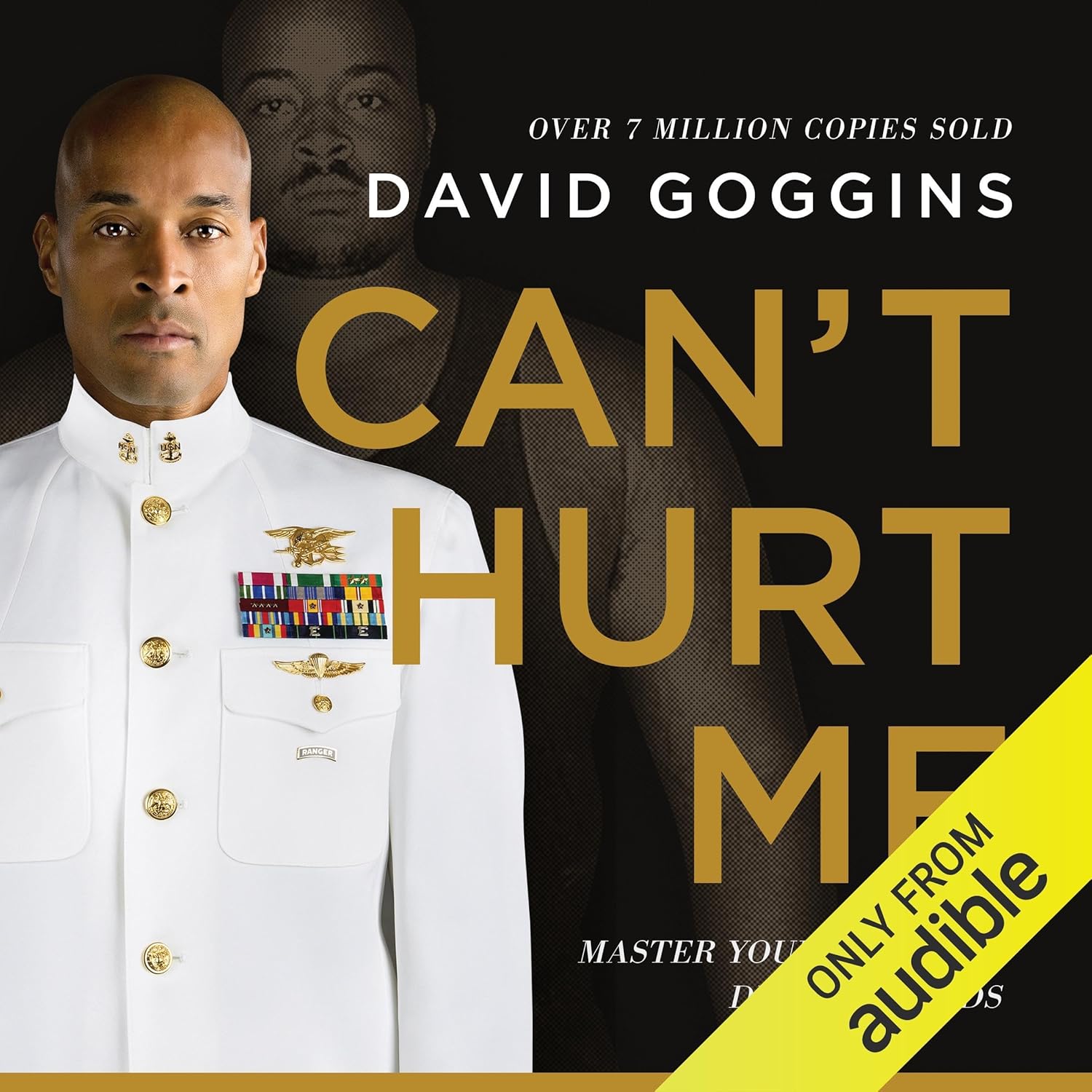
Can’t Hurt Me: Master Your Mind and Defy the Odds
Introduction
David Goggins’ Can’t Hurt Me (2018) is a raw, no-holds-barred memoir/self-help hybrid that has sold millions and become a modern bible for mental toughness. Goggins, a retired Navy SEAL, ultramarathon runner, and former Guinness World Record holder for most pull-ups in 24 hours (4,030), recounts his transformation from an abused, overweight, directionless young man into one of the world’s most extreme endurance athletes. At ~364 pages, the book blends brutal autobiography with actionable challenges at the end of each chapter. It’s not gentle inspiration—it’s a gut-punch call to embrace suffering, reject excuses, and unlock the 40% of potential most people never tap. In 2026, amid endless comfort and quick-fix culture, Goggins’ message feels more defiant than ever.
Content and Structure
The narrative follows Goggins’ life in roughly chronological phases, interspersed with reflective “challenges” for readers.
- Early life: Goggins details a nightmarish childhood in poverty with a tyrannical father who physically and mentally abused him, his mother, and brother. Racism, learning disabilities, and family instability left him overweight, underachieving, and depressed by his 20s—working a dead-end job, eating junk, and hating his reflection.
- Turning point and transformation: A pivotal moment watching TV specials on SEALs sparks change. He drops massive weight in months (from ~300 lbs to SEAL-ready), endures Hell Week three times (after injuries and failures), becomes a SEAL, then Army Ranger and Air Force TACP. Later chapters cover ultramarathons (often with little prep, broken bones, stress fractures, and organ strain), the pull-up record attempts, and constant self-punishment to prove limits are illusions.
Goggins introduces core concepts like the 40% Rule (when your mind screams “quit,” you’re only at 40% capacity), the Accountability Mirror (brutal self-honesty via photos/notes on flaws), the Cookie Jar (mental reservoir of past victories for tough moments), and building “mental calluses” through deliberate discomfort. Each chapter ends with practical tasks—e.g., inventory your weaknesses, take cold showers, or run farther than planned.The tone is unfiltered: graphic abuse descriptions, profanity, self-loathing, and triumphs. Goggins narrates his audiobook version, adding intensity.
Strengths and Criticisms
Strengths: Raw authenticity inspires action—many readers credit it for life changes (weight loss, career shifts, endurance gains). The challenges make it interactive; the 40% Rule and tools are memorable and applicable beyond athletics. Goggins’ story proves extreme potential exists.Criticisms: The extremism borders on masochism—pushing through serious injuries risks long-term harm. Some see it as toxic individualism, dismissing systemic issues or balance (family, rest). It glorifies suffering; not everyone needs (or should) live this way. The relentless intensity can feel exhausting or alienating.
Conclusion
Can’t Hurt Me isn’t for the faint-hearted—it’s a mirror for complacency and a hammer for excuses. Goggins doesn’t promise easy wins; he demands total commitment. If you’re stuck, seeking fire, or questioning your limits, it delivers a seismic wake-up. Rated 4.5/5 for impact, though approach with caution—mental toughness yes, self-destruction no. Pair it with recovery wisdom for sustainability. In a world of shortcuts, Goggins reminds us: the mind quits first. Master it, and odds bend.