
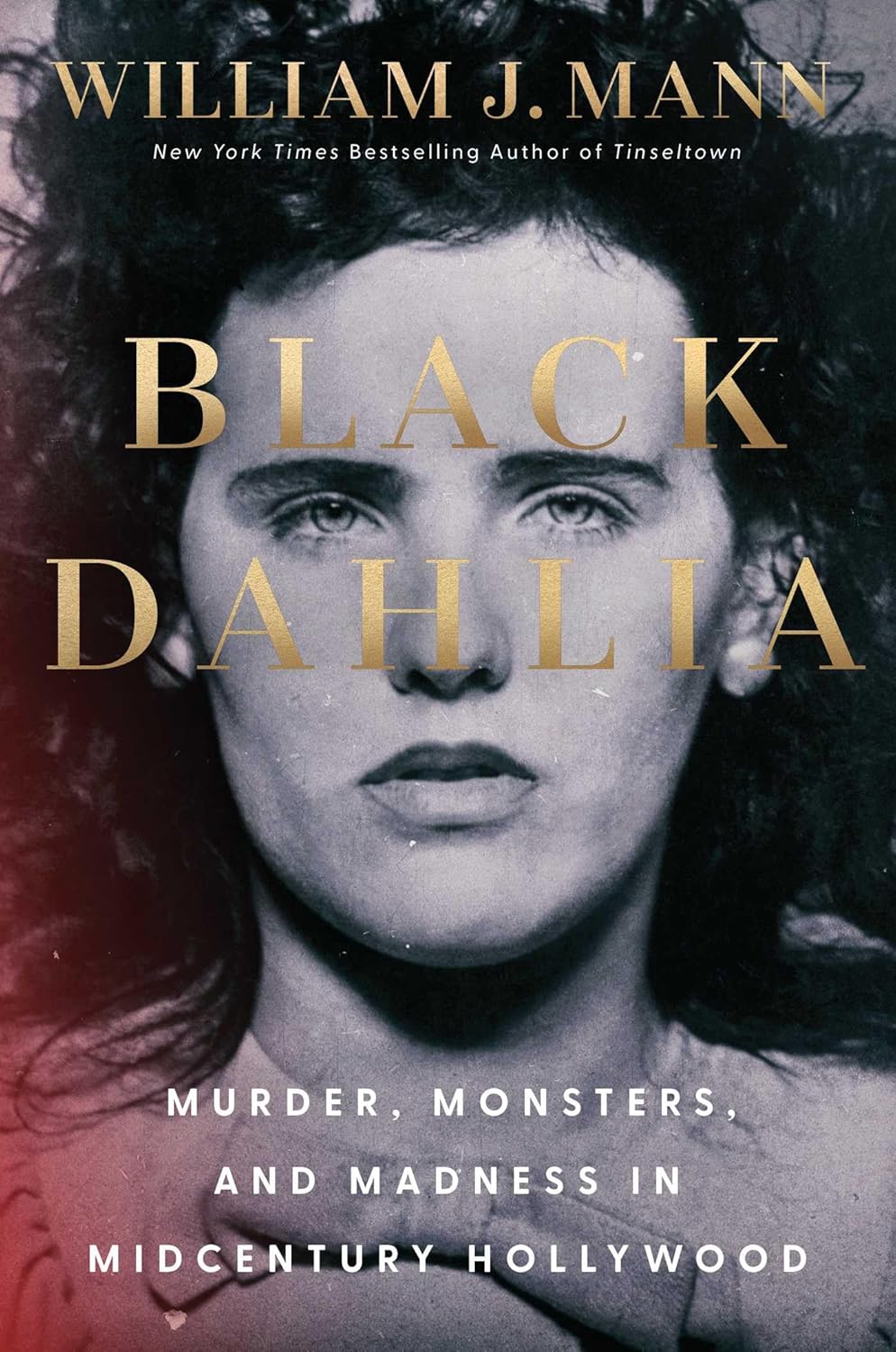
Black Dahlia: Murder, Monsters, and Madness in Midcentury Hollywood by Piu Eatwell is a gripping, meticulously researched true-crime narrative. It was published in early 2026 by Pegasus Crime. The book re-examines the infamous 1947 murder of Elizabeth Short—the young woman whose body was found severed in half in a vacant Los Angeles lot—and uses the case to explore the dark underbelly of postwar Hollywood, the city’s obsession with glamour and violence, and the enduring myth-making that turned a tragic crime into one of America’s most notorious unsolved mysteries.
Plot Overview
On the morning of January 15, 1947, a mother walking with her young daughter in the Leimert Park neighborhood of Los Angeles discovered the nude, bisected body of 22-year-old Elizabeth Short. The corpse had been meticulously cleaned, posed with arms bent above the head, and drained of blood. The mouth had been sliced from ear to ear in a grotesque “Glasgow smile.” No blood was found at the scene, suggesting the murder occurred elsewhere. The case exploded across front pages nationwide. Reporters dubbed the victim “the Black Dahlia,” a nickname that stuck despite Short never using it herself.
Eatwell reconstructs Short’s short life: a Massachusetts girl who dreamed of Hollywood stardom, drifted between transient jobs and brief engagements, and lived on the margins of the film industry. She was beautiful, charismatic, and chronically broke—qualities that made her both magnetic and vulnerable in a city full of predators.
The book follows the initial frenzy:
- The LAPD’s chaotic investigation under Chief William Worton and Captain Jack Donahoe.
- Hundreds of false confessions, dozens of named suspects (including doctors, gangsters, and even celebrities).
- Sensational press coverage that turned Short into a symbol of fallen innocence while exploiting her gruesome death for sales.
- The case’s slow fade from headlines as no arrest was made.
Eatwell then delves into the long aftermath:
- Persistent theories linking the murder to organized crime, corrupt cops, or Hollywood elites.
- The 1949 “Werewolf Murder” of Georgette Bauerdorf (a similar victim profile that some investigators quietly connected).
- The 1980s–1990s resurgence of interest via books like Severed by John Gilmore and Steve Hodel’s controversial claim that his father, Dr. George Hodel, was the killer.
- Modern forensic re-examinations and the partial DNA testing of surviving evidence.
The author does not endorse any single solution. Instead, she argues the case remains unsolved because of systemic failures: police rivalries, destroyed evidence, witness intimidation, and a culture that preferred lurid myth to uncomfortable truth.
Character Dynamics and Development
- Elizabeth Short — portrayed with dignity rather than sensationalism. Eatwell shows her as ambitious, lonely, and resilient—a dreamer who trusted too easily in a predatory city.
- The LAPD — depicted as overwhelmed, factionalized, and sometimes corrupt. Detectives like Harry Hansen and Finis Brown emerge as dedicated but limited by the era’s tools and biases.
- The press — both villains and chroniclers. Reporters like Aggie Underwood pushed the story hard, sometimes fabricating details or pressuring witnesses.
- Suspects — treated cautiously. Eatwell examines major names (George Hodel, Leslie Dillon, Bugsy Siegel connections) but emphasizes lack of conclusive proof.
The book avoids turning any figure into a cartoon monster. Instead, it shows how postwar Los Angeles—a city of broken dreams, wartime trauma, and unchecked ambition—created the conditions for such a crime.
Key Themes
- The commodification of female suffering — how Short’s murder was turned into entertainment while her humanity was erased.
- Hollywood’s dark mirror — glamour built on exploitation, with young women as disposable.
- Police and press failures — inter-agency rivalry, evidence mishandling, and sensationalism that poisoned the investigation.
- The myth machine — how the Dahlia case became larger than the facts, feeding true-crime culture for decades.
- The enduring cost of unsolved violence — families left without closure, a city haunted by its own darkness.
The tone is measured and somber. Eatwell writes with journalistic precision and novelistic flair, balancing new archival finds (letters, police memos, witness statements) with vivid scene-setting.
In short, this is a haunting, authoritative read. It strips away decades of speculation to reveal the real tragedy of Elizabeth Short and the midcentury Los Angeles that failed her. It is less about solving the murder than understanding why it remains unsolved—and why it still fascinates us. Essential for true-crime readers, Hollywood historians, or anyone interested in how one brutal death exposed the rot beneath the city’s golden surface.