
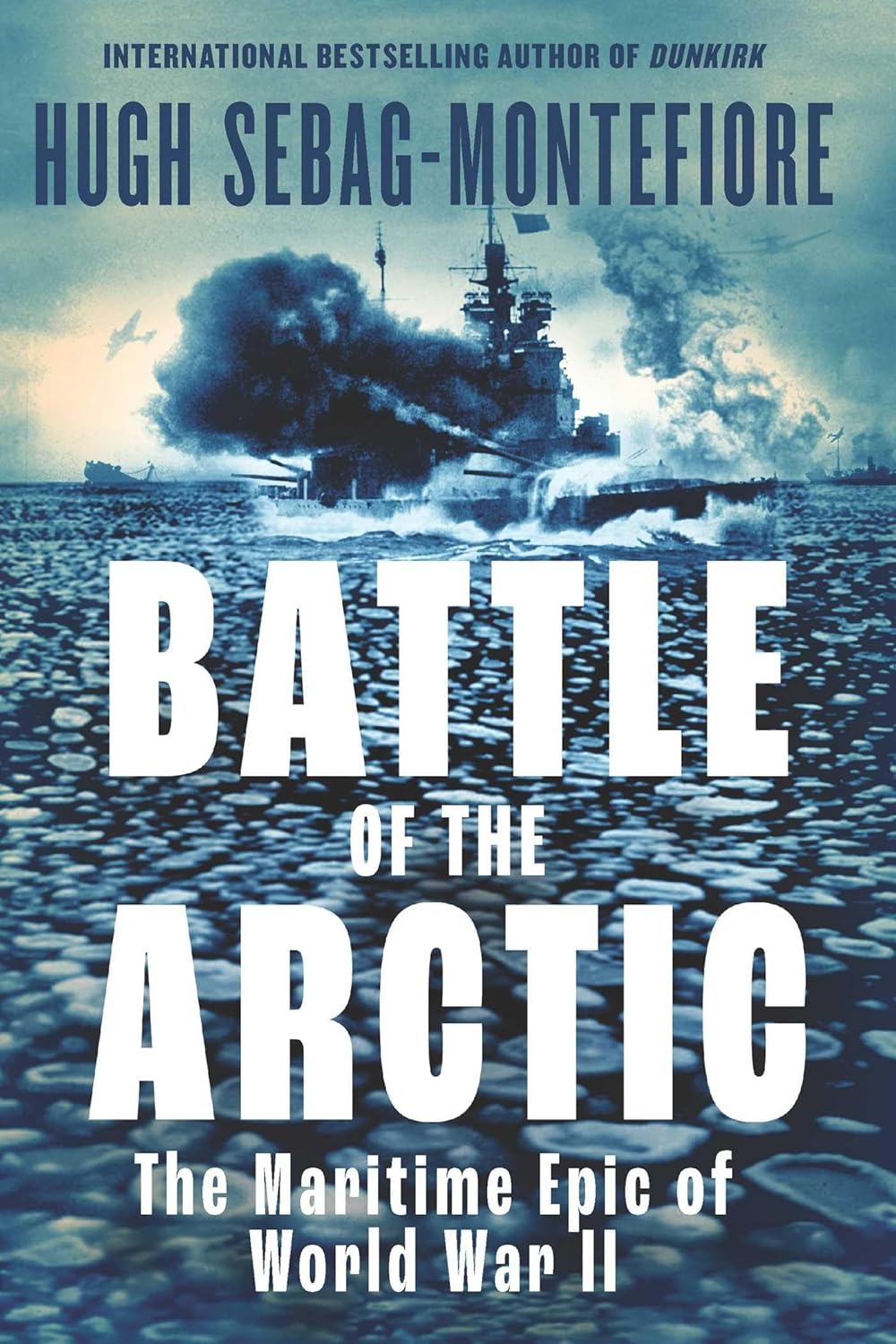
Battle of the Arctic: The Maritime Epic of World War II
Overview and Publication Details
“Battle of the Arctic: The Maritime Epic of World War II” is a comprehensive non-fiction history written by Hugh Sebag-Montefiore, a noted British historian and author of acclaimed works such as “Dunkirk: Fight to the Last Man” and “Enigma: The Battle for the Code.” Published on January 6, 2026, by Pegasus Books (with a simultaneous UK edition from William Collins/HarperCollins), the hardcover edition spans 816 pages. The book draws on extensive primary sources—including survivor interviews, diaries, official records, and newly available documentation—to chronicle the Arctic convoys, the vital but extraordinarily hazardous Allied supply route to the Soviet Union during World War II.
Core Content and Structure
The narrative centers on the Arctic convoys that ran from 1941 to 1945, delivering essential Lend-Lease supplies—tanks, aircraft, munitions, food, and raw materials—from ports in Scotland, Iceland, and the United States to Murmansk and Archangel in northern Russia. These operations were conducted in some of the harshest maritime conditions ever faced: perpetual darkness or midnight sun, sub-zero temperatures, ferocious storms, pack ice, fog, and constant threats from German U-boats, surface raiders (notably the battleship Tirpitz), and Luftwaffe aircraft based in occupied Norway.
The book follows a chronological structure, beginning with the inaugural convoy, Operation Dervish, in August 1941, and concluding with the final sailings in spring 1945. Sebag-Montefiore dedicates significant space to pivotal episodes, including the infamous PQ-17 disaster of July 1942—where Admiral Pound’s controversial order to scatter the convoy led to the loss of 24 out of 35 merchant ships—and the dramatic pursuits involving Tirpitz and Allied carrier strikes. The text also covers the role of escort vessels (destroyers, corvettes, cruisers), anti-submarine warfare, and the contributions of American, British, Canadian, and other Allied forces.
A distinctive feature is the emphasis on the human experience, particularly of merchant mariners and naval personnel. The author vividly describes the physical toll—frostbite that could claim limbs in minutes, immersion suits failing in icy waters, and the psychological strain of endless alerts—while tallying casualties and detailing rescues, sinkings, and hospital conditions in Murmansk.
Key Themes and Insights
The work portrays the Arctic theater as a multifaceted battle against both the enemy and nature itself, with storms, ice, and whales complicating operations alongside German attacks. Sebag-Montefiore highlights unsung heroism, especially among merchant crews who endured without the protections afforded to warships, and examines strategic decisions, intelligence failures, and the convoys’ critical contribution to sustaining the Soviet war effort on the Eastern Front. While acknowledging earlier accounts (notably Richard Woodman’s “Arctic Convoys”), the book prioritizes detailed personal testimonies over broad strategic analysis, confining political and economic context to essential sketches.
Tone, Style, and Strengths
Sebag-Montefiore employs a gripping, narrative-driven style that balances meticulous research with dramatic storytelling, creating a sense of immediacy and tension. The prose is accessible yet richly detailed, making the extreme conditions and courage palpable. Early reviews praise its thoroughness, emotional depth, and avoidance of over-simplification, describing it as a definitive yet highly readable addition to WWII naval history. At over 800 pages, the length allows for in-depth coverage without abridging key incidents.
Overall Assessment
“Battle of the Arctic” delivers a powerful, exhaustive account of one of World War II’s most grueling and underappreciated campaigns. It honors the extraordinary bravery and sacrifice required to keep the northern lifeline open, while conveying the relentless horror of combat in the frozen seas. This volume is essential reading for students of naval warfare, the Eastern Front, or maritime history, offering fresh perspectives through survivor voices and a compelling reminder of the human cost behind Allied victory.