
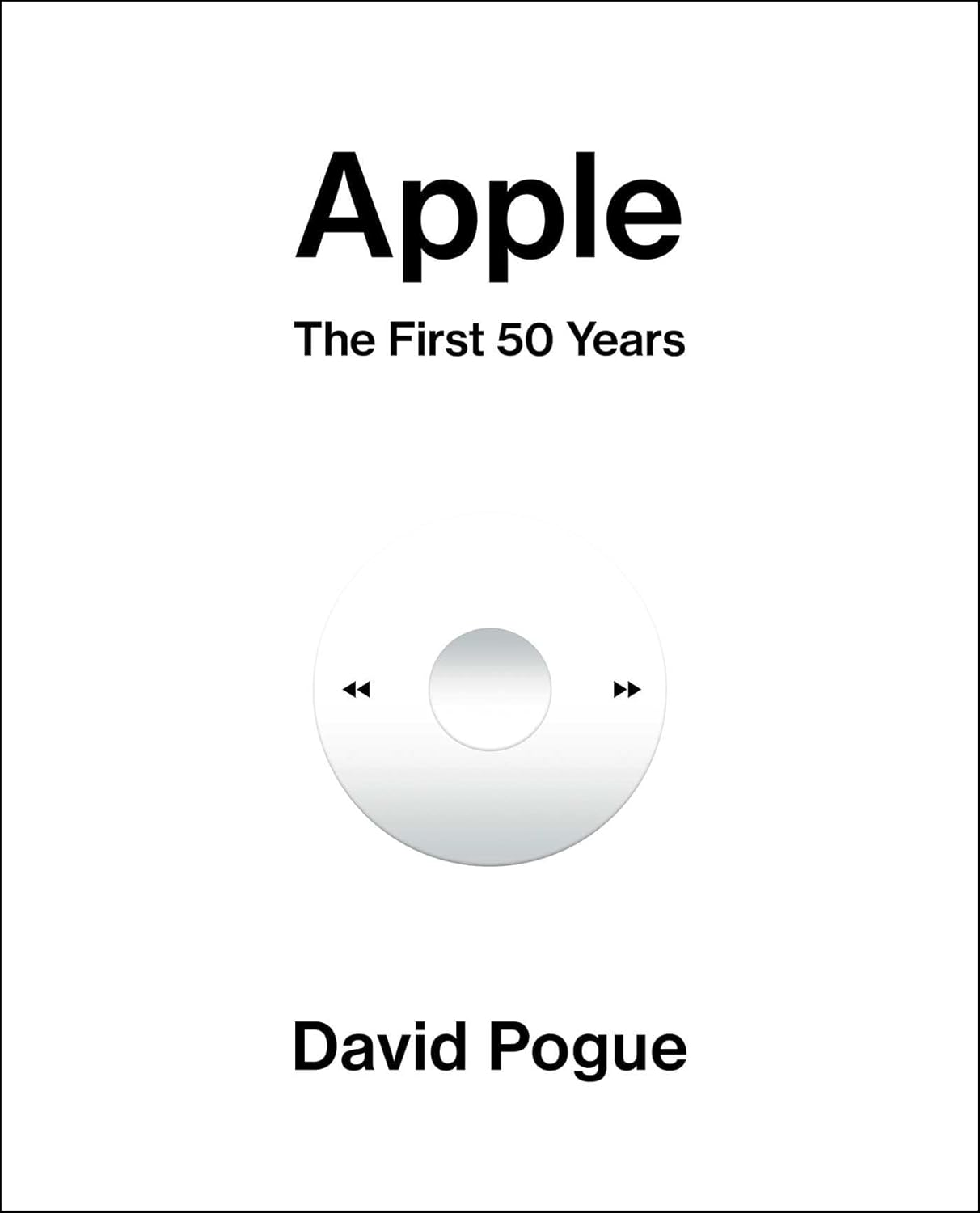
Apple: The First 50 Years by Leander Kahney is a concise, engaging corporate history that traces the company’s journey from its founding in 1976 through its 50th anniversary in 2026. Published in early 2026 by Portfolio/Penguin, the book offers a balanced, non-hagiographic look at Apple’s evolution—celebrating its iconic innovations while candidly addressing missteps, internal conflicts, near-death experiences, and the cultural forces that shaped one of the world’s most valuable companies.
Overview (Chronological Structure)
The narrative is divided into five major eras, each roughly corresponding to a decade-plus of leadership and defining moments:
- The Garage Years & Early Triumphs (1976–1985)
Steve Jobs and Steve Wozniak launch Apple in Jobs’s parents’ garage with the Apple I (1976) and the breakthrough Apple II (1977), which becomes the first mass-market personal computer. The Macintosh (1984) introduces the graphical user interface, mouse, and “1984” Super Bowl ad, but internal power struggles lead to Jobs’s ouster in 1985. The book highlights Wozniak’s engineering genius, Jobs’s marketing vision, and the chaotic but creative early culture. - The Wilderness & Near-Death (1985–1997)
Apple stumbles under John Sculley, Michael Spindler, and Gil Amelio. Products like the Newton PDA flop, market share collapses, and the company loses nearly $2 billion. The board brings Jobs back in 1997 via the NeXT acquisition. This section details the desperation—Apple was weeks from bankruptcy—and Jobs’s ruthless turnaround: slashing product lines, ending the Mac clone program, and forging the Microsoft alliance (Bill Gates’s $150 million investment and Internet Explorer commitment). - The iMac to iPod Renaissance (1998–2007)
Jobs’s second act begins with the colorful iMac (1998), which saves the company financially and aesthetically. The iPod (2001) and iTunes Store (2003) create the digital music revolution. The book covers the design philosophy of Jony Ive, the supply-chain mastery of Tim Cook, and the cultural shift toward sleek, user-centric products. - The iPhone & iPad Era (2007–2016)
The iPhone (2007) redefines the smartphone industry. The iPad (2010) creates the tablet category. Apple becomes the world’s most valuable company. This section explores the App Store ecosystem, the battle with Google/Android, antitrust scrutiny, and Jobs’s declining health. His death in 2011 marks the end of an era; Tim Cook’s steady hand takes over. - The Cook Years & Modern Apple (2011–2026)
Under Cook, Apple grows into a $3+ trillion behemoth. Key milestones include the Apple Watch (2015), AirPods (2016), the shift to Apple Silicon (M1 chip 2020), the explosion of services (Apple Music, iCloud, App Store revenue), privacy as a brand differentiator, and the Vision Pro (2024) mixed-reality headset. The book addresses controversies: labor conditions at Foxconn, App Store fees and antitrust lawsuits, the removal of the headphone jack and power adapter, and debates over innovation vs. iteration.
The final chapter reflects on Apple at 50: a company that went from near-bankruptcy to the most valuable in history, yet faces new challenges—AI competition, regulatory pressure, slowing hardware growth, and the question of what comes after the iPhone era.
Character Dynamics
- Steve Jobs dominates the first half: visionary, tyrannical, brilliant, flawed. His return in 1997 is portrayed as both salvation and authoritarian consolidation.
- Steve Wozniak is the engineering soul—genius inventor who eventually steps back from the spotlight.
- Jony Ive is the design conscience through the 2000s and 2010s.
- Tim Cook emerges as the steady, operations-focused successor—less charismatic, more disciplined, and highly effective at scaling Apple into a services giant.
The book also highlights lesser-known figures: early engineers, marketing minds like Lee Clow (“Think Different”), and Tim Cook’s supply-chain deputies who made Apple’s manufacturing machine possible.
Key Themes
- Design as religion — Apple’s obsession with simplicity, beauty, and user experience.
- Control vs. openness — closed ecosystem vs. Android’s openness; App Store rules vs. antitrust pressure.
- Innovation cycles — periods of revolutionary leaps (Apple II, Mac, iPod, iPhone) followed by refinement.
- Leadership styles — Jobs’s reality-distortion field vs. Cook’s quiet competence.
- Cultural impact — Apple as a symbol of creativity, rebellion (early ads), and later premium consumerism.
The tone is even-handed: admiring of Apple’s achievements, critical of its arrogance, secrecy, and occasional missteps (Antennagate, butterfly keyboards, removal of legacy ports).
In short, this is a brisk, readable 50-year overview. It celebrates Apple’s genius while acknowledging the human cost, strategic gambles, and controversies that came with dominance. Perfect for casual readers who want the full arc in one volume, or longtime fans seeking a compact refresher on how a garage startup became the world’s most valuable company.