
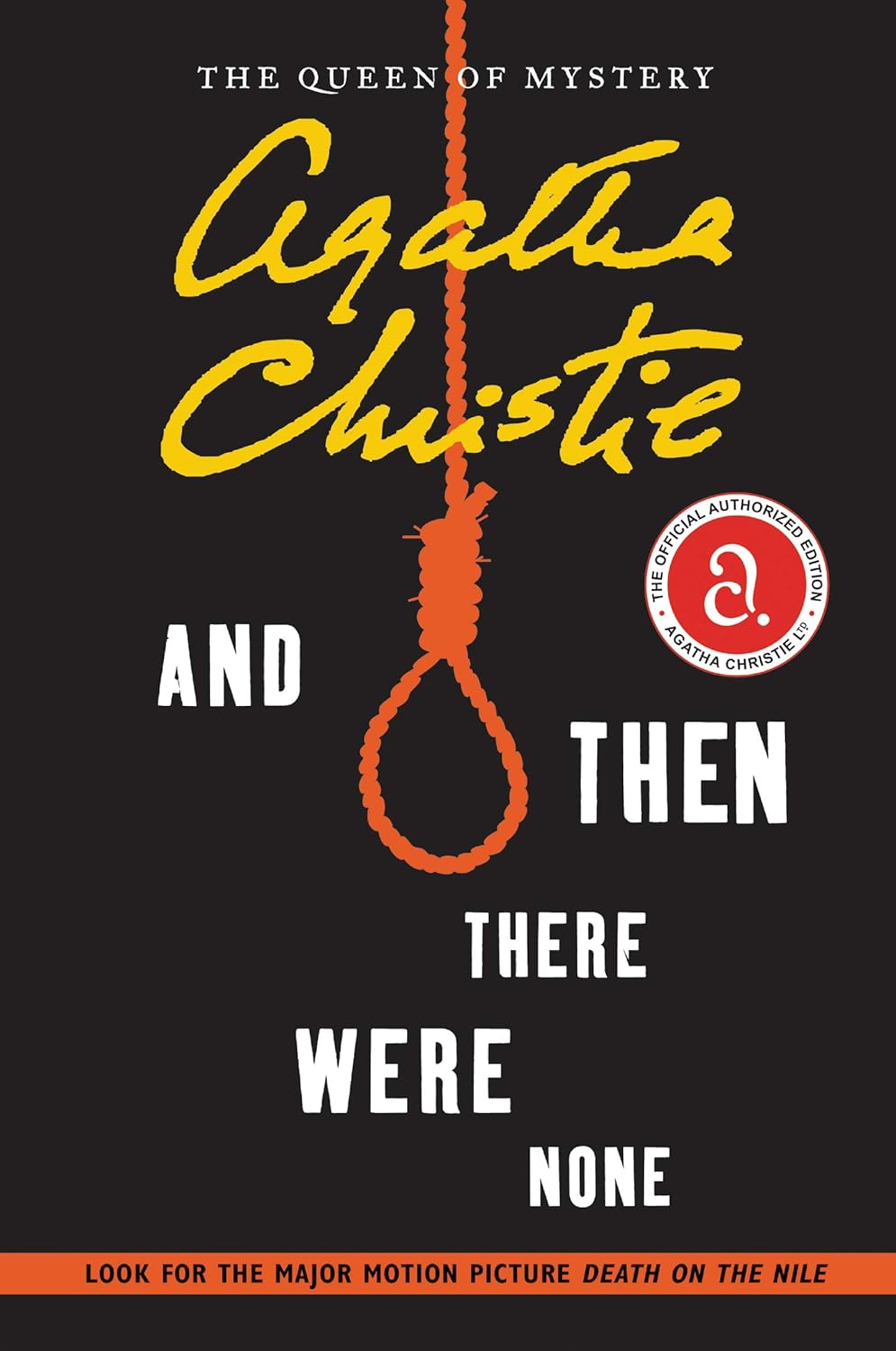
And Then There Were None by Agatha Christie is a masterpiece of mystery and psychological suspense. First published in 1939 (originally titled Ten Little Niggers in the UK, later changed due to the offensive term), it is widely regarded as one of the greatest crime novels ever written and Christie’s best-selling book (over 100 million copies sold worldwide). It is a standalone novel, not part of any series.
Plot Overview
Ten strangers, each with a dark secret, are invited (or summoned) to a luxurious but isolated mansion on Soldier Island off the Devon coast. The host, a mysterious “U.N. Owen,” is nowhere to be found. The only other people on the island are the butler and housekeeper, who claim to have been hired through an agency and know no more than the guests.
Soon after dinner on the first night, a gramophone record plays an accusing voice that names each guest and reveals the crime they committed but escaped justice for. Almost immediately, the guests begin to die—one by one—in ways that eerily match the lines of the nursery rhyme “Ten Little Soldiers” (or “Ten Little Indians” / “Ten Little Niggers” depending on the edition), which is framed and hanging in every bedroom.
With no way off the island, no communication with the mainland, and a killer apparently among them, the survivors grow increasingly paranoid. Trust collapses. Alliances form and shatter. Each death narrows the circle until the final, devastating twist reveals the truth behind the murders—and the identity of the killer.
The novel is structured as a classic “closed circle” mystery: no outside help can arrive, no one can escape, and the murderer must be one of the ten.
Character Dynamics and Development
The ten guests are archetypes of 1930s British society, each with a guilty past:
- A judge who sentenced an innocent man to death.
- A doctor who caused a patient’s death through malpractice.
- A governess who let a child drown.
- A general whose orders led to soldiers’ deaths.
- A playboy who abandoned his pregnant fiancée.
- An elderly spinster who starved her ward.
- A detective who framed an innocent man.
- A butler and housekeeper couple who murdered their employer.
They are not cartoon villains—Christie gives each enough humanity to make their guilt complex and their fear believable. The group dynamic is tense and claustrophobic: suspicion poisons every conversation, and the reader is never sure who (if anyone) can be trusted.
Key Events and Themes
The book unfolds over three days. Key structural beats:
- Arrival and the accusatory recording.
- First deaths following the nursery-rhyme pattern.
- Growing panic, failed escape attempts, and dwindling numbers.
- The chilling final chapters, where the last survivors confront the impossible truth.
Major themes include:
- Guilt and justice — everyone on the island is guilty, yet none has been punished by law.
- The inescapability of conscience — the murders force the characters to face what they have done.
- The mechanics of a perfect crime — the killer’s plan is brilliantly meticulous.
- Human nature under pressure — how fear, paranoia, and self-preservation destroy trust.
The tone is cold, elegant, and relentlessly suspenseful. Christie’s prose is economical and precise; she wastes no words. There are no graphic scenes of violence—death is described with chilling restraint.
Reception and Legacy
It is widely considered Christie’s masterpiece and one of the finest locked-room/closed-circle mysteries ever written. The twist ending is legendary—shocking yet perfectly fair (all clues are present). The book has been adapted many times: stage plays (the longest-running mystery play in history), films (including René Clair’s 1945 version and the 2015 BBC miniseries), radio dramas, and parodies.
In short, this is the gold standard of classic mystery. Ten strangers are lured to an island. One by one they die according to a nursery rhyme. No one can escape. The killer is among them. The final twist is one of the most famous in crime fiction. Perfect for anyone who loves airtight plotting, psychological tension, and a solution that is both surprising and inevitable.
If you have never read it, avoid spoilers at all costs—the impact depends entirely on going in blind.