
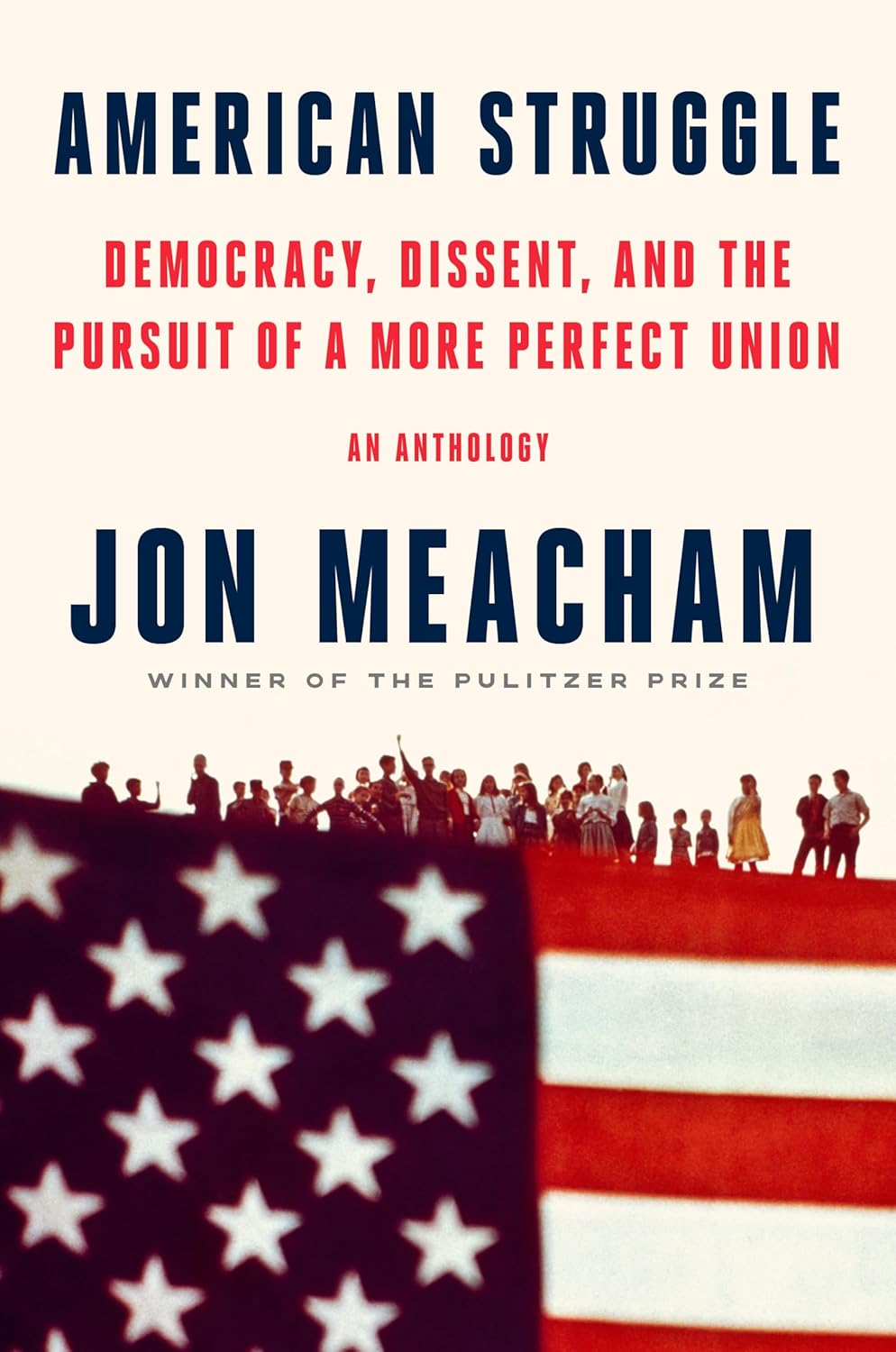
American Struggle: Democracy, Dissent, and the Pursuit of a More Perfect Union: An Anthology edited by Annette Gordon-Reed and Eric Foner is a powerful, wide-ranging collection of primary sources and short interpretive essays. Published in early 2026 by W. W. Norton & Company, the anthology brings together more than 100 documents spanning from the colonial era to the present day. It traces the long, contested arc of American democracy—its ideals, its betrayals, its expansions, and its ongoing fights.
Overview and StructureThe book is organized chronologically into ten thematic sections, each introduced by a brief essay from a leading historian (including the editors, Ibram X. Kendi, Heather Cox Richardson, Keeanga-Yamahtta Taylor, and others). The selections emphasize voices of dissent—those who challenged the status quo—while also including key documents that defined the mainstream understanding of American freedom at different moments.
Major sections cover:
- Colonial foundations and early resistance (Pequot War accounts, Anne Hutchinson’s trial, slave codes, Bacon’s Rebellion)
- Revolutionary era ideals vs. exclusions (Declaration of Independence, Abigail Adams’s “Remember the Ladies” letter, petitions from enslaved people, early anti-slavery writings)
- Constitutional debates and early republic tensions (Federalist and Anti-Federalist papers, Cherokee Nation removal documents, David Walker’s Appeal)
- Antebellum struggles over slavery and expansion (Uncle Tom’s Cabin excerpts, Frederick Douglass speeches, Seneca Falls Declaration, Dred Scott decision)
- Civil War and Reconstruction (Emancipation Proclamation, 13th–15th Amendments, Black Codes, Ida B. Wells on lynching, Plessy v. Ferguson dissent)
- Progressive Era and labor battles (Jane Addams on Hull House, Triangle Shirtwaist fire testimony, IWW free-speech fights, woman suffrage documents)
- Civil rights and anti-imperialism (W.E.B. Du Bois on the color line, Emma Goldman on free speech, Zitkala-Ša on Indian boarding schools, Filipino independence petitions)
- Mid-20th-century struggles (FDR’s Second Bill of Rights, Japanese internment dissent, MLK’s Letter from Birmingham Jail, Black Panther Party platform, Stonewall uprising accounts)
- Late 20th-century backlash and resistance (Reagan-era AIDS activism, Anita Hill testimony, anti-globalization protests, post-9/11 surveillance critiques)
- 21st-century fights (Occupy Wall Street statements, Black Lives Matter founding documents, Standing Rock Sioux water-protection statements, January 6th aftermath reflections, Dobbs v. Jackson dissent)
Each document is paired with a short headnote that provides context and highlights its significance. The anthology deliberately balances canonical texts (Gettysburg Address, “I Have a Dream”) with lesser-known voices (Native petitions, labor radical pamphlets, queer liberation manifestos, recent grassroots statements).
Key Themes and Arguments
The editors frame the book around the tension between America’s stated ideals (“all men are created equal”) and its repeated failures to live up to them. Dissent is presented not as fringe but as essential to the nation’s progress. Key recurring themes:
- Democracy is never fully achieved; it is always being fought for.
- Exclusion (of race, gender, class, sexuality, indigeneity) has been central to American history.
- The most transformative changes often began with marginalized voices challenging the powerful.
- Progress is uneven and reversible; gains can be lost without constant vigilance.
- The pursuit of a “more perfect union” remains unfinished and urgent.
Style and Reception
The prose is clear and direct. The documents speak for themselves, with minimal editorial intrusion. The book is designed for classroom use—each section ends with discussion questions and suggestions for further reading—but it reads equally well as a standalone narrative of struggle and resilience.
Early reviews praise the anthology for its breadth, balance, and refusal to sanitize history. It includes triumphant moments (Emancipation, suffrage victories) alongside painful truths (lynching, internment, mass incarceration). Critics call it a necessary corrective to both uncritical patriotism and despairing cynicism.
In short, this is a vital, sobering collection. It lets Americans—past and present—speak in their own words about the long, unfinished fight to make the nation’s promise real. It reminds readers that democracy is not a gift handed down; it is a struggle carried forward. Perfect for students, activists, or anyone who wants to understand the deep roots of today’s battles over rights, justice, and belonging.