
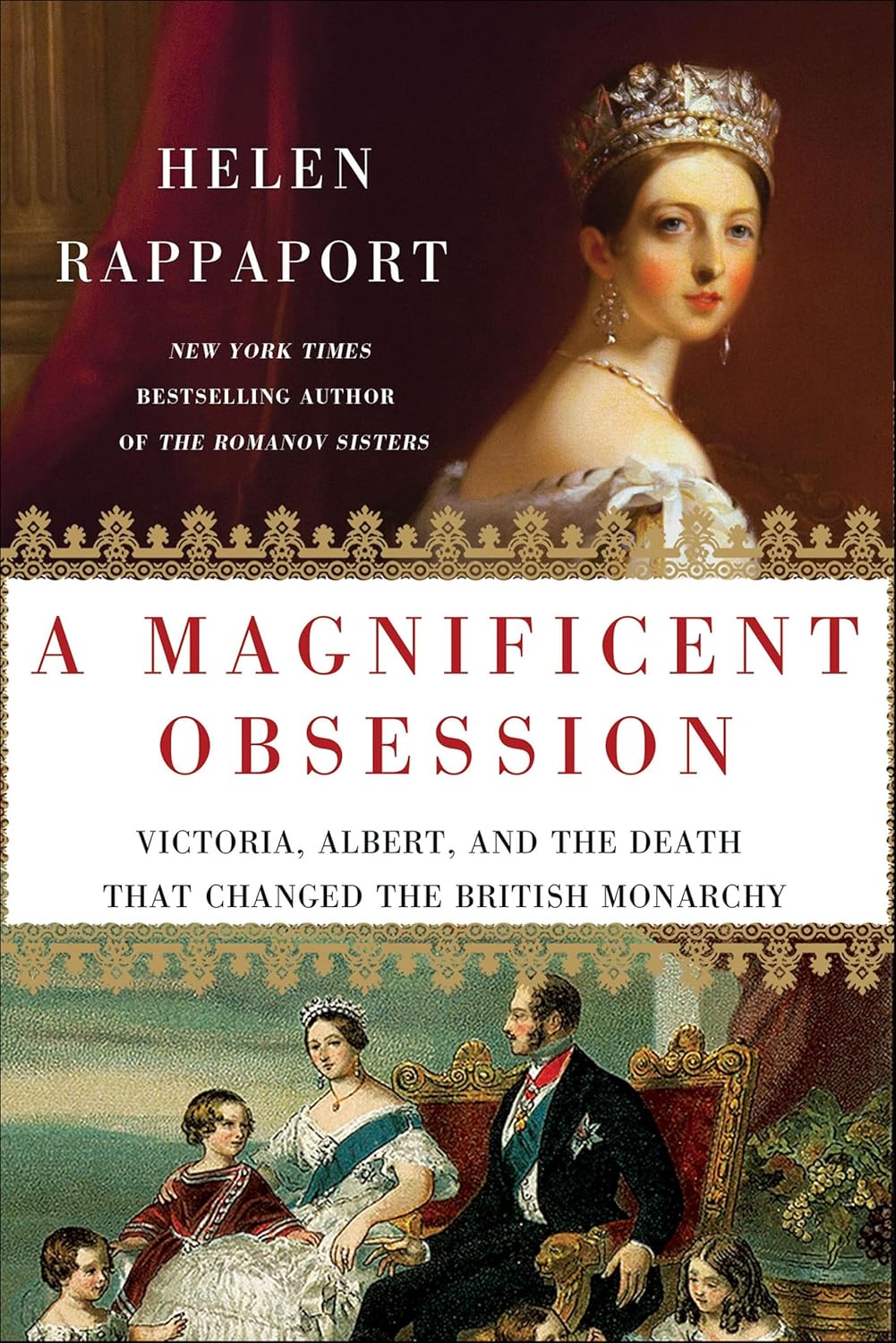
A Magnificent Obsession: Victoria, Albert, and the Death That Changed the British Monarchy by Helen Rappaport is a meticulously researched and emotionally powerful historical biography. First published in 2011 (with reprints and continued strong interest into 2026), it is widely regarded as one of the best modern accounts of Queen Victoria’s life after the death of her beloved husband, Prince Albert.
Overview
The book focuses on the period from Prince Albert’s sudden death in December 1861 until roughly the mid-1870s — the years when Victoria was plunged into profound, almost debilitating grief. Rappaport shows how this single event transformed not only Victoria personally but also the British monarchy and the public’s perception of the Crown.
Core StoryOn 14 December 1861, Prince Albert died at Windsor Castle at the age of 42, most likely from typhoid fever (though the exact cause has been debated). Victoria, then only 42 herself and mother to nine children, was utterly devastated. What followed was nearly a decade of intense mourning:
- She wore black for the rest of her life (nearly 40 years).
- She withdrew almost completely from public life, rarely appearing in London or opening Parliament.
- She surrounded herself with mementos of Albert — casting his hands and face in plaster, keeping his rooms exactly as he left them, and commissioning countless statues and memorials.
- She relied heavily on her Scottish servant John Brown for emotional support (a relationship that caused scandal and gossip).
- She micromanaged her children’s lives and marriages while struggling with her own mental and physical health.
Rappaport shows how this prolonged mourning created a constitutional crisis. The public grew restless with an “invisible” queen, republican sentiment rose, and politicians worried about the future of the monarchy. Victoria’s withdrawal also allowed her eldest son, Bertie (the future Edward VII), to live a scandalous life that further damaged the royal image.
The book also explores the remarkable love story between Victoria and Albert — their passionate (and sometimes stormy) marriage, Albert’s enormous influence on British politics and culture, and how his death left a void that Victoria never fully filled.
Strengths of the Book
- Deeply human portrait — Rappaport portrays Victoria not as the stiff, humorless widow of popular imagination, but as a passionate, grief-stricken woman who was also a shrewd political operator when she chose to be.
- Rich detail — Draws on Victoria’s own journals, letters, and previously unpublished material to show the raw intensity of her mourning.
- Balanced view — Acknowledges both the excessive nature of Victoria’s grief and the genuine depth of her love and loss.
- Broader context — Explains how Albert’s death affected everything from foreign policy to public works (the Albert Memorial, Royal Albert Hall, etc.).
- Compelling narrative — Reads like a novel while remaining rigorously factual.
Tone & Style
Rappaport writes with empathy and clarity. The tone is respectful but never hagiographic. She does not shy away from Victoria’s flaws (self-indulgence, stubbornness, favoritism) while still conveying the profound tragedy of her loss.
Who Should Read It
- Readers interested in Victorian history, the British monarchy, or royal biographies
- Anyone who wants to understand the real woman behind the black-draped image
- Fans of well-written narrative history that feels intimate and dramatic
In short, A Magnificent Obsession is the definitive modern account of Queen Victoria’s long widowhood and how the death of Prince Albert fundamentally changed the British monarchy. It is both a heartbreaking love story and a fascinating study of power, grief, and public image.
Highly recommended for anyone who enjoys royal history, strong female protagonists in nonfiction, or stories about how personal tragedy can reshape a nation.